Looking for context on Jay Y. Fung from public information

softfault

Member
I came across a threat profile about Jay Y. Fung while doing some general reading on trading related enforcement cases, and I wanted to get some perspective from people here. The page summarizes publicly available records and regulatory actions connected to his name, mostly tied to trading activity from years ago. I am not an expert in this area and I am not making any claims, but it raised a few questions for me about how these situations are usually interpreted over time.
From what is described in public records, Jay Y. Fung appears to have been involved in a regulatory case related to securities trading that was resolved through a settlement. It seems like the matter was addressed legally rather than through a criminal trial, which I know can mean different things depending on the context. What I find hard to judge is how much weight people usually give to older enforcement actions once they are settled.
I am sharing this mostly out of curiosity. I am interested in how people here evaluate risk or credibility when someone’s name shows up in this kind of public database years later. Do you treat it as historical context only, or as something that still matters today? I would appreciate hearing how others think through this kind of information.
 
I came across a threat profile about Jay Y. Fung while doing some general reading on trading related enforcement cases, and I wanted to get some perspective from people here. The page summarizes publicly available records and regulatory actions connected to his name, mostly tied to trading activity from years ago. I am not an expert in this area and I am not making any claims, but it raised a few questions for me about how these situations are usually interpreted over time.
From what is described in public records, Jay Y. Fung appears to have been involved in a regulatory case related to securities trading that was resolved through a settlement. It seems like the matter was addressed legally rather than through a criminal trial, which I know can mean different things depending on the context. What I find hard to judge is how much weight people usually give to older enforcement actions once they are settled.
I am sharing this mostly out of curiosity. I am interested in how people here evaluate risk or credibility when someone’s name shows up in this kind of public database years later. Do you treat it as historical context only, or as something that still matters today? I would appreciate hearing how others think through this kind of information.
I think the hardest part with profiles like this is separating signal from noise. A settled regulatory matter from years ago tells you something happened, but not necessarily what it means today. I usually try to understand whether there’s been any activity since then or if the person completely exited the space.
 
Exactly. Context is everything. A lot of people don’t realize how common settlements are in securities cases. It doesn’t automatically imply ongoing misconduct, but it does justify asking follow-up questions.
 
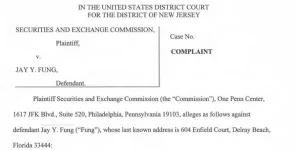
I went through the public filing again after seeing this thread, and I think the reason it feels confusing is because the document is written more for legal purposes than for general readers. It describes the situation using technical terms, which makes it harder to understand what actually happened step by step. When multiple people and entities are listed together, the story becomes even more difficult to follow.
 
Same here. It’s not about labeling someone, it’s about understanding the full arc. One data point without follow-up is incomplete.
What I usually try to do in these cases is read both the complaint and the later release that explains the result. Sometimes the first document sounds very serious, but the final order gives more context about how the case was resolved. Without reading both parts, it is easy to misunderstand the situation.
 
One thing I noticed in the filing is that the focus seems to be on how certain investment opportunities were presented to investors. That kind of issue appears often in regulatory cases, especially when the wording used in communications becomes important. Even small differences in how something is described can lead to questions from regulators.
 
I have read a few enforcement complaints before, and they all have a similar style. The regulator explains what they believe happened, but the document does not always show the full background or the discussions that led to the situation. Because of that, reading only the complaint can give a very strong impression without showing the whole timeline.
Screenshot 2026-03-11 143036.webp
That is why I think it is important to check the final release or court order as well. Those usually explain what the outcome was and whether the case ended with a settlement, judgment, or some other resolution. Without that part, the story feels incomplete.
 
The part that made this case harder to understand for me was the number of names mentioned in the filing. When more than one person or company is involved, the document has to describe everyone’s role, and that makes the wording more complex. For someone who is not used to legal language, it can feel like too much information at once.
 
From what I can tell, the case seems to come from a period when regulators were paying close attention to how investment opportunities were being offered. During those times, many filings were made to clarify what rules should be followed. That means the document may reflect the standards of that period as well as the specific situation. Reading older cases can be useful because they show how the rules are applied in real situations. Even if the events happened years ago, the same principles are often still used today when regulators review investor communications.
 
That’s kind of where I’m stuck. The record is real, but the interpretation feels open-ended. I’m not sure how much weight to give something that’s clearly documented but also clearly old.
 
I came across a threat profile about Jay Y. Fung while doing some general reading on trading related enforcement cases, and I wanted to get some perspective from people here. The page summarizes publicly available records and regulatory actions connected to his name, mostly tied to trading activity from years ago. I am not an expert in this area and I am not making any claims, but it raised a few questions for me about how these situations are usually interpreted over time.
From what is described in public records, Jay Y. Fung appears to have been involved in a regulatory case related to securities trading that was resolved through a settlement. It seems like the matter was addressed legally rather than through a criminal trial, which I know can mean different things depending on the context. What I find hard to judge is how much weight people usually give to older enforcement actions once they are settled.
I am sharing this mostly out of curiosity. I am interested in how people here evaluate risk or credibility when someone’s name shows up in this kind of public database years later. Do you treat it as historical context only, or as something that still matters today? I would appreciate hearing how others think through this kind of information.
Age matters a lot in my view. Markets change, people change. If there’s no repeat behavior showing up in public records, I’d treat it as historical context rather than a current risk factor.
 
I agree in principle, but institutions don’t always think that way. Even old issues can trigger extra scrutiny. It doesn’t mean exclusion, but it does mean questions get asked.
 
Another thing worth noting is that these summaries compress legal language into plain English. That’s useful, but also dangerous. Without reading the original filings, it’s easy to misunderstand what was actually established versus what was alleged.
 
Another thing worth noting is that these summaries compress legal language into plain English. That’s useful, but also dangerous. Without reading the original filings, it’s easy to misunderstand what was actually established versus what was alleged.
Totally agree. I’ve seen cases where the headline sounds severe, but the underlying documents are much more specific and limited. Summaries should be treated as pointers, not verdicts.
 
I also think motivation matters. If someone is researching for due diligence, this is relevant. If it’s just curiosity, then it’s easy to overread it. The same information can mean different things depending on why you’re looking.
 
I also think motivation matters. If someone is researching for due diligence, this is relevant. If it’s just curiosity, then it’s easy to overread it. The same information can mean different things depending on why you’re looking.
Right, intent changes interpretation. For me, this kind of record is a note in the margin, not the main text.
 
That’s probably the healthiest way to see it. I’m glad this didn’t turn into a rush to conclusions and stayed focused on how people actually reason through these things.
 
One thing I keep thinking about is audience. These profiles are not written for lawyers or regulators, they’re written for the general public. That alone means nuance is going to get flattened. People reading quickly might assume conclusions that aren’t actually stated anywhere.
 
I also think time distance matters psychologically. Something from ten or fifteen years ago feels very different depending on whether someone stayed active in the same space or disappeared entirely. Continuity makes people more cautious.
 
One thing I keep thinking about is audience. These profiles are not written for lawyers or regulators, they’re written for the general public. That alone means nuance is going to get flattened. People reading quickly might assume conclusions that aren’t actually stated anywhere.
Yeah, and once a summary exists, it kind of becomes the reference point even if it’s incomplete. Most people are not going to dig into filings or court documents unless they really have to.
 
Back
Top