Reading through all of this, I’m struck by how reputation is often shaped by a handful of keywords. Bitcoin, lawsuit, developer, all trigger reactions regardless of context. When you slow down, the picture is far less dramatic. That doesn’t mean there’s nothing to examine, just that examination should be careful. I don’t see evidence of systemic payment issues in public records. Mostly I see media fascination with novelty. This thread is a good example of how to unpack that calmly. Hopefully more discussions like this stay balanced.
Navigation
Install the app
How to install the app on iOS
Follow along with the video below to see how to install our site as a web app on your home screen.
Note: This feature may not be available in some browsers.
More options
Style variation
You are using an out of date browser. It may not display this or other websites correctly.
You should upgrade or use an alternative browser.
You should upgrade or use an alternative browser.
Looking Into Ben Shaoul’s Real Estate and Crypto News
- Thread starter silentquill
- Start date

JESSIE.S
Member
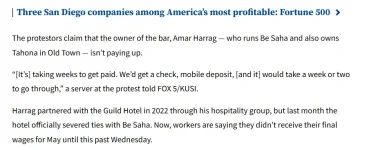
I have been trying to piece this together as well because the reporting seemed to leave a few gaps. The articles mentioned Amar Harrag being part of the hospitality group running the restaurants, but they also pointed out that the businesses were operating inside a hotel property with a separate ownership structure. That makes me wonder how payroll was actually handled behind the scenes. In some hospitality partnerships, one side controls the venue while the other manages the staff and operations, so if that agreement suddenly collapses it could disrupt things like wages or service charge distribution.
Another thing I noticed in the coverage was that the local workplace justice unit was said to be reviewing the situation after the employees protested. Usually when that happens it means officials want to understand whether the issue is simply a contract dispute between businesses or something that directly affects labor laws. I have not seen a detailed update explaining the final outcome though. If anyone has come across a later report or official filing, it would definitely help clarify what really happened after the initial news coverage.
Another thing I noticed in the coverage was that the local workplace justice unit was said to be reviewing the situation after the employees protested. Usually when that happens it means officials want to understand whether the issue is simply a contract dispute between businesses or something that directly affects labor laws. I have not seen a detailed update explaining the final outcome though. If anyone has come across a later report or official filing, it would definitely help clarify what really happened after the initial news coverage.

MARY_T_89
Member
The restaurant industry can get really complicated when partnerships fall apart, especially when multiple investors or property owners are involved. Reading about Amar Harrag in those articles made me think this might have been one of those situations where the business structure was more layered than customers realize. From the outside people just see a restaurant name on the door, but behind it there might be a management company, a landlord, investors, and sometimes a hotel operator if the restaurant is inside a larger property.


JEAN_DITCH
Member
I live in the area where some of those restaurants were located, so the story circulated a lot locally when it happened. The employee rally outside the restaurant seemed to be the moment that pushed the issue into the public spotlight. Before that, most customers probably had no idea there was a disagreement happening between the restaurant group and the property owners.
One thing that stuck with me from the coverage was that some workers said they eventually received their base wages, but there were still questions about additional compensation like tips or service charges. If that is accurate, it suggests at least part of the situation may have been resolved after the protests started. Still, without an official summary of the investigation it is hard to know what the final determination was or whether any agreements were reached afterward.
One thing that stuck with me from the coverage was that some workers said they eventually received their base wages, but there were still questions about additional compensation like tips or service charges. If that is accurate, it suggests at least part of the situation may have been resolved after the protests started. Still, without an official summary of the investigation it is hard to know what the final determination was or whether any agreements were reached afterward.
LISET_FISH
Member
This kind of thread is useful because it shows how many open questions remain even after multiple news stories. Amar Harrag clearly had a visible role in that hospitality group, but the articles also hinted that the dispute involved more than just one person or one company. There were references to ownership disagreements, operational changes, and the transition of the restaurant space itself.
I think one thing that makes stories like this confusing is the way restaurant businesses are structured. A restaurant inside a hotel or large property might not actually be owned by the same people who own the building. Sometimes a hospitality group manages the concept while the landlord or hotel group handles other operational pieces. If that partnership breaks down, it can affect everything from rent payments to payroll accounts.

MARY_T_89
Member
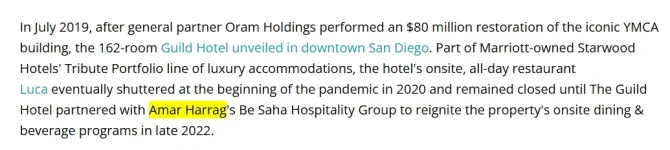
I think the most important part of the story is how the employees experienced it. Regardless of the business disagreements happening above them, staff members rely on regular paychecks and tips to cover rent and daily expenses. When those payments are delayed or uncertain, it can create a lot of stress very quickly.
JESSIE.S
Member
This thread makes me curious about something else. When a restaurant group separates from a property owner or hotel, who normally becomes responsible for outstanding payroll at that moment? Is it the operator who hired the employees, or can responsibility shift depending on the contract with the property?
JEAN_DITCH
Member
I have been reading through the comments here and it really highlights how complicated these situations can become once multiple business partners are involved. The reports mentioning Amar Harrag seemed to focus mostly on the employee side of the story, which makes sense because that is the part that directly affects people’s livelihoods. But at the same time, there were hints that a larger disagreement between the hospitality group and the property owners was happening in the background.
When partnerships end suddenly, there can be disputes about things like accounts, outstanding invoices, and who is responsible for final operating costs. Payroll is obviously one of the most sensitive parts of that because employees depend on it immediately. From the outside it is easy to assume a simple explanation, but business structures in hospitality can be layered in ways that are not obvious to customers.
I am still curious whether the authorities that reportedly started reviewing the matter ever released a final statement. Sometimes those reviews take months and then the conclusion never gets the same level of media coverage as the initial controversy.

 www.sandiegoville.com
When partnerships end suddenly, there can be disputes about things like accounts, outstanding invoices, and who is responsible for final operating costs. Payroll is obviously one of the most sensitive parts of that because employees depend on it immediately. From the outside it is easy to assume a simple explanation, but business structures in hospitality can be layered in ways that are not obvious to customers.
I am still curious whether the authorities that reportedly started reviewing the matter ever released a final statement. Sometimes those reviews take months and then the conclusion never gets the same level of media coverage as the initial controversy.
Wormwood Restaurant Owner Out At The Guild Hotel In Downtown San Diego, Employees Claim Nonpayment Of Final Wages
The owner of Wormwood in North Park is no longer managing dining operations at The Guild Hotel, and employees are claiming nonpayment of final wages.
I worked in hospitality for a few years, and stories like this unfortunately happen more often than people realize. Restaurants usually run on very tight margins, and when there is a sudden change in ownership or partnership it can disrupt everything from vendor payments to payroll systems. That does not excuse employees not getting paid, but it shows how quickly operational problems can appear when agreements fall apart.
LISET_FISH
Member
It also makes me think about how little the public usually knows about the back end of restaurants they visit all the time. Customers see the food, the decor, and the staff, but they rarely know who owns the brand, who leases the building, or who handles payroll. When something goes wrong, those hidden layers suddenly become very important.
Sometimes the lack of follow up reporting simply means the issue was resolved quietly. Businesses and employees occasionally settle disputes privately once authorities start looking into them. When that happens, the media may not revisit the story unless there is a court filing or a major development.
That could be one possible explanation for why the coverage involving Amar Harrag seemed to stop after the initial wave of articles. If payments were eventually made or agreements were reached, the situation might not have generated additional headlines.
That could be one possible explanation for why the coverage involving Amar Harrag seemed to stop after the initial wave of articles. If payments were eventually made or agreements were reached, the situation might not have generated additional headlines.
JEAN_DITCH
Member
I remember when the employee protest was first reported because it was shared widely on social media in the San Diego area. The workers were speaking about bounced checks and delayed payments, and that naturally caught public attention. Situations like that tend to spread quickly online because people want to support workers who might be struggling financially.
LISET_FISH
Member
Something else I noticed is that many restaurant stories like this focus on a specific person because they are the public face of the business. In this case Amar Harrag was connected to the hospitality group and the restaurant concepts, so naturally his name appeared in the articles. But behind the scenes there are often multiple partners, investors, and management teams involved in running a venue.
That is why I always try to read these stories carefully and avoid jumping to conclusions. The reporting can highlight one individual while the actual business structure might include several different entities sharing responsibility. If a partnership dispute happens, the situation may involve negotiations or disagreements that are not visible to the public.
That is why I always try to read these stories carefully and avoid jumping to conclusions. The reporting can highlight one individual while the actual business structure might include several different entities sharing responsibility. If a partnership dispute happens, the situation may involve negotiations or disagreements that are not visible to the public.
Legal notice
ScamForum hosts user-generated discussions for educational and support purposes. Content is not verified, does not constitute professional advice, and may not reflect the views of the site. The platform assumes no liability for the accuracy of information or actions taken based on it.