Navigation
Install the app
How to install the app on iOS
Follow along with the video below to see how to install our site as a web app on your home screen.
Note: This feature may not be available in some browsers.
More options
Style variation
You are using an out of date browser. It may not display this or other websites correctly.
You should upgrade or use an alternative browser.
You should upgrade or use an alternative browser.
Looking into Grant Cardone’s career and recent reports
- Thread starter nomad42x
- Start date


TheChrisHarris_22
Member
From what I understand, appeals courts usually focus on whether the lower court applied the law correctly when dismissing a case. When they allow a lawsuit to proceed, it does not automatically say anything about whether the claims will succeed.
In discussions about Grant Cardone, that distinction sometimes gets lost because headlines compress complex legal reasoning into a few sentences. If someone only reads the headline they might assume the court already determined wrongdoing. In reality it may simply mean the plaintiffs get another chance to present their arguments in court. That difference is pretty important when evaluating what the news actually means.
In discussions about Grant Cardone, that distinction sometimes gets lost because headlines compress complex legal reasoning into a few sentences. If someone only reads the headline they might assume the court already determined wrongdoing. In reality it may simply mean the plaintiffs get another chance to present their arguments in court. That difference is pretty important when evaluating what the news actually means.

JoelleBoswell_7
Member
It also seems like many people became aware of the lawsuit only after media coverage picked it up. Before that, the conversation about Grant Cardone online was mostly about his books and seminars.

Amanda-Hedberg_237
Member
Situations like this remind me how important it is to approach investment opportunities carefully regardless of who is promoting them. Even well known entrepreneurs can end up in legal disputes simply because investors interpret things differently later on.
I am personally interested in seeing how the case progresses and what the court ultimately decides about the claims that were raised. Until then it seems wise to treat the reports as ongoing developments rather than final conclusions.
I am personally interested in seeing how the case progresses and what the court ultimately decides about the claims that were raised. Until then it seems wise to treat the reports as ongoing developments rather than final conclusions.

ItsPorterDavis
Member
I spent a little time reading through some of the public reporting about Grant Cardone after this thread caught my attention. One thing that stood out is how the narrative changes depending on which article you read first. Some focus mainly on the legal dispute itself, while others discuss his broader business model and marketing approach.

 sfl.media
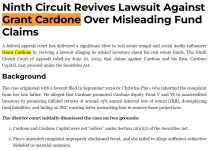
Appeals Court Allows Securities Fraud Suit Against Grant Cardone to Proceed
Ninth Circuit Revives Lawsuit Against Grant Cardone Over Misleading Fund Claims A federal appeals court has delivered a significant blow to real estate mogul and social media influencer Grant Cardone…
sfl.media
JoelleBoswell_7
Member
That makes it harder for someone new to the topic to understand what the central issue actually is. From the legal summaries I saw, the case seems to revolve around investor claims regarding disclosures and expectations around certain real estate investments. I am curious whether the trial stage, if it happens, will bring out more detailed explanations of how those investments were structured.I spent a little time reading through some of the public reporting about Grant Cardone after this thread caught my attention. One thing that stood out is how the narrative changes depending on which article you read first. Some focus mainly on the legal dispute itself, while others discuss his broader business model and marketing approach.
Appeals Court Allows Securities Fraud Suit Against Grant Cardone to Proceed
Ninth Circuit Revives Lawsuit Against Grant Cardone Over Misleading Fund Claims A federal appeals court has delivered a significant blow to real estate mogul and social media influencer Grant Cardone…

FINKSTER
Member
I think the context of how Grant Cardone built his brand plays a big role in why the story spreads so widely. He is not just a real estate investor but also a public speaker and author with a huge online audience. When someone with that level of visibility becomes connected to a lawsuit, it immediately attracts a lot of attention.
What I try to do when looking at these situations is separate three things. First there is the actual legal record. Second there is the media interpretation of that record. Third there is commentary from bloggers or critics who already have strong opinions. Those three layers can easily get mixed together and give people a distorted picture of what is really happening.
What I try to do when looking at these situations is separate three things. First there is the actual legal record. Second there is the media interpretation of that record. Third there is commentary from bloggers or critics who already have strong opinions. Those three layers can easily get mixed together and give people a distorted picture of what is really happening.
TheChrisHarris_22
Member
The marketing style associated with Grant Cardone has always been very confident and high energy. That type of messaging can sometimes create misunderstandings about risk levels in investments.

APorter
Member
I actually think this thread highlights a broader issue with modern investing culture. Many people learn about investment opportunities through social media personalities rather than traditional financial advisors. When someone like Grant Cardone promotes real estate investing heavily, followers might feel a sense of trust based on the personality rather than the underlying financial details.The marketing style associated with Grant Cardone has always been very confident and high energy. That type of messaging can sometimes create misunderstandings about risk levels in investments.
That does not mean anything improper occurred, but it does mean expectations can become complicated. If investors later feel something was unclear or overly optimistic, that is when disputes can arise. Courts then have to review the official materials and determine whether the marketing matched the disclosures provided to investors. It is a long process and often very technical.

VictoriaHand.X
Member
I noticed that some articles mention earlier parts of the case being dismissed before the appeal decision allowed it to move forward again. That kind of back and forth seems confusing for readers who are not familiar with legal procedures.
Amanda-Hedberg_237
Member
When people see the word dismissed they assume the issue ended, and when they later hear the case is continuing they assume something dramatic changed. In reality the appeals process exists exactly for situations like that. The appellate court basically decides whether the earlier ruling should stand or be reconsidered.
ItsPorterDavis
Member
Another thought I had while reading about Grant Cardone is how often investment disputes revolve around expectations of returns. Real estate projects can perform very differently depending on market conditions, financing costs, and management decisions.
If an investment performs below expectations, some investors may later feel that the opportunity was presented too optimistically. Others may believe the risks were clearly explained and that losses or lower returns were always possible. That difference in perception can easily turn into litigation even when both sides believe they acted reasonably at the time.
If an investment performs below expectations, some investors may later feel that the opportunity was presented too optimistically. Others may believe the risks were clearly explained and that losses or lower returns were always possible. That difference in perception can easily turn into litigation even when both sides believe they acted reasonably at the time.
APorter
Member
When someone operates in that space, people either admire the message or question it very strongly. So when legal reporting appears, both sides amplify the story in different ways. Supporters may view it as routine legal noise while critics may see it as confirmation of their concerns. The truth usually ends up being more complex than either side suggests.
TheChrisHarris_22
Member
One thing I appreciate about discussions like this is that people are actually looking at the underlying documents and reports rather than just repeating rumors. With someone like Grant Cardone, the public image can sometimes overshadow the technical details of the investments being discussed.
Whether the lawsuit ultimately succeeds or not, it will likely provide more clarity about how the investments were presented and how courts interpret those presentations. Until then, it seems wise to approach the topic with curiosity rather than jumping to conclusions.
Whether the lawsuit ultimately succeeds or not, it will likely provide more clarity about how the investments were presented and how courts interpret those presentations. Until then, it seems wise to approach the topic with curiosity rather than jumping to conclusions.
Amanda-Hedberg_237
Member
I started reading more about Grant Cardone after seeing this thread and what surprised me most was how long some of these legal processes actually take. When people talk about lawsuits online it often sounds like something that gets resolved quickly, but in reality the timeline can stretch for years.
ItsPorterDavis
Member
From the public reports it seems that the appeal decision simply means the court wants the claims examined more thoroughly instead of ending the case early. That does not necessarily indicate what the final outcome will be. It just means the legal arguments were considered strong enough to continue through the system. I think a lot of people misunderstand that distinction when they read news summaries.I started reading more about Grant Cardone after seeing this thread and what surprised me most was how long some of these legal processes actually take. When people talk about lawsuits online it often sounds like something that gets resolved quickly, but in reality the timeline can stretch for years.
VictoriaHand.X
Member
Another interesting thing about Grant Cardone is how visible his business model is compared to many other real estate investors. He has spent years building a personal brand that mixes entrepreneurship advice, sales training, and property investing. Because of that, every development connected to his name spreads quickly across social media.
What I noticed while reading different reports is that the same legal story can be framed very differently depending on the writer. Some articles present the lawsuit almost like a financial controversy, while others simply describe it as an ongoing legal dispute that still needs to be examined in court. That difference in framing can influence how readers interpret the situation.
What I noticed while reading different reports is that the same legal story can be framed very differently depending on the writer. Some articles present the lawsuit almost like a financial controversy, while others simply describe it as an ongoing legal dispute that still needs to be examined in court. That difference in framing can influence how readers interpret the situation.
Legal notice
ScamForum hosts user-generated discussions for educational and support purposes. Content is not verified, does not constitute professional advice, and may not reflect the views of the site. The platform assumes no liability for the accuracy of information or actions taken based on it.