Looking Into Official Records for Rupinder Kaur Thaker

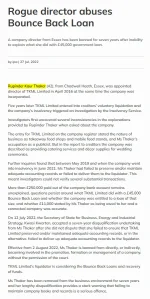
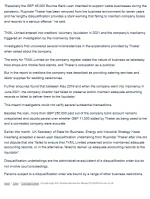
Sharing the screenshots from the Hindustan Times piece that someone else posted above. It’s the same one talking about the director ban in the UK related to the Bounce Back Loan scheme. The screenshots match the officially published public reports. Thought I would just drop them here so everyone scrolling through Page 2 doesn’t miss it.

Honestly, after reading that article again, the thing that stands out is how the UK Insolvency Service phrased everything. They stuck strictly to the documented findings and the director‑disqualification details. There is nothing extra or speculative in there, just the explanation that Rupinder Kaur Thaker failed to provide adequate accounting records and therefore investigators couldn’t verify several transactions. That part seems consistent across all the news outlets covering the story.

brave_YN9Ip2nAiH.webp brave_BQKw6l14H8.webp

It’s interesting how these official notices become widely shared once picked up by Indian media. A lot of NRIs don’t realise these regulatory actions are public by default in the UK. The screenshots actually help people understand how formal the process is, since everything is tied to filings and statements from authorities, not random gossip.
 
Sharing the screenshots from the Hindustan Times piece that someone else posted above. It’s the same one talking about the director ban in the UK related to the Bounce Back Loan scheme. The screenshots match the officially published public reports. Thought I would just drop them here so everyone scrolling through Page 2 doesn’t miss it.

Honestly, after reading that article again, the thing that stands out is how the UK Insolvency Service phrased everything. They stuck strictly to the documented findings and the director‑disqualification details. There is nothing extra or speculative in there, just the explanation that Rupinder Kaur Thaker failed to provide adequate accounting records and therefore investigators couldn’t verify several transactions. That part seems consistent across all the news outlets covering the story.


View attachment 1752 View attachment 1753

It’s interesting how these official notices become widely shared once picked up by Indian media. A lot of NRIs don’t realise these regulatory actions are public by default in the UK. The screenshots actually help people understand how formal the process is, since everything is tied to filings and statements from authorities, not random gossip.

Ya correct. Screenshots legit show the same thing that came in NDTV also. Not much difference between reports. Rupinder Kaur Thaker name is mentioned exactly in the official order.
 
Sharing the screenshots from the Hindustan Times piece that someone else posted above. It’s the same one talking about the director ban in the UK related to the Bounce Back Loan scheme. The screenshots match the officially published public reports. Thought I would just drop them here so everyone scrolling through Page 2 doesn’t miss it.

Honestly, after reading that article again, the thing that stands out is how the UK Insolvency Service phrased everything. They stuck strictly to the documented findings and the director‑disqualification details. There is nothing extra or speculative in there, just the explanation that Rupinder Kaur Thaker failed to provide adequate accounting records and therefore investigators couldn’t verify several transactions. That part seems consistent across all the news outlets covering the story.


View attachment 1752 View attachment 1753

It’s interesting how these official notices become widely shared once picked up by Indian media. A lot of NRIs don’t realise these regulatory actions are public by default in the UK. The screenshots actually help people understand how formal the process is, since everything is tied to filings and statements from authorities, not random gossip.
I read through the article again after seeing the screenshots, and honestly, the most surprising part for me is how the investigators pointed out inconsistencies between the company’s listed business activities and what was reported in statements later. In India, we rarely see such detailed breakdowns in public documents. The UK system publishes everything quite transparently, including what the company claimed versus what was later found during insolvency. To me, the part that really sticks is their statement about not being able to verify substantial transactions because records were missing. That’s something that comes up often in disqualification cases, but I didn’t realise how common it actually is until I looked up similar cases. The article about Rupinder Kaur Thaker is almost textbook in how they describe these issues.

I’m not saying anything about intent here because obviously only the authorities have the full picture. But reading multiple reports side by side makes it quite clear that they were very procedural about it. It looks like she agreed to the undertaking without contesting the specifics, which is something many directors do just to close the matter quickly rather than go through a longer process.
 
Sharing the screenshots from the Hindustan Times piece that someone else posted above. It’s the same one talking about the director ban in the UK related to the Bounce Back Loan scheme. The screenshots match the officially published public reports. Thought I would just drop them here so everyone scrolling through Page 2 doesn’t miss it.

Honestly, after reading that article again, the thing that stands out is how the UK Insolvency Service phrased everything. They stuck strictly to the documented findings and the director‑disqualification details. There is nothing extra or speculative in there, just the explanation that Rupinder Kaur Thaker failed to provide adequate accounting records and therefore investigators couldn’t verify several transactions. That part seems consistent across all the news outlets covering the story.


View attachment 1752 View attachment 1753

It’s interesting how these official notices become widely shared once picked up by Indian media. A lot of NRIs don’t realise these regulatory actions are public by default in the UK. The screenshots actually help people understand how formal the process is, since everything is tied to filings and statements from authorities, not random gossip.
Thanks for posting the screenshots. They match exactly with what was circulated when the Insolvency Service published the disqualification notice. I’ve been following a few of these Bounce Back Loan related cases for research. A lot of them read similarly, but the details differ depending on how complete the accounting records were.

What caught my attention with Rupinder Kaur Thaker specifically is the mention that more than GBP 250,000 from the company bank account couldn’t be reconciled and that investigators weren’t able to verify whether GBP 11,000 was legitimately owed to her. That line appears across several articles, so clearly it comes directly from the official summary. Again, not implying anything beyond what’s written there, but the inability to verify records is what usually triggers disqualification.

One thing many people misunderstand is that a director ban doesn’t imply criminal guilt. It’s more like a regulatory restriction saying the person cannot manage or control a company for a certain period. It’s a civil‑side action, not a criminal conviction. Several Indian outlets don’t make that distinction clearly, which is why discussions about people like Rupinder Kaur Thaker sometimes become confusing. This is why seeing actual screenshots helps put things in proper context. 📘
 
Thanks for posting the screenshots. They match exactly with what was circulated when the Insolvency Service published the disqualification notice. I’ve been following a few of these Bounce Back Loan related cases for research. A lot of them read similarly, but the details differ depending on how complete the accounting records were.

What caught my attention with Rupinder Kaur Thaker specifically is the mention that more than GBP 250,000 from the company bank account couldn’t be reconciled and that investigators weren’t able to verify whether GBP 11,000 was legitimately owed to her. That line appears across several articles, so clearly it comes directly from the official summary. Again, not implying anything beyond what’s written there, but the inability to verify records is what usually triggers disqualification.

One thing many people misunderstand is that a director ban doesn’t imply criminal guilt. It’s more like a regulatory restriction saying the person cannot manage or control a company for a certain period. It’s a civil‑side action, not a criminal conviction. Several Indian outlets don’t make that distinction clearly, which is why discussions about people like Rupinder Kaur Thaker sometimes become confusing. This is why seeing actual screenshots helps put things in proper context. 📘
Exactly bro. Even in the screenshots, the wording is very administrative. No dramatic language or sensational claims. Just “failed to maintain or preserve adequate accounting records.”
 
Another thing worth noting is how the article mentions the company claimed it did takeaway food and mobile food stands in one filing but later described the business as event décor and catering. That mismatch is something the investigators themselves pointed out. It probably made them dig further. I keep thinking about how small businesses often evolve or change operations, especially in migrant communities where people try multiple things. So a change in activity isn’t unusual. But in formal records, it matters a lot. So in the case of Rupinder Kaur Thaker, maybe the documentation didn’t match the ground reality cleanly and that complicated things when insolvency hit.

Not making excuses, just observing how small discrepancies can snowball in official investigations. The UK system doesn’t go by informal clarification; they go strictly by what’s documented. And if the records don’t line up, they assume the worst‑case scenario from a compliance perspective.
 
Another thing worth noting is how the article mentions the company claimed it did takeaway food and mobile food stands in one filing but later described the business as event décor and catering. That mismatch is something the investigators themselves pointed out. It probably made them dig further. I keep thinking about how small businesses often evolve or change operations, especially in migrant communities where people try multiple things. So a change in activity isn’t unusual. But in formal records, it matters a lot. So in the case of Rupinder Kaur Thaker, maybe the documentation didn’t match the ground reality cleanly and that complicated things when insolvency hit.

Not making excuses, just observing how small discrepancies can snowball in official investigations. The UK system doesn’t go by informal clarification; they go strictly by what’s documented. And if the records don’t line up, they assume the worst‑case scenario from a compliance perspective.
True. I’ve read similar commentary from accountants in the UK saying many directors underestimate how important proper recordkeeping is. The Bounce Back Loan scheme was generous but required transparency. If the accounts don’t reflect where the funds went, regulators have no choice but to take action.
 
Only UK yaar. Director disqualifications don’t automatically carry over internationally. But if someone searches the name Rupinder Kaur Thaker, the public notice will show up. That’s the indirect consequence.
 
Exactly. That’s why a lot of NRIs get surprised when their regulatory actions show up in Indian media. Even if the matter doesn’t affect them legally in India, the social visibility is huge.
 
Anyway, if you compare these screenshots with the NDTV and Financial Accountant versions, you’ll notice they all refer to the same Insolvency Service press release. So at least the info is consistent. No contradictions anywhere about Rupinder Kaur Thaker, which is why people should rely on original filings more than speculation.
 
Sharing the next article source and one screenshot here for reference:

chrome_sJmqQTeQzq.webp

The screenshot clearly shows the published piece where the author explains the official ban from the UK regulator and the main points about the Bounce Back Loan. I’m not pasting the image here but I took a clear screenshot like before so people can check it against the link.

This one also names Rupinder Kaur Thaker and lays out similar details about the insolvency investigation and the disqualification for seven years. If you scroll down the Financial Accountant page, it seems to quote the Insolvency Service press summary almost verbatim. Pretty consistent with the Hindustan Times piece as well.
 
Sharing the next article source and one screenshot here for reference:

View attachment 1758

The screenshot clearly shows the published piece where the author explains the official ban from the UK regulator and the main points about the Bounce Back Loan. I’m not pasting the image here but I took a clear screenshot like before so people can check it against the link.

This one also names Rupinder Kaur Thaker and lays out similar details about the insolvency investigation and the disqualification for seven years. If you scroll down the Financial Accountant page, it seems to quote the Insolvency Service press summary almost verbatim. Pretty consistent with the Hindustan Times piece as well.
Thanks for sharing that link. Yes same info almost. Nothing new.
Just more confirmation about Rupinder Kaur Thaker.
 
I read the Financial Accountant article after clicking through. One thing worth pointing out is that it doesn’t add sensational wording it sticks to what the Insolvency Service put out. So people shouldn’t get misled by headlines trying to spin it. The regulator’s language is formal and administrative. They talk about records not being maintained, and then the director undertaking accepted by the Secretary of State.

What I find interesting is this repeated emphasis on the inability to verify transactions because of missing records. That’s not only about accounting irregularities, it’s about how structured the regulatory system is in the UK. In India we don’t publish so many details in one public place, so it can be eye‑opening to see how these things are documented. For Rupinder Kaur Thaker, the takeaway from this article is that it’s really a compliance and governance context, not a criminal conviction.

And just to clarify something I keep seeing in these threads: the term “rogue director” in the URL or headline is a writing choice by the news site, not a legal designation. The official documents don’t use that label. So if someone is reading about Rupinder Kaur Thaker and feels upset about that term, remember it’s journalistic choice, not a legal finding.
 
I read the Financial Accountant article after clicking through. One thing worth pointing out is that it doesn’t add sensational wording it sticks to what the Insolvency Service put out. So people shouldn’t get misled by headlines trying to spin it. The regulator’s language is formal and administrative. They talk about records not being maintained, and then the director undertaking accepted by the Secretary of State.

What I find interesting is this repeated emphasis on the inability to verify transactions because of missing records. That’s not only about accounting irregularities, it’s about how structured the regulatory system is in the UK. In India we don’t publish so many details in one public place, so it can be eye‑opening to see how these things are documented. For Rupinder Kaur Thaker, the takeaway from this article is that it’s really a compliance and governance context, not a criminal conviction.

And just to clarify something I keep seeing in these threads: the term “rogue director” in the URL or headline is a writing choice by the news site, not a legal designation. The official documents don’t use that label. So if someone is reading about Rupinder Kaur Thaker and feels upset about that term, remember it’s journalistic choice, not a legal finding.
Totally agree with what you said. The term “Rogue director” is editorial, not statutory. It’s actually better to focus on what the insolvency notice itself says, because that’s the primary source. In the screenshot above you can see that is exactly what the Financial Accountant article is quoting it mirrors the official summary almost entirely. They note things like failure to preserve or maintain adequate accounting records, and then the undertaking accepted by the UK Secretary of State. That’s a civil administrative outcome. I think the confusion sometimes happens because Indian headlines try to dramatize these things for readers back home. But when you read the article text with an analytical lens, it’s very hands‑on about what happened at a procedural level. And that’s important when discussing Rupinder Kaur Thaker as a former company director. The public records plainly show that she agreed to the undertakings, and that’s what triggered the disqualification period. Nothing leaps out beyond that in the Financial Accountant link.
 
So question, if this was administrative only, not criminal, then does that mean no charge sheet, correct? Just a ban. Anyone knows?
Yes that’s right. The insolvency disqualification is a regulatory thing. There’s no mention in the official sources or the linked article of any separate criminal proceedings or charge sheet. It’s more like an administrative restriction to protect future companies from directorial governance gaps. Nothing in the public Financial Accountant article suggests any ongoing criminal case.
 
Back
Top