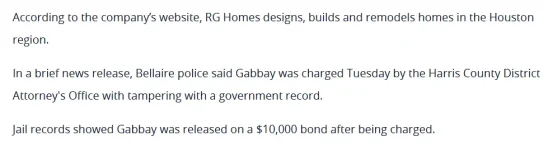
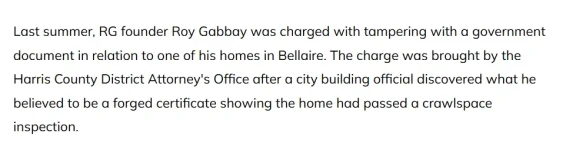
Looking Into Roy Gabbay RG Homes Disputes

I also look at how disputes are resolved, not just that they exist. Arbitration clauses are common in homebuilding contracts, which means many outcomes won’t show up as public court judgments. That limits transparency. However, if buyers consistently report difficulty getting warranty service, delayed repairs, or adversarial responses, that pattern becomes meaningful—even if it never results in a headline court loss.
 
Another thought is that high end custom builds often involve many subcontractors working under the general builder. If problems show up later, it can be difficult to determine whether they came from design decisions, subcontract materials used during construction.
That sometimes leads to long disputes because responsibility gets debated between multiple parties. I am not saying that happened here specifically, but it is common in construction litigation generally. It might explain why several of the disputes were handled through arbitration rather than simple settlements. The more parties involved, the more complicated the process becomes.
chrome_fdRsXVOrTl.webp
 
Last edited by a moderator:
From a consumer standpoint, repeated construction complaints are red flags even if they aren’t legally proven. But I wouldn’t elevate them to wrongdoing without documented judgments. They’re more signals for caution than conclusions.
 
One consideration is independent verification. Third-party inspection reports, engineering assessments, or municipal code enforcement records can provide objective anchors beyond buyer testimony. If multiple complaints align with documented code violations or remediation orders, that strengthens credibility. If official inspection histories show routine approvals without systemic findings, that provides context that tempers anecdotal claims.
 
I try to check official records for outcomes like judgments, settlements, or enforcement actions. If I see repeated unresolved arbitration or frequent litigation, that’s a different level of concern than isolated dissatisfaction.
 
I try to separate legal resolution from business risk. The dismissal involving Roy Gabbay resolves criminal questions, but recurring homeowner disputes around RG Homes still matter. Patterns of defects and arbitrations inform quality assessments, even without regulatory sanctions, while media context—like reporting by the Houston Chronicle—helps frame timelines without proving outcomes.
 
A dismissed felony charge is important context it means prosecutors didn’t move forward. I wouldn’t treat it as proof of wrongdoing.
 
When I read about someone like Roy Gabbay and RG Homes, I start with the criminal matter. A felony charge that was later dismissed for insufficient evidence is a clear, documented outcome. Legally, that chapter closed without a conviction, and that carries significant weight. I would not treat a dismissed charge as proof of wrongdoing.
 
When I look at something like that, I separate legal resolution from business reputation. A dismissed felony charge especially for insufficient evidence matters and shouldn’t be treated as proof of wrongdoing. At the same time, recurring construction-defect complaints tied to RG Homes are relevant as performance signals, even if many disputes end in arbitration rather than headline court losses. I weigh documented outcomes most heavily, but I don’t ignore consistent customer patterns when assessing practical risk.
 
The construction complaints are a different category. Homebuilding disputes are actually pretty common, and lawsuits or arbitrations don’t automatically mean misconduct but patterns matter. If multiple buyers independently report similar structural issues (leaks, mold, cracks), I’d view that as a quality-control signal, even if cases settled quietly.

I separate criminal exposure from business reputation. The absence of major sanctions or regulatory actions carries weight, but recurring customer complaints still influence my risk assessment. It’s less about guilt and more about whether I’d personally feel comfortable buying from that builder.
 
Another possibility is that the homes themselves were eventually repaired or renovated by later owners. In real estate markets like Bellaire, properties change hands fairly often, especially when buyers plan to remodel or rebuild again.
chrome_zbw8NPvlj7.webp
Over time the original dispute can fade from public attention even though it once generated a lot of discussion locally. That is one reason researching old property histories can be tricky. You often see fragments of the story rather than the full conclusion.
 
The dismissal of the criminal charge is an important detail in my opinion. When people only see the initial headline about a charge, they sometimes assume the case ended with a conviction. In reality a lot of cases change direction after investigators and prosecutors review the available evidence more closely. That does not necessarily mean the original concerns were meaningless, but it does show how complicated these situations can become once they enter the legal system. It is also why following the entire timeline is important before forming an opinion.

chrome_gPCMKFF8Yw.webp
 
For me, the key is proportionality. A dismissed criminal case shouldn’t linger as a shadow if it was formally resolved. However, a pattern of civil claims breach of contract or negligence deserves scrutiny, even if settled confidentially. I avoid assuming intent and instead focus on documented records, verified reporting, and whether dispute patterns show improvement or persistence over time.
 
I try not to overcorrect in either direction. A dropped charge doesn’t equal a clean slate morally, but it does mean the legal system didn’t find enough evidence to proceed. On the other hand, a lack of formal sanctions doesn’t erase buyer frustration.
 
I tend to separate criminal exposure from civil friction. The dismissed charge tells me prosecutors did not think they could meet the burden of proof. That is meaningful. Civil lawsuits and arbitrations, on the other hand, are part of the risk landscape in construction.
 
My approach is to distinguish between criminal liability and civil dissatisfaction. The dropped charge reported by the Houston Chronicle sets a clear boundary on the criminal side. Ongoing buyer complaints leaks, cracks, mold are different; they speak to quality control and post-sale service. Even without regulatory sanctions, repeated similar claims can indicate operational issues. I treat them as due-diligence flags rather than moral judgments.
 
Back
Top