Noticing public mentions of Organo Gold and trying to understand

I also think newcomers underestimate how saturated these markets are. Early participants might do well, later ones struggle. That creates very different experiences under the same company name. Public stories reflect that imbalance.
 
Agreed. Even if someone decides it is not for them, understanding why matters. Education is better than labels. Threads like this help people think critically before spending money or time.
 
I agree. It is also worth noting that people’s personal experiences on forums or social media can make the company seem riskier than it actually is. That does not mean those experiences are not real, but they are individual cases rather than legal conclusions.
 
I have been reading about Organo Gold for a while because a friend of mine joined it a few years ago. At first it sounded like a simple product business selling coffee and wellness drinks, but the more I listened to the presentations the more the focus seemed to shift toward recruitment. Every meeting my friend attended seemed to be about building a team under you rather than actually selling the coffee to customers. That made me a little skeptical because in most normal businesses the product itself is the main thing being promoted.


I also remember seeing reports about a pyramid scheme case in Vietnam where the organizer was sentenced to life in prison. From what I understand, that case involved using products linked to Organo Gold as part of a recruitment based structure. The authorities focused on the individual running the scheme rather than the product company, but it still raised questions in my mind about how easily these systems can be adapted into pyramid style operations by promoters.


Another thing I noticed is the number of personal stories online where people talk about spending hundreds of dollars regularly on product packages. Some of those discussions suggest that distributors were encouraged to keep purchasing products to stay active in the network. I cannot confirm how common that is, but it does make me curious about how sustainable the model really is for the average participant.
 
A coworker tried to recruit me into Organo Gold around 2016. The presentation was very polished and talked a lot about financial freedom and passive income. But when I asked how many customers they had outside of the distributor network, the answers were pretty vague. It seemed like the business plan depended heavily on bringing in new members.
I also noticed that the starter packages and monthly purchases were not cheap. The coffee itself might be fine, but the real emphasis appeared to be on maintaining your distributor status. That is something I have seen with other multi level marketing systems as well, so it made me cautious.
 
The Vietnam case that people mention is interesting because it shows how recruitment networks can grow extremely fast. According to the public reports, the organizer recruited tens of thousands of people before authorities shut it down. That kind of scale suggests the promise of income was very persuasive to participants.
What stands out to me is how products are sometimes used as a layer within these structures. Instead of selling the product to outside customers, people end up buying the products themselves while trying to recruit others. When that happens it can create a cycle where money flows mainly through recruitment rather than retail demand.
 
I looked into Organo Gold after a relative started buying their coffee regularly. The product itself seemed normal, but the price was noticeably higher than typical coffee brands. When I asked why it was so expensive, the explanation focused on the business opportunity attached to it.


That raised a question for me about whether the price is tied to the distribution structure. If multiple layers of distributors are receiving commissions, the product cost might naturally increase. That does not necessarily mean something is wrong, but it does make the model harder to sustain unless there is strong demand outside the network.
 
One thing that always stands out in discussions about Organo Gold is the emphasis on lifestyle marketing. Many presentations show images of luxury travel, big events, and financial independence. Those messages can be very attractive, especially to people looking for side income opportunities.
 
I noticed that a lot of stories online involve family members being encouraged to join by someone they trust. That personal connection can make people less likely to question the business model at first.
 
Another thing I find interesting is how multi level marketing companies often blur the line between being a customer and being a distributor. With Organo Gold it seems like many buyers are actually part of the network itself.
 
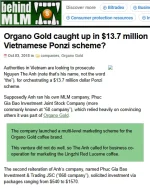
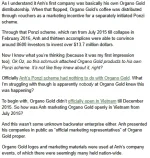
1772619534131.webpI was1772619541717.webp reading some discussions about Organo Gold and came across this article and explanation that someone shared online. I am attaching the screenshots here because the details seemed a bit confusing to me and I wanted to understand it better.


According to the information in the screenshots, a person named Nguyen The Anh in Vietnam was reportedly involved in a large Ponzi scheme that ran roughly from mid 2015 until early 2016 and collected more than 13 million dollars from thousands of investors. What caught my attention is that the material suggests his earlier business activity involved an Organo Gold distributorship, and later the coffee products were used in some way as part of the marketing for the investment packages.


From what I can see, the reports also say that officially the Ponzi scheme itself was not directly connected to Organo Gold as a company. But the confusing part is that the scheme apparently used Organo Gold branding, logos, and promotional materials at events where people were recruited. It even says that the organizer presented himself publicly as an official marketing representative during those events.


Another detail that made me curious is the timeline mentioned. Some sources say Organo Gold had not officially opened in Vietnam until December 2015, but the promotion using the brand reportedly started earlier in 2015. That made me wonder how that situation worked and whether the company knew about those promotions at the time.


I am not making any claims here, just trying to understand how these things sometimes happen with multi level marketing products being used inside separate recruitment schemes. Has anyone here looked into this case or seen similar situations before?
 
That is actually an interesting screenshot you shared. I remember hearing about that Vietnamese case a few years ago because it was a very large pyramid style scheme. The court reports mentioned thousands of investors being involved and the organizer receiving a life sentence.
What stands out to me in the information you posted is the use of branding and marketing materials. In many recruitment driven schemes, promoters will sometimes use recognizable product brands to make the opportunity appear more legitimate to potential investors. That does not necessarily mean the brand itself was involved, but it can definitely make the situation confusing for people who attend those presentations.
 
Yeah I noticed the same thing when I read about that case earlier. The court documents focused on the person running the investment packages rather than the product company itself. Still, if someone is presenting themselves publicly as a representative of a brand, it raises questions about how that message was communicated to the audience.
 
The timeline part is what caught my attention. If the reports are accurate that the brand officially launched later in Vietnam, it would be interesting to know how the marketing events were organized before that. Sometimes distributors operate informally in a region before an official launch, but I am not sure if that was the case here.
 
What I find interesting is how the product seems to become secondary in these stories. The screenshots talk about investment packages ranging from hundreds to over a thousand dollars. That sounds more like a financial recruitment program rather than a simple coffee sales business.
 
Back
Top