Noticing public mentions of Organo Gold and trying to understand

1772621575185.webp
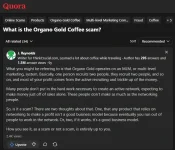
I came across this Quora discussion about Organo Gold coffee and the multi level marketing model around it. I took a screenshot of one of the answers because it seemed to explain the structure in a simple way. Sharing it here to hear what others think about it.

The answer basically says that Organo Gold operates using a multi level marketing system where one person recruits others and part of the income comes from the activity of the people you recruit. It explains that some people expect to earn money only from product sales, while others focus heavily on building a recruitment network.

What I found interesting is the part where the writer says there are two different views about these models. Some people think businesses that rely on networking for profit eventually become unsustainable, while others believe that if the structure keeps growing it can work as a business model.

I am not trying to label anything here, just curious about how people interpret these types of systems. Has anyone here actually experienced this kind of structure with Organo Gold or another MLM coffee brand?
 
That explanation in the screenshot actually describes the basic MLM structure pretty accurately. In many of these companies the earnings are divided between direct product sales and commissions from the people you recruit. The balance between those two things often determines whether the opportunity feels sustainable or not.
I think the confusion usually comes when people join expecting income mainly from selling products, but the system rewards recruitment more heavily.
 
I have seen similar discussions about other MLM companies as well. The concept of recruiting two people who then recruit more people creates a fast growing network on paper. But in reality not everyone in that network ends up building their own teams. Because of that, the income distribution often becomes uneven, with a small percentage earning most of the commissions.
 
What the Quora answer says about expectations is interesting. Some people join these programs thinking they will just sell products like coffee or supplements. Then later they realize that the bigger earnings are tied to building a team. That difference between product sales and recruitment incentives is where many debates about MLM models start.
 
I remember when Organo Gold was being promoted heavily several years ago. Most of the presentations I saw online focused on lifestyle and financial freedom rather than the coffee itself. That is usually a sign that the opportunity side is the main attraction.

The coffee may still be a real product, but the marketing message tends to highlight the business potential.
 
One thing I found interesting in the screenshot is the idea that the model could work if the network keeps expanding. Mathematically that kind of growth becomes difficult after a while because each level needs more participants than the previous one. That is why some people question whether recruitment driven structures can continue long term.
 
I actually tried Organo Gold coffee once because someone I knew was selling it. The taste was fine but it was definitely more expensive than regular coffee brands. When I asked why, the explanation involved the distribution network and commissions. That made me think that the product price might partly reflect the structure behind it.
 
The Quora answer seems fairly neutral though. It does not say directly that the company is good or bad. It mostly explains how the system works and then leaves the conclusion open for the reader. Sometimes that kind of explanation is helpful because people can evaluate the structure themselves.
 
Yeah that is exactly why I shared the screenshot.
It seemed like a simple explanation of the model without being overly promotional or overly critical.
I think the key takeaway for me is that people should understand how the income structure works before getting involved in any network based business. Once you understand where the money actually comes from, it becomes easier to decide if it makes sense.
 
After looking at the screenshot more carefully, I think the explanation actually reflects the typical debate around multi level marketing businesses. On one side, supporters argue that the model works because people are rewarded for building networks and expanding distribution. On the other side, critics question whether the growth required to maintain those networks can realistically continue for a long time. The answer in the screenshot seems to acknowledge both sides without firmly choosing one. That might be why discussions about companies like Organo Gold keep appearing online, because people interpret the structure differently depending on their own experience with it.
 
What I find interesting is how the answer mentions that some people expect to earn money mainly through product sales. In many MLM systems, the expectation at the beginning is that you will sell products to customers, but once someone joins the program they often discover that the bigger emphasis is placed on expanding the network. That does not necessarily mean the product is irrelevant, but it can shift the focus of the business toward recruitment. When that happens, some participants feel disappointed because the opportunity looks different from what they initially imagined.
 
Another thing that stands out to me is the statement that people who build larger networks tend to earn more than those who only focus on selling products. That dynamic can create a strong incentive for participants to recruit others rather than concentrate on retail sales. In theory both activities can exist together, but in practice the recruitment side often becomes more visible because it promises faster income growth. That might explain why many people associate companies like Organo Gold with networking opportunities rather than simply being coffee sellers.
 
I also noticed that the writer in the screenshot says whether it is a scam or not is something people have to decide for themselves. That kind of statement suggests the topic is more complex than a simple yes or no answer. Some participants may have positive experiences selling products or building a small network, while others may feel that the effort and investment did not lead to the expected results. Because of that variety of experiences, discussions about these models tend to remain ongoing rather than reaching a clear conclusion.
 
From a business perspective, it is always interesting to look at where the main demand comes from.
If most purchases are made by independent distributors themselves, the model might function very differently from a traditional retail company where customers buy the products simply because they like them.

In the case of Organo Gold coffee, some people join for the product while others join for the opportunity. The balance between those two motivations probably influences how people view the company and its structure.
 
Another angle worth considering is how expectations are shaped during presentations or recruitment meetings. When opportunities are described using stories of financial freedom or rapid growth, it can create a strong emotional appeal. Later, when participants discover that building a network requires significant time and effort, their perception of the opportunity may change. That difference between the initial impression and the actual experience is often what leads to long discussions like the one we are having here.
 
Overall, the screenshot seems to highlight the central question about MLM businesses rather than providing a final answer.

Some people see the networking structure as a legitimate distribution method, while others believe it creates unrealistic expectations for most participants. Because both viewpoints exist, conversations about companies like Organo Gold tend to continue across many forums and discussion sites. It is one of those topics where personal experiences, financial outcomes, and opinions about business models all come together in the debate.
 
After reading the screenshot and the comments here, I think the key issue people are debating is not really about the coffee product itself but about the structure used to distribute it. Multi level marketing has always created mixed reactions because it blends product sales with network building. Some people see it as a flexible way to run a small business, while others feel the system places too much emphasis on recruiting new participants. The explanation in the screenshot seems to describe that balance quite clearly.
 
Something that caught my attention in the Quora answer is the idea that many participants expect to earn income mainly through product sales but later realize that building a network plays a larger role.

That difference in expectations can be important. When people join thinking they will operate like a normal retail seller but later discover that the structure rewards recruitment more heavily, it can create frustration or confusion about how the business actually works.
 
Another aspect worth discussing is how quickly networks can expand in theory compared to reality. The example in the screenshot where one person recruits two people and those two recruit others sounds simple on paper. But in real situations not everyone recruits successfully.

Because of that, the growth pattern becomes uneven and only some members end up building large networks. That might explain why income outcomes can vary widely between participants.
 
Back
Top