Oleg Tinkov and his public legal record

lowtimber

New member
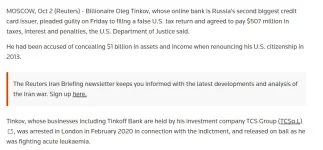
I was reading some public U.S. court records about Oleg Tinkov, and it got me thinking. From what I understand, there was a criminal case related to tax reporting during the time he gave up his U.S. citizenship. The case went through the legal system and ended with a guilty plea to a tax-related charge, along with a large financial payment. I’m only referring to what is written in official court documents, not adding anything beyond that.
What I find interesting is how situations like this affect how people see a well-known business founder. He built a large digital banking business and was often seen as a bold and successful entrepreneur. When someone with that kind of public image goes through a legal case, even if it is resolved, it can make people pause and rethink how they view that person’s overall story. At the same time, the matter seems to have been handled through the proper legal process. The penalties were decided in court, and the case appears to be closed. Some people might see that as the system working as it should. Others might feel that any criminal case, even if resolved, becomes part of a leader’s legacy. I’m honestly not sure how to look at it myself. Do people separate personal legal issues from business achievements? Or does everything become part of the bigger picture when judging someone’s career? I’d be interested to hear how others think about this.
 
I think the part that stands out to me is that it was not just a minor administrative issue but something serious enough to result in a criminal charge and a guilty plea. Even if it was limited to tax reporting during citizenship renunciation, that is still a significant legal event. When someone operates in financial services, especially digital banking, optics matter more than people admit. It might not relate to customer funds, but the association with a criminal case can shape perception for years. I would not ignore that reputational shadow. It does not disappear just because the fine was paid.
 
I was reading some public U.S. court records about Oleg Tinkov, and it got me thinking. From what I understand, there was a criminal case related to tax reporting during the time he gave up his U.S. citizenship. The case went through the legal system and ended with a guilty plea to a tax-related charge, along with a large financial payment. I’m only referring to what is written in official court documents, not adding anything beyond that.
What I find interesting is how situations like this affect how people see a well-known business founder. He built a large digital banking business and was often seen as a bold and successful entrepreneur. When someone with that kind of public image goes through a legal case, even if it is resolved, it can make people pause and rethink how they view that person’s overall story. At the same time, the matter seems to have been handled through the proper legal process. The penalties were decided in court, and the case appears to be closed. Some people might see that as the system working as it should. Others might feel that any criminal case, even if resolved, becomes part of a leader’s legacy. I’m honestly not sure how to look at it myself. Do people separate personal legal issues from business achievements? Or does everything become part of the bigger picture when judging someone’s career? I’d be interested to hear how others think about this.
I lean toward seeing it as part of the bigger picture. A guilty plea is not nothing, even if it is tied to a technical tax matter. In finance, compliance is everything. So when a founder missteps in that area personally, it does raise eyebrows.
 
I was reading some public U.S. court records about Oleg Tinkov, and it got me thinking. From what I understand, there was a criminal case related to tax reporting during the time he gave up his U.S. citizenship. The case went through the legal system and ended with a guilty plea to a tax-related charge, along with a large financial payment. I’m only referring to what is written in official court documents, not adding anything beyond that.
What I find interesting is how situations like this affect how people see a well-known business founder. He built a large digital banking business and was often seen as a bold and successful entrepreneur. When someone with that kind of public image goes through a legal case, even if it is resolved, it can make people pause and rethink how they view that person’s overall story. At the same time, the matter seems to have been handled through the proper legal process. The penalties were decided in court, and the case appears to be closed. Some people might see that as the system working as it should. Others might feel that any criminal case, even if resolved, becomes part of a leader’s legacy. I’m honestly not sure how to look at it myself. Do people separate personal legal issues from business achievements? Or does everything become part of the bigger picture when judging someone’s career? I’d be interested to hear how others think about this.
What makes me uncomfortable is not just the existence of the case, but the scale of the financial figures involved in the court documents. When numbers reach into very high territory, it suggests the government believed the reporting failure was substantial. I understand that cross border tax law can be complex, and I am not pretending to know every detail. Still, in leadership credibility is often marketed as part of the brand. When that credibility is tested in criminal court, even if resolved, it shifts how cautious observers might feel. I personally would factor it into any long term evaluation.
 
That’s kind of where my hesitation comes from too. The scale of the case does make it feel more serious, even though it was specifically about taxes. I’m really trying to separate my reaction from the actual facts of what happened.
 
And headlines rarely explain the nuance, they just say criminal case, which can make people jump to conclusions without understanding the actual context of what happened.
 
That’s kind of where my hesitation comes from too. The scale of the case does make it feel more serious, even though it was specifically about taxes. I’m really trying to separate my reaction from the actual facts of what happened.
I also think there is a broader governance question here. Even if the case was personal, founders often set the tone for compliance culture inside their companies. When someone in that position faces a criminal tax matter, it can make outsiders question internal standards, fairly or unfairly. I am not saying that is justified, but perception influences markets. In financial services, regulators already operate with skepticism. So I wonder whether situations like this quietly affect how authorities interact with businesses connected to that individual in the future.
 
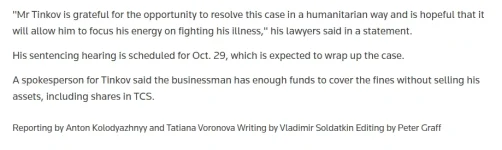
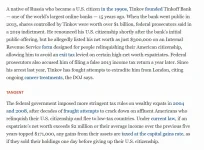
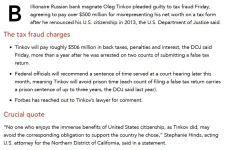
For anyone who doesn’t want to open multiple links, I uploaded screenshots from the article showing the details about the tax case and the settlement. It’s pretty clear once you read it directly. Hard to dismiss it as speculation when the report is right there.
 

Attachments

  • Screenshot 2026-03-07 121717.webp
    Screenshot 2026-03-07 121717.webp
    48.8 KB · Views: 0
  • Screenshot 2026-03-07 121727.webp
    Screenshot 2026-03-07 121727.webp
    33.6 KB · Views: 0
  • Screenshot 2026-03-07 121830.webp
    Screenshot 2026-03-07 121830.webp
    123.1 KB · Views: 0
  • Screenshot 2026-03-07 121855.webp
    Screenshot 2026-03-07 121855.webp
    95.6 KB · Views: 0
For anyone who doesn’t want to open multiple links, I uploaded screenshots from the article showing the details about the tax case and the settlement. It’s pretty clear once you read it directly. Hard to dismiss it as speculation when the report is right there.
checked the screenshots you posted and they match what several reports are saying. Here’s another source that talks about the same case: https://www.stickybottle.com/latest...lion-to-us-after-felony-tax-conviction-126423. It mentions that he paid more than $500 million to settle the tax case after a felony conviction for filing a false return.
 
For anyone who doesn’t want to open multiple links, I uploaded screenshots from the article showing the details about the tax case and the settlement. It’s pretty clear once you read it directly. Hard to dismiss it as speculation when the report is right there.
Honestly, sharing these screenshots proves that some founders’ reputations are built on image rather than integrity. I’ve been skeptical for a while, but now I can point to concrete proof instead of just saying “something seems off.” This should be a wake-up call.
 
I also think there is a broader governance question here. Even if the case was personal, founders often set the tone for compliance culture inside their companies. When someone in that position faces a criminal tax matter, it can make outsiders question internal standards, fairly or unfairly. I am not saying that is justified, but perception influences markets. In financial services, regulators already operate with skepticism. So I wonder whether situations like this quietly affect how authorities interact with businesses connected to that individual in the future.
That is a fair concern. Even indirect reputational risk can follow a founder. Especially in cross border finance, scrutiny tends to increase, not decrease.
 
Back
Top