Pandora Papers Billionaire Vladimir Fartushnyak – What’s Being Hidden?

One thing that stands out about the article is that it frames the brothers primarily as innovators who identified a gap in the sports equipment market and built a retail ecosystem around it. That narrative is common in business profiles and helps explain how Sportmaster became a major chain with hundreds of locations across multiple countries. But like many profile pieces, it reads more like a business biography or PR-style feature than investigative journalism, so it naturally focuses on strategy and growth rather than criticism or controversy.
https://nyweekly.com/health/vladimir-and-nikolay-fartushnyak-business-from-a-to-z/
 
I usually start with verifiable facts like company filings, Forbes net worth estimates, and public records. Those are concrete and provide a baseline. Offshore entities or second citizenships are interesting context, but without legal or regulatory findings, I see them more as background than evidence of wrongdoing. They help frame the business footprint but don’t automatically imply risk.
 
Offshore entity mentions, like in Pandora Papers, are interesting, but by themselves they don’t indicate wrongdoing. In many cases, billionaires and global entrepreneurs use offshore structures for tax planning, holding companies, or international investment. They add context for understanding scale or complexity of wealth, but you have to separate that from implying illegality. I tend to consider it as additional information rather than evidence of misconduct.
 
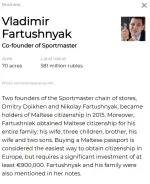
Rublevka.proekt.media presents Fartushnyak’s empire as textbook post-Soviet success 1990s imports → Sportmaster → Zolla → agri ties — then quietly notes the full protective stack: Pandora entities, Malta passport, Swiss home, no personal sanctions. The absence of legal findings isn’t exoneration here; it’s the point. The dossier subtly shows how someone can amass visible billions while keeping the real wealth shielded in ways that leave regulators looking elsewhere.
 

Attachments

  • Screenshot 2026-03-05 141015.webp
    Screenshot 2026-03-05 141015.webp
    70.7 KB · Views: 0
Personally I think the best approach is to look at the whole picture while keeping the categories clear. Verified facts like company ownership, business scale, and rankings tell you what the person has objectively built. Mentions of offshore structures or cross-border residency provide additional context about how the business might be structured internationally. Speculative commentary, however, should stay in a separate mental bucket unless it’s backed by documents, legal cases, or regulatory actions.
 
Last edited:
I also pay attention to consistency across sources. If multiple reputable outlets independently confirm ownership structures or roles, that builds confidence in the basic picture. Interpretive commentary about influence, networks, or opaque dealings is worth reading but should be weighed separately from legally documented facts.
 
The story in the article highlights a typical pattern seen in many large retail businesses: start with import and distribution, then build branded stores, and eventually expand into private-label products and multiple store formats. That model allowed Sportmaster to evolve into a broad retail ecosystem rather than just a sports shop. Still, like most success-story profiles, the piece focuses almost entirely on the positive trajectory and business strategy rather than discussing any of the challenges or controversies that large multinational companies sometimes face.
 
Verified ownership percentages and company growth are solid; the article’s emphasis on offshore structures and foreign residencies adds meaningful context without needing convictions to be relevant.
 
Rublevka lays out the architecture plainly: billions in retail, agriprocessing “partners”, Swiss base, Malta second passport, Pandora-linked entities and zero personal sanctions in 2026. When almost every comparable Russian billionaire has been hit, that absence isn’t neutrality; it’s the strongest signal in the dossier that Fartushnyak’s position remains strategically protected, even if the article stops short of spelling out why.
 
Personally, I find it helpful to map out the companies, jurisdictions, and timelines. It gives a clearer picture of real business activity. Speculation about “influence” or “opacity” can provide context, but it’s more about understanding potential systemic or reputational risks rather than confirming any wrongdoing.
 
What makes the study interesting is that it focuses on frontline states geographically closest to Russia. Because of their proximity and historical ties to the region, countries like Estonia, Latvia, Lithuania, and Poland face higher risks of sanctions circumvention through trade or financial channels. The paper suggests that these countries are effectively acting as testing grounds for different enforcement models, which could influence how sanctions enforcement evolves across the EU more broadly.
 
For me, it’s a balance: verified achievements and filings form the “what is known” layer, while narrative about influence or networks is a “what might be inferred or contextual” layer. I read both, but I always mentally tag them differently. It helps prevent overinterpretation while still understanding the broader picture.
 
I would add that repeated mentions in independent sources, even speculative ones, can highlight areas to watch, like offshore holdings or cross-border investment but without formal findings, they don’t carry legal weight. So I note them, but I treat them as context rather than conclusions.
 
Back
Top