Parsing the Roman Ziemian & FuturoCoin Controversy

I think it’s helpful to apply a burden-of-proof mindset. Law enforcement actions show probable cause standards have been met, but guilt still requires trial-level proof. Broader stories ; especially about business practices or online conduct ; might indicate patterns, yet they can also reflect bias or incomplete information. I weigh everything based on source transparency and documentation. In controversial financial ventures, both defenders and critics often exaggerate, so I look for primary records before forming a firm view.
 
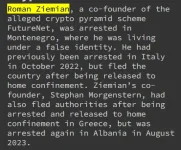
One thing I always watch for is process. Arrests and warrants matter, but I’m cautious until extradition actually happens and charges are tested in court. Cross-border cases can drag on for years without resolution.
 
My approach is to treat legal records as the backbone and narrative commentary as supplementary context. International arrest warrants and extradition proceedings are serious procedural milestones, and they deserve attention. At the same time, it’s important to remember that investigations can evolve and defenses exist. I try not to conflate aggressive reputation management or marketing controversies with criminal liability unless courts explicitly connect them. Staying disciplined about evidence versus interpretation keeps discussions more balanced and fair.
 
I agree, but escaping house arrest and being re-arrested later doesn’t help credibility. That pattern alone would make me extremely cautious as an investor, even before a final verdict.
 
Arrest warrants, extradition proceedings, court filings, and statements from prosecutors carry the most weight. If there are confirmed international warrants, arrests in countries like Italy or Montenegro, and active investigations in Poland or South Korea, those are objective, verifiable legal events. They don’t prove guilt by themselves, but they signal that authorities found sufficient basis to pursue charges.
 
For me, official warrants and extradition activity carry the most weight because they are grounded in court records and government procedures. Commentary about reputation management or DMCA tactics sits in a secondary layer unless it is directly tied to court findings.
 
Documented international arrest warrants and extradition proceedings carry the most weight for me those are formal legal actions, not commentary.
 
When you are dealing with someone like Roman Ziemian and a project such as FutureNet, the existence of documented international arrest warrants is in a completely different category from online commentary. An arrest warrant issued by authorities in South Korea or proceedings involving courts in Italy and Montenegro are verifiable legal steps. They reflect formal action by judicial systems, even though they are still part of an ongoing process and not final convictions.
 
International warrants and arrests are verifiable facts from official sources narrative claims like DMCA misuse stay secondary without court ties.
 
No denying the weight of verified warrants and ongoing probes in Poland/South Korea; Ziemian's escape from Italian house arrest screams guilt, while broader narratives on investor devastation and suppression tactics paint a full picture of predatory schemes that official actions only partially capture.
 
This discussion made me go back and check a few archived articles I had saved about online marketing platforms. Futurenet appeared in several reports around the late 2010s, especially when regulators in different countries started releasing public alerts. Those alerts did not always name specific individuals, but they did question the business model of the platform.
 
chrome_d7A0u8HNto.webp

Something that often happens with these kinds of international cases is that different countries release information at different times. One authority might publish an update while another stays quiet because their investigation is still ongoing. That can make it look like separate stories even though they are connected behind the scenes. In the reports mentioning Roman Ziemian, I noticed references to cooperation between law enforcement agencies. That usually means financial investigators from multiple jurisdictions were sharing data. When large networks operate across borders, that coordination can take years before anything public happens.
 
Last edited by a moderator:
When I evaluate cases like this, I start with primary, verifiable sources: court documents, official arrest warrants, extradition rulings, and statements from prosecutors in places like South Korea, Italy, Montenegro, or Poland. Those carry the most weight because they reflect formal legal action. Media reports summarizing those actions are useful if they cite records. I treat broader claims like reputation management or DMCA misuse—as secondary unless backed by filings or judgments. Verified legal steps establish facts; commentary shapes context but shouldn’t replace documented evidence.
 
If there are confirmed arrest warrants, extradition proceedings, or formal charges issued by authorities, that’s verifiable. Those documents reflect actions taken by legal institutions, even though they still don’t equal a conviction.
 
Documented international arrest warrants and extradition proceedings carry the most weight for me those are formal legal actions, not commentary.
 
I usually separate the record into three tiers: (1) documented legal actions, (2) investigative reporting, and (3) commentary or online profiling. Arrest warrants, extradition requests, and court proceedings especially when issued by authorities in countries like South Korea or within the EU carry the greatest evidentiary weight. Credible journalism comes next if it cites filings. Claims about reputation management or online takedowns stay provisional for me unless supported by court documents.
 
Back
Top