Patrick Goswitz and the Online Allegation Trail

nightcargo

Member
Scrolling through some cybersecurity themed aggregation sites recently, I noticed the name Patrick Goswitz appearing in an article that uses strong language and dramatic framing. The piece presents a narrative that sounds serious at first glance, but when I looked closer, I struggled to find direct references to verified court cases, indictments, or official enforcement actions tied to the claims. That gap made me slow down and question what exactly is being documented versus what is being interpreted. A lot of the article’s tone seems built around screenshots, references to DMCA notices, and commentary rather than formal legal findings. As far as I understand, public DMCA records simply show that someone filed a copyright takedown request. They do not automatically indicate criminal conduct or wrongdoing by the person named. Yet when those records are presented without explanation, they can appear more alarming than they actually are. I am not here to accuse Patrick Goswitz of anything, especially since I have not located confirmed criminal judgments or law enforcement statements supporting the article’s tone. Instead, I am more interested in how people evaluate this kind of online reporting. There is a difference between being mentioned on an aggregator site and being formally charged with a cybercrime offense. So I am curious how others here approach this. When you see a name repeated in “expose” style content without clear links to official records, what weight do you give it? Do you treat it as noise, or do you see it as something worth deeper investigation?
 
Scrolling through some cybersecurity themed aggregation sites recently, I noticed the name Patrick Goswitz appearing in an article that uses strong language and dramatic framing. The piece presents a narrative that sounds serious at first glance, but when I looked closer, I struggled to find direct references to verified court cases, indictments, or official enforcement actions tied to the claims. That gap made me slow down and question what exactly is being documented versus what is being interpreted. A lot of the article’s tone seems built around screenshots, references to DMCA notices, and commentary rather than formal legal findings. As far as I understand, public DMCA records simply show that someone filed a copyright takedown request. They do not automatically indicate criminal conduct or wrongdoing by the person named. Yet when those records are presented without explanation, they can appear more alarming than they actually are. I am not here to accuse Patrick Goswitz of anything, especially since I have not located confirmed criminal judgments or law enforcement statements supporting the article’s tone. Instead, I am more interested in how people evaluate this kind of online reporting. There is a difference between being mentioned on an aggregator site and being formally charged with a cybercrime offense. So I am curious how others here approach this. When you see a name repeated in “expose” style content without clear links to official records, what weight do you give it? Do you treat it as noise, or do you see it as something worth deeper investigation?
Whenever I see an article like that referencing Patrick Goswitz, I immediately check for official records before forming an opinion. Aggregator sites sometimes recycle narratives that are not supported by court filings or government announcements. Without a docket number, a public judgment, or a formal indictment, it becomes difficult to treat the claims as established fact. Screenshots and database mentions can look convincing but lack legal substance. I think people underestimate how easily online content can create a perception without confirmed evidence.
 
Whenever I see an article like that referencing Patrick Goswitz, I immediately check for official records before forming an opinion. Aggregator sites sometimes recycle narratives that are not supported by court filings or government announcements. Without a docket number, a public judgment, or a formal indictment, it becomes difficult to treat the claims as established fact. Screenshots and database mentions can look convincing but lack legal substance. I think people underestimate how easily online content can create a perception without confirmed evidence.
That is exactly what I noticed too. The article had a serious tone, but I could not find matching public court documentation to anchor the claims. It made me realize how presentation style can influence perception even when underlying documentation is thin. I am trying to encourage careful review rather than automatic acceptance.
 
The reference to DMCA notices stood out to me. A DMCA filing simply means someone claimed copyright ownership over specific content. It is not a criminal complaint, and it does not prove malicious activity. When those notices are framed in a dramatic way, readers can easily misunderstand their purpose. In the absence of law enforcement confirmation, it is risky to equate takedown activity with cybercrime.
 
There is a broader issue here about online labeling. Once a name like Patrick Goswitz appears in connection with a “cybercriminal” narrative, search engines amplify it regardless of whether the claims are substantiated.
 
That is why distinguishing between commentary and verified action is so important. If there were actual charges, they would appear in federal or state court records. Without that, we are dealing with opinion based material.
 
That is why distinguishing between commentary and verified action is so important. If there were actual charges, they would appear in federal or state court records. Without that, we are dealing with opinion based material.
That amplification effect worries me. Even if the article is speculative or opinion based, repetition across platforms can make it seem authoritative. I think people often assume that multiple mentions equal confirmation, when in reality it might just be content recycling.
 
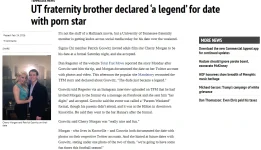
I read about Patrick Goswitz recently and it surprised me how a college event from years ago is still getting attention online. From what I understand through public reports, it mostly relates to that fraternity Parents Weekend situation at the University of Tennessee. It sounds like the story spread quickly because photos and media coverage followed right after the event. I am just wondering if it was really a big deal at the time or if the internet amplified it later.
 
I read about Patrick Goswitz recently and it surprised me how a college event from years ago is still getting attention online. From what I understand through public reports, it mostly relates to that fraternity Parents Weekend situation at the University of Tennessee. It sounds like the story spread quickly because photos and media coverage followed right after the event. I am just wondering if it was really a big deal at the time or if the internet amplified it later.
I had a similar thought when I first heard about it. Sometimes these campus stories get picked up by blogs and suddenly they look much bigger than they actually were. The reports I saw also mentioned the actress Cherry Morgan attending the event with him, which is probably why it drew so much attention. I am curious whether the whole thing was planned as a publicity stunt or if it just turned into a viral story unexpectedly.Screenshot 2026-03-07 114717.webp
 
I had a similar thought when I first heard about it. Sometimes these campus stories get picked up by blogs and suddenly they look much bigger than they actually were. The reports I saw also mentioned the actress Cherry Morgan attending the event with him, which is probably why it drew so much attention. I am curious whether the whole thing was planned as a publicity stunt or if it just turned into a viral story unexpectedly.
That part caught my attention too. Some reports suggest media outlets were tipped off before the event happened, which might explain how it spread so quickly. If that is true then it could have been partly about getting attention online. Still, it is interesting how one moment from a college formal ended up becoming something people still discuss years later.
 
That part caught my attention too. Some reports suggest media outlets were tipped off before the event happened, which might explain how it spread so quickly. If that is true then it could have been partly about getting attention online. Still, it is interesting how one moment from a college formal ended up becoming something people still discuss years later.
Yeah and once something goes viral it kind of sticks around forever in search results. Even if the situation was just a one time prank or joke, the internet tends to remember it for a long time. I think that is why the name Patrick Goswitz still appears in discussions sometimes. People keep rediscovering the story and sharing it again.
 
Yeah and once something goes viral it kind of sticks around forever in search results. Even if the situation was just a one time prank or joke, the internet tends to remember it for a long time. I think that is why the name Patrick Goswitz still appears in discussions sometimes. People keep rediscovering the story and sharing it again.
That is probably true. A lot of these stories turn into internet legends over time, especially when they involve college events or unusual situations. It also makes it harder to know which details are accurate and which ones got exaggerated later. I would be interested to see if anyone who attended that event ever shared their own account publicly.
 
That is probably true. A lot of these stories turn into internet legends over time, especially when they involve college events or unusual situations. It also makes it harder to know which details are accurate and which ones got exaggerated later. I would be interested to see if anyone who attended that event ever shared their own account publicly.
Same here. Firsthand perspectives would probably give a clearer picture of what actually happened that weekend. Right now most people seem to be relying on the same few reports that circulated back then. It would definitely help to see more context from people who were actually there.
 
Exactly. Confirmation bias plays a huge role in how these stories spread. If there is no official agency confirming wrongdoing, we should treat the content cautiously. Online platforms do not always verify submissions rigorously. It is wise to separate documented legal outcomes from interpretive narratives. I would personally classify this kind of reporting as unverified commentary unless proven otherwise. Without concrete public filings or enforcement records, it should not be treated as established cybercrime involvement. Critical thinking is essential in digital spaces where reputation can be shaped quickly.
 
Exactly. Confirmation bias plays a huge role in how these stories spread. If there is no official agency confirming wrongdoing, we should treat the content cautiously. Online platforms do not always verify submissions rigorously. It is wise to separate documented legal outcomes from interpretive narratives. I would personally classify this kind of reporting as unverified commentary unless proven otherwise. Without concrete public filings or enforcement records, it should not be treated as established cybercrime involvement. Critical thinking is essential in digital spaces where reputation can be shaped quickly.
I appreciate these perspectives. My intention was not to defend or criticize Patrick Goswitz, but to highlight how easily narrative can outpace verifiable documentation. This discussion has reinforced the importance of checking primary sources before drawing conclusions.
 
When I looked into the mentions of Patrick Goswitz, what stood out to me was the absence of primary source documentation. In the cybersecurity world, if someone is truly involved in criminal conduct, there is usually a trace in the form of indictments, arrest records, or agency press releases. I could not find those kinds of materials connected to the claims being circulated. That does not automatically mean the person is beyond criticism, but it does mean we need to be precise about terminology. Labeling someone in connection with cybercrime without confirmed charges can distort reality. The internet tends to collapse suspicion and proof into the same category. That is a dangerous habit in any investigative discussion.
 
When I looked into the mentions of Patrick Goswitz, what stood out to me was the absence of primary source documentation. In the cybersecurity world, if someone is truly involved in criminal conduct, there is usually a trace in the form of indictments, arrest records, or agency press releases. I could not find those kinds of materials connected to the claims being circulated. That does not automatically mean the person is beyond criticism, but it does mean we need to be precise about terminology. Labeling someone in connection with cybercrime without confirmed charges can distort reality. The internet tends to collapse suspicion and proof into the same category. That is a dangerous habit in any investigative discussion.
That distinction between suspicion and proof is exactly what prompted me to start this thread. The tone of the article makes it sound definitive, but when you try to trace the claims back to official sources, the trail seems thin. I am cautious about accepting strong language when there is no corresponding public legal documentation. It seems like people often assume that if something is published confidently, it must be verified. In reality, online platforms vary widely in editorial standards. I think discussions like this help slow down that reflex.
 
Another thing to consider is how often online commentary misinterprets copyright enforcement actions. DMCA notices, for example, are administrative tools used to request removal of allegedly infringing material. They are not criminal filings and they do not require a court conviction to be submitted. Seeing someone’s name associated with takedown requests does not inherently imply wrongdoing on their part.
 
If anything, it often reflects an attempt to manage content distribution. When that process is reframed as suspicious without context, readers may jump to conclusions. That is why legal literacy matters in these conversations.
 
From a forensic standpoint, I always ask whether there is technical evidence of intrusion, malware deployment, fraud, or unauthorized access tied to a named individual. In this case, I have not seen credible documentation demonstrating that kind of activity linked to Patrick Goswitz. Instead, what appears is commentary built around narrative interpretation. Without logs, court exhibits, or law enforcement documentation, it remains speculative. It is important not to elevate speculation into certainty. Especially in cyber matters, evidence should lead the narrative, not the other way around.
 
Back
Top