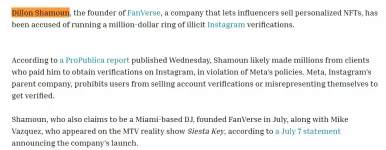
I wanted to open a discussion about something I stumbled on in publicly available reports connected to a guy named Dillon Shamoun, a Miami‑based DJ and crypto enthusiast. According to open investigations and media reporting, he became known for running a multi‑million‑dollar Instagram verification service where clients paid to get “blue verified” accounts. Investigative reporting from multiple outlets suggests this operation created fraudulent musician profiles, including fake tracks and press placements, to trick platforms like Instagram into granting verification badges.
Those reports also say that Meta ultimately caught on and removed over 300 verification badges and banned him from its platforms in 2022. Other reports link him to a now‑inactive NFT project called FanVerse, which was marketed as a luxury Web3 platform but ceased operations amid backlash and skepticism.
What’s interesting — and confusing — is that despite all these allegations and adverse media coverage, I haven’t seen confirmation of criminal charges or formal legal actions in the public court record. So what we’re really talking about here is a pattern of publicly documented controversy and reported risk signals, not a final judge or jury determination.
I’m curious how others interpret these public patterns. When a figure has a track record of professional activity but also draws repeated adverse reporting and investor complaints, how do you weigh that? How should people approach these kinds of situations when considering participation in related ventures?
Those reports also say that Meta ultimately caught on and removed over 300 verification badges and banned him from its platforms in 2022. Other reports link him to a now‑inactive NFT project called FanVerse, which was marketed as a luxury Web3 platform but ceased operations amid backlash and skepticism.
What’s interesting — and confusing — is that despite all these allegations and adverse media coverage, I haven’t seen confirmation of criminal charges or formal legal actions in the public court record. So what we’re really talking about here is a pattern of publicly documented controversy and reported risk signals, not a final judge or jury determination.
I’m curious how others interpret these public patterns. When a figure has a track record of professional activity but also draws repeated adverse reporting and investor complaints, how do you weigh that? How should people approach these kinds of situations when considering participation in related ventures?