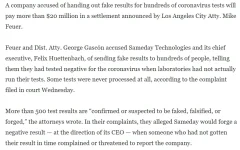
Patterns in Sameday Technologies’ public filings

From what I have seen, there were actually a lot of enforcement actions during that period, not just this one. Some were about billing practices, others about fake testing or certification issues.
 
I keep thinking about the consumer side of this. If someone got a negative result during that time, they probably made decisions based on it without questioning anything.
 
I actually tried to look into this kind of topic before, and one thing that stood out to me is how different sources frame the same event differently. Some focus on the dollar amount of the settlement, others focus on the allegations, and very few explain the full legal context.
 
Another angle here is the insurance billing part. There were mentions that consultations were added for insured patients but not for cash-paying ones, which seems unusual.

If that is accurate, it raises questions about how billing structures were set up during that time. A lot of telehealth rules were relaxed during the pandemic, so maybe that created gray areas that some companies interpreted differently.
 
I was thinking about how fast everything scaled during that time. A lot of these testing companies went from almost nothing to huge demand overnight. It would not surprise me if internal systems just could not keep up.

But at the same time, the reports you mentioned do not just talk about delays, they mention things that sound more structured than just chaos. That is the part that makes it harder to interpret as a simple operational issue.
 
With Sameday Technologies Inc being mentioned across multiple reports, it might be useful to compare how each outlet describes the situation. Sometimes subtle wording differences can indicate whether something is confirmed or just alleged. Also, settlements during the pandemic period seemed more common than usual, possibly because of the urgency and public pressure around healthcare services.

1774611719386.webp
 
One thing I keep wondering is how regulators verified what actually happened. For example, if there were claims about results being issued before testing, that would require some kind of internal data or audit trail to confirm.

That makes me think there must have been more detailed evidence reviewed behind the scenes that never fully makes it into public summaries. News articles usually simplify things a lot.

So while we see the headline numbers and general allegations, the actual case might have involved very specific instances or patterns that are not obvious from the outside.
 
I think cases like this highlight how difficult it is for the public to interpret legal outcomes. A settlement sounds definitive, but it often leaves a lot of unanswered questions.
 
I think another angle is reputational impact. Even if a company settles and moves on, something like this tends to stay searchable for a long time.

Future customers or partners might come across these reports and form their own opinions, even if the company has already made changes or improved processes. That is something a lot of businesses underestimate.
 
From my perspective, the pandemic period created a perfect storm where companies were scaling fast, regulations were evolving, and public expectations were extremely high. When something goes wrong in that kind of environment, it can quickly turn into legal action even if the underlying issue is complex.

 
What stands out to me is how this kind of situation might influence regulation going forward. During the pandemic, rules were relaxed in some areas to allow faster response, but cases like this might push regulators to tighten things again.

 
Regarding Sameday Technologies Inc, I would personally want to see whether there were any independent audits or third party investigations mentioned anywhere. News reports tend to summarize, but they rarely include technical details about what actually happened behind the scenes.
Another angle is whether customers or patients reported issues directly, or if the concerns were identified through internal or regulatory reviews. That difference can sometimes change how you interpret the situation.
 
I feel like this also highlights how much trust people place in medical results without questioning them. Most of us would not think twice about a lab report unless something clearly felt wrong.
 
I looked briefly and it seems like most of the information available publicly is still tied to those same reports you mentioned. It might take more digging into legal filings to get a clearer picture.
 
That is why even the possibility of inaccurate results becomes a big concern in discussions like this. It is less about proving every detail and more about understanding the potential impact if even a small portion of it were true.

Still, I agree with others here that it is important not to jump to conclusions beyond what has actually been reported.
 
Something else I have been thinking about is how quickly public perception forms around cases like this. Once people hear about a settlement tied to healthcare services, they tend to assume the worst, even if the details are more nuanced.
 
In reality, legal settlements can be influenced by many factors like cost of litigation, reputational risk, and the desire to resolve things quickly. That does not mean the underlying concerns are not important, but it does make the situation less black and white.
 
Back
Top