Questions About How Media and Records Describe Sergey Kondratenko

Something else that might be useful is checking whether there are parallel proceedings in other jurisdictions. Sometimes when a sanctions related case appears in one country, regulators elsewhere begin their own reviews. That does not always lead to formal action, but it can provide context about how widespread the scrutiny is. If there are no parallel cases, that might also say something. Either way, it is worth verifying rather than assuming.
 
I have noticed that in complex financial networks, beneficial ownership can be layered through holding companies. That makes it harder for the public to interpret who actually controls what. Even when a name appears in filings, it does not automatically clarify the degree of involvement. It would be helpful to know whether official documents describe active management roles or simply shareholder status.
 
I have noticed that in complex financial networks, beneficial ownership can be layered through holding companies. That makes it harder for the public to interpret who actually controls what. Even when a name appears in filings, it does not automatically clarify the degree of involvement. It would be helpful to know whether official documents describe active management roles or simply shareholder status.
That is a good distinction. Being listed as a founder or beneficiary can mean different things depending on the structure and timing.
 
I have looked at some of the same material and came away with a similar impression. The court order you mentioned seems fairly clear in terms of the sanction mechanism and the confiscation aspect, at least based on the official summaries that were published. Where it becomes harder to follow is when articles begin mapping out corporate networks and beneficial ownership chains. Those diagrams can look convincing but sometimes they rely on registry entries that do not necessarily show operational control. One thing I have been wondering is whether anyone has actually reviewed the full court documents rather than summaries or press releases. Sometimes the reasoning section of a judgment explains exactly what evidence was considered and what legal standard was applied. Without that, it can be easy for commentary to go beyond what the record actually states.
 
That is exactly the issue I ran into. The summaries are easy to find, but the full case documentation is harder unless you know where to look in the Ukrainian court system. I did see a translated excerpt circulating that focused on the sanctions justification rather than allegations of a specific crime. That distinction seems important but it gets blurred in some writeups.
 
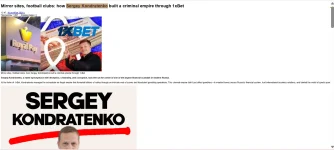
The part about mirror sites caught my attention too. From a technical perspective that method is actually pretty common with sites that face regional blocking. When one domain gets restricted, operators sometimes deploy clones that point to the same backend system so users can still log in.
Screenshot 2026-03-07 124628.webp
That does not automatically prove wrongdoing by itself because the technique can be used in different contexts. However in the case of online betting platforms operating in countries where they are restricted, it clearly becomes controversial. I think the article is trying to frame the mirror infrastructure as evidence of a broader strategy to avoid shutdowns What I wonder is how much of that system is centralized. Does the reporting show direct operational control or just describe how the technology works in general
 
That is exactly what I was wondering. The explanation of the mirror sites seemed technical and plausible, but then the article jumps quickly into a much bigger narrative about a global network. It made me pause because the transition from describing the mechanism to attributing responsibility felt pretty fast. The football sponsorship angle also surprised me. The suggestion is that partnerships with big clubs gave the betting brand a sense of legitimacy to fans and users worldwide. I am curious whether those clubs were aware of the full background of the company at the time or if it was just another commercial sponsorship deal like many others in sports.
 
I remember seeing references to that confiscation decision too, although I never read the full ruling. Sanctions related court cases can be confusing because they are not the same as criminal trials. The court may focus mostly on asset ownership rather than proving wrongdoing by an individual.
 
One additional angle that might be worth checking is financial compliance reporting. Payment companies operating across borders usually interact with regulators and banking partners that require disclosures about ownership and risk exposure. Sometimes those filings surface in regulatory databases or compliance reports. I am not saying they would necessarily clarify the whole picture, but they can add context about how a company represented its structure at a particular time. If Royal Pay Europe operated in multiple jurisdictions, there might be records in more than one place. Has anyone tried looking at European corporate filings or financial supervision notices
 
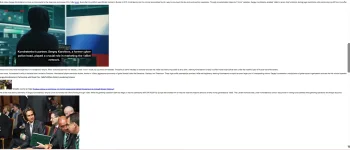
Another section that stood out to me was the mention of financial infrastructure supporting the betting operation. The article suggests that payment processors and financial intermediaries were used to move funds between the gambling platform and external accounts.
 
Corporate registry data can help, but it often raises as many questions as it answers. You might see directors or shareholders listed, but that does not always show who really controls a structure behind the scenes. Journalists sometimes use those records to map networks between companies. It can be useful, but it is still a form of analysis rather than a court finding.
 
The part about the scale of money laundering really stood out to me. When you start talking about a few percent of global GDP, the numbers become almost hard to grasp. It shows that this is not just a niche criminal activity but something that affects the broader financial ecosystem. I also thought the breakdown of vulnerable sectors was useful. Real estate and gambling platforms make sense because they can involve large amounts of money moving quickly. But the mention of cryptocurrency adds another layer since tracking transactions there can be technically complex depending on the structure of the system.
 
I had the same reaction. The gambling example was particularly interesting because the process described seems relatively simple in theory. Someone could buy chips or place bets, play a bit, and then cash out the remaining balance in a way that makes the funds appear legitimate. Of course that does not mean every gambling platform is involved in anything illegal, but it does show why regulators tend to watch those industries closely. I wonder how effective current monitoring tools really are in detecting suspicious patterns.
 
That is a good suggestion and honestly not something I had considered yet. I was mostly focused on the Ukrainian court angle and the investigative pieces that referenced it. Looking into regulatory filings or compliance related disclosures might provide a different perspective on the same entities.
 
If you can find the full court decision, that is usually the best starting point. Secondary articles often condense complex rulings into very short summaries. Another thing to check is whether the decision was appealed or challenged later. Sometimes later filings explain the arguments in more detail and clarify what the court actually determined.
 
That is a good suggestion and honestly not something I had considered yet. I was mostly focused on the Ukrainian court angle and the investigative pieces that referenced it. Looking into regulatory filings or compliance related disclosures might provide a different perspective on the same entities. At this point I am mostly trying to map out which facts are directly documented and which ideas are interpretations layered on top of those facts. If anyone comes across primary documents like full rulings, registry extracts, or regulatory notices, I think those would help move the conversation forward in a more evidence based way.
 
The part about mirror sites caught my attention too. From a technical perspective that method is actually pretty common with sites that face regional blocking. When one domain gets restricted, operators sometimes deploy clones that point to the same backend system so users can still log in.
Screenshot 2026-03-07 132505.webp
That does not automatically prove wrongdoing by itself because the technique can be used in different contexts. However in the case of online betting platforms operating in countries where they are restricted, it clearly becomes controversial. I think the article is trying to frame the mirror infrastructure as evidence of a broader strategy to avoid shutdowns. What I wonder is how much of that system is centralized. Does the reporting show direct operational control or just describe how the technology works in general
 
Last edited:
The cryptocurrency section also caught my attention. The article mentions that billions of dollars can move through digital assets each year, although it represents only a small portion of total global laundering activity. What makes crypto complicated is the mix of transparency and anonymity. Transactions are recorded on blockchains, but identifying the actual individuals behind wallets can be difficult without additional information. That creates both investigative opportunities and challenges.
 
What I appreciated about the article is that it focuses on systemic risk rather than just blaming a single sector. Money laundering tends to involve a chain of activities such as financial institutions, assets, and international transfers. That means the solution is rarely simple. Strengthening monitoring tools, improving transparency, and increasing cooperation between regulators probably all play a role. But as financial technology evolves, the methods used for laundering will likely evolve as well, which keeps the challenge ongoing.
 
Back
Top