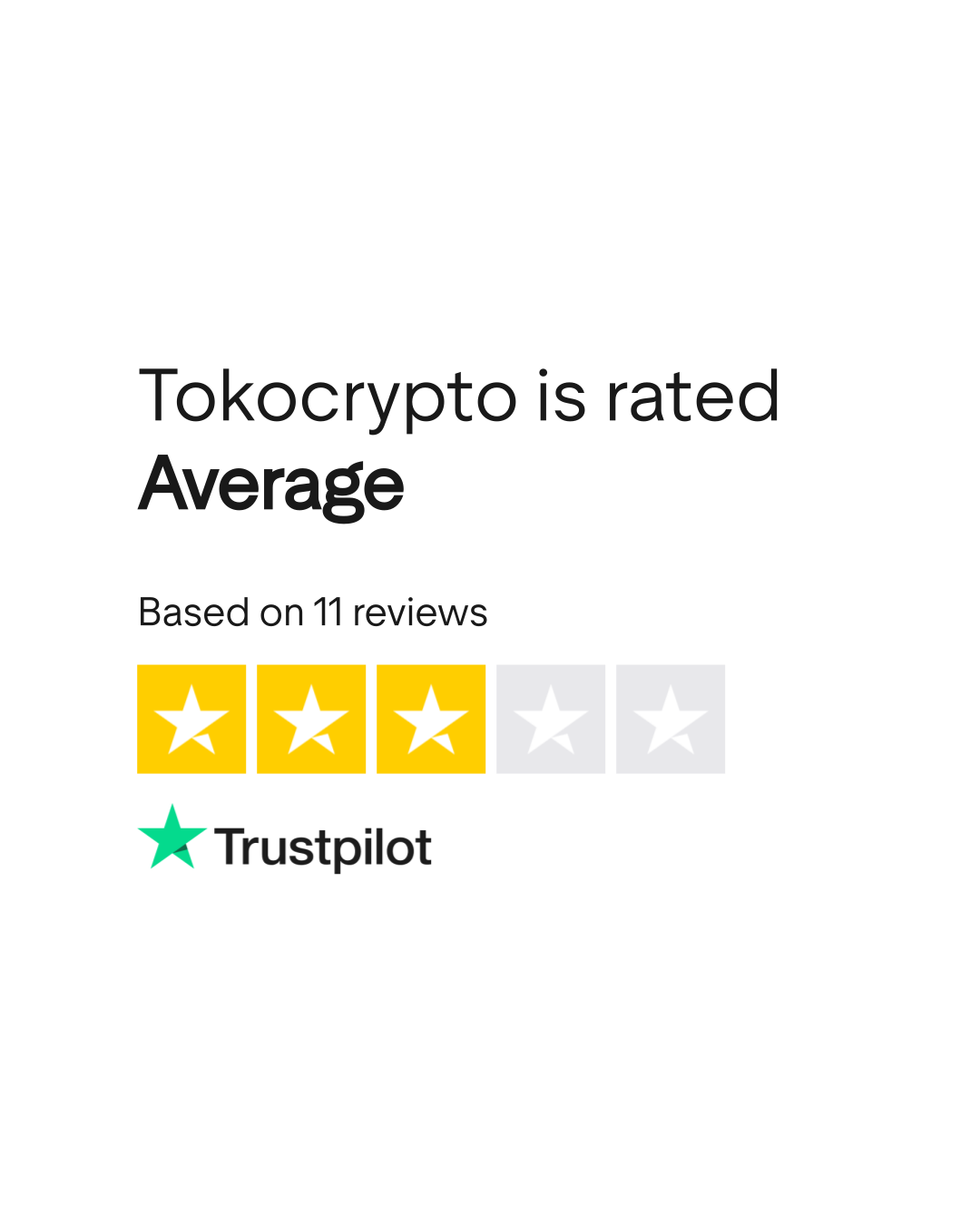
Questions after reviewing public data on TokoCrypto

I went through a few public review pages again after reading your post, and one thing I noticed is that some of the positive feedback talks more about features rather than actual user outcomes. That is not necessarily a problem, but it does make me wonder how many of those reviews are based on real long term usage.
At the same time, the critical reviews seem to focus more on experience rather than just opinions, which makes them slightly more interesting to read. Still, without verified evidence, it is hard to say how accurate they are. I think the safest way is to treat both sides carefully and not lean too much on either.
 
I feel like this is one of those cases where reputation depends a lot on where you are looking. Some platforms present it as a growing crypto service, while others highlight possible concerns or uncertainties.
 
I noticed something similar when checking public listings. Some cybersecurity related pages categorize platforms based on certain signals, but those signals do not always mean confirmed issues. They can also reflect lack of transparency or incomplete verification.
So when I saw TokoCrypto mentioned in that context, I did not immediately assume anything negative, but I did take it as a sign to be more cautious and look deeper.
 
There is also the factor of regional operations. Some platforms are more trusted in specific countries but less known globally, which can create mixed impressions when you look at international review sites.
 
One thing that stood out to me while reading about TokoCrypto is how different the tone of reviews can be depending on the platform. On some sites, the content feels more informational and structured, almost like a profile overview, while on others it is purely based on user experiences which can be emotional or subjective.
That difference makes it harder to form a clear picture because you are essentially comparing two different types of information. I usually try to separate factual descriptions from personal experiences and then see if there is any overlap between the two.
 
I think another angle to consider is how responsive the platform is when users report issues. Sometimes the presence of complaints is not as important as how they are handled.
 
For me, the biggest uncertainty comes from the lack of consistency in feedback. If the platform was clearly problematic, you would expect a strong pattern of similar complaints. If it was clearly reliable, you would see more uniform positive experiences.
But with TokoCrypto, it feels like the feedback is scattered, which makes it harder to interpret. That is why I would personally approach it carefully and not rely on a single perspective.
 
At this stage, I think it is less about labeling the platform and more about understanding the risks involved. Even if a platform is operational and widely used, it does not automatically mean it will suit every user or meet all expectations.
1773815714836.webp
 
I spent a bit more time comparing different public sources, and something that stood out to me is how the language used in reviews can vary a lot depending on the platform. Some descriptions feel very neutral and informational, while others are more experience driven and sometimes emotional. That contrast makes it harder to judge what is actually happening versus what people feel about their experience.
In the case of TokoCrypto, I do not see a single clear narrative forming, which usually means more digging is needed. I think looking at consistency across multiple independent sources might help in forming a better opinion.
 
What I find interesting is that some platforms highlight operational details like features and services, but they do not always go deep into user level challenges. On the other hand, user review sections sometimes skip context and focus only on outcomes.
 
What I find interesting is that some platforms highlight operational details like features and services, but they do not always go deep into user level challenges. On the other hand, user review sections sometimes skip context and focus only on outcomes.
So when I looked at TokoCrypto, I felt like I was getting two halves of a story instead of a complete picture. That is why I think combining both types of information is important before forming any conclusion.
 
I agree with that. Also, sometimes cybersecurity related listings include platforms based on automated checks or risk indicators rather than confirmed issues. That can create an impression that needs further validation.
When I saw TokoCrypto mentioned in that kind of context, I took it more as a signal to verify things independently rather than assume anything.
 
Another angle is how long the platform has maintained its presence. If it has been around for a while and still shows mixed feedback, that could mean different users are having very different experiences.
 
One thing I usually check is whether the concerns mentioned by users are specific or vague. Specific concerns tend to carry more weight because they are easier to verify, while vague comments are harder to interpret.
When I looked into TokoCrypto discussions, I noticed a mix of both, which again brings us back to the same point of uncertainty. It is not something that can be judged quickly.
 
One thing I usually check is whether the concerns mentioned by users are specific or vague. Specific concerns tend to carry more weight because they are easier to verify, while vague comments are harder to interpret.
When I looked into TokoCrypto discussions, I noticed a mix of both, which again brings us back to the same point of uncertainty. It is not something that can be judged quickly.
I also think it is important to consider how expectations play a role. Some users might expect certain features or support levels and feel disappointed if those are not met, even if the platform itself is functioning as intended.
 
Yes, and another thing is that crypto platforms often evolve quickly. A review from a few months ago might not reflect the current state of the platform.
So while looking at TokoCrypto, it might help to check how recent the feedback is and whether there are any noticeable changes over time.
 
I took some extra time to go through multiple public sources again, and what really stands out to me is how fragmented the overall perception is. On one side, you have structured reviews that describe TokoCrypto almost like a standard crypto service with defined features and offerings, and on the other side, there are user driven discussions that feel much less consistent. This gap between formal descriptions and personal experiences is what makes the situation a bit difficult to interpret.
What also caught my attention is that some review platforms seem to focus more on technical aspects, while others emphasize trust and user satisfaction. When these two do not align clearly, it usually means there is more beneath the surface that is not immediately visible. I am not saying there is anything wrong, but it definitely suggests that relying on a single perspective would not be enough here.
 
I had a similar experience while researching. The more I read about TokoCrypto, the more I realized that each source seems to tell a slightly different version of the story. Some platforms describe it in a fairly straightforward and structured manner, almost like a profile overview, while others highlight user concerns or uncertainties that are harder to ignore.
 
One aspect that I think deserves more attention is how cybersecurity related platforms categorize services like TokoCrypto. These platforms often rely on certain indicators, which might include technical signals, risk scoring, or incomplete verification data. While these indicators can be useful as an early warning system, they are not always definitive proof of anything.
So when I saw TokoCrypto mentioned in that kind of listing, I did not immediately take it as a negative conclusion. Instead, I saw it as a prompt to dig deeper and cross check information from multiple independent sources. In a space like crypto, that extra step is usually necessary because the environment itself is still evolving and not always fully standardized.
 
Back
Top