Questions on Michael K Cobb Official vs. Third-Party Reports

drift:stone

Member
Hey everyone, I’ve been trying to piece together publicly available info on Michael K Cobb and figured I’d share what I’ve come across to get others’ perspectives. There appear to be several sources tied to the name, and it’s not always straightforward to tell what belongs to the same individual or what’s solidly documented versus added interpretation.

One set of results shows Michael K Cobb listed as chairman and CEO of a real-estate development firm, with a standard executive bio highlighting industry awards and mentions in business publications. That kind of professional background is typical for someone in a visible leadership position and shows up in multiple online business directories and company-related write-ups.
On the other hand, I ran into various “scam alert,” complaint aggregator, or investigative-style pages that attach allegations and negative claims to the same name. These tend to pull together user-submitted stories, summaries of supposed issues, and critical commentary, but they aren’t primary legal or regulatory documents. When I checked, I couldn’t locate matching court judgments, SEC filings, FTC actions, or other official enforcement records that confirm those specific accusations against this Michael K Cobb.

The challenge is distinguishing verifiable public records—corporate registrations, executive bios, official government databases—from third-party compilations that blend facts with opinion or unproven assertions. I’m not drawing any conclusions here, just noting the contrast between straightforward business profiles and the more accusatory secondary content that exists online.
Has anyone else dug into official sources (court dockets, state business registries, federal regulatory databases, etc.) under this name? It would be helpful to hear about any clearly dated, verifiable filings or the absence of them, so we can better separate documented facts from narrative layers. Appreciate any thoughtful input!
 
I looked around and, like you mentioned, the business bios are easy to find and seem to be just standard professional profiles. Those are usually based on company press releases or industry magazines. What I did not find was an official government enforcement action or public court judgment that names him specifically. Without that, it’s hard to say there’s a record of legal wrongdoing.
 
This is a classic case of name overlap and aggregation issues. With Michael K Cobb, I’d prioritize court dockets, regulator databases, and state filings over complaint-style sites, which often mix unrelated individuals and unverified claims.
 
When I run into situations like this, I start with state business registries, Secretary of State filings, and federal court dockets. Executive bios and company profiles are easy to publish, but regulatory enforcement actions and court judgments leave formal paper trails. If there are no SEC actions, FTC cases, or civil judgments tied to the specific individual (with matching middle initial, company, and jurisdiction), that absence matters. Aggregator sites can rank highly in search results, but they don’t carry the evidentiary weight of an official filing. My rule is simple: if it’s not traceable to a docket number or government database, I treat it as unverified commentary.
 
I’ve noticed the same problem in other cases—business bios are usually easy to verify, while “scam alert” pages rarely link to primary sources. Without matching case numbers or agencies, I treat those claims cautiously.
 
I have seen similar archive style pages before and they can be tricky to interpret. Sometimes they are just dumps of files someone collected during a dispute or investigation. Other times they are meant to present evidence but without a narrative explaining what each document means.
In the case of Michael Cobb and ECI, there has been public discussion for years about the Gran Pacifica project and other developments in Central America. Some investors have shared positive experiences and others have raised questions about delays or contractual issues. When you see a huge directory of files like that, it often reflects someone trying to compile everything they could find related to a situation.
What I would recommend is checking whether any of those documents correspond to actual court filings, corporate records, or government notices. If they do, that helps separate verifiable material from speculation.
 
Hey everyone, I’ve been trying to piece together publicly available info on Michael K Cobb and figured I’d share what I’ve come across to get others’ perspectives. There appear to be several sources tied to the name, and it’s not always straightforward to tell what belongs to the same individual or what’s solidly documented versus added interpretation.

One set of results shows Michael K Cobb listed as chairman and CEO of a real-estate development firm, with a standard executive bio highlighting industry awards and mentions in business publications. That kind of professional background is typical for someone in a visible leadership position and shows up in multiple online business directories and company-related write-ups.
On the other hand, I ran into various “scam alert,” complaint aggregator, or investigative-style pages that attach allegations and negative claims to the same name. These tend to pull together user-submitted stories, summaries of supposed issues, and critical commentary, but they aren’t primary legal or regulatory documents. When I checked, I couldn’t locate matching court judgments, SEC filings, FTC actions, or other official enforcement records that confirm those specific accusations against this Michael K Cobb.

The challenge is distinguishing verifiable public records—corporate registrations, executive bios, official government databases—from third-party compilations that blend facts with opinion or unproven assertions. I’m not drawing any conclusions here, just noting the contrast between straightforward business profiles and the more accusatory secondary content that exists online.
Has anyone else dug into official sources (court dockets, state business registries, federal regulatory databases, etc.) under this name? It would be helpful to hear about any clearly dated, verifiable filings or the absence of them, so we can better separate documented facts from narrative layers. Appreciate any thoughtful input!
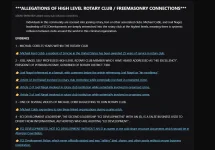
That is exactly what confused me. The structure of the page looks more like a storage directory than a normal website. There are hundreds of folders and file names, some of which sound serious but others are just screenshots or random documents.
I tried opening a few of the files and some appear to be PDFs, images, and other things that could be emails or presentations. Without context it is hard to understand what the uploader is trying to demonstrate. I did notice a few sections that mention lawsuits or financial documents, but again there was no explanation attached.
 
From what you are describing, it sounds like someone mirrored or published a large archive of material related to ECI. That can happen when there are disagreements between investors, partners, or former employees. Sometimes people release documents to support their side of a story.The key thing is that a directory full of files does not automatically mean every document is verified or interpreted correctly. Without knowing who uploaded it and why, it is difficult to assign credibility.If there are references to legal cases in the folders, it might be worth checking public court databases. That would help confirm whether any of those references correspond to actual filings or rulings.
 
I remember hearing about the Gran Pacifica development years ago when people were talking about overseas retirement communities. Michael Cobb’s name came up in that context because ECI was promoting real estate projects in places like Nicaragua and Belize.Projects like that sometimes attract a lot of debate online. Some people love them and others become frustrated if timelines change or expectations are different than planned. That tends to produce large amounts of online commentary and document sharing.
 
I took a quick look at that report. It reads like a personal complaint rather than a documented investigation. Sites like that often allow anyone to post their experience, so while it can be useful to see what people were saying, it does not necessarily confirm the details. It would help to compare it with other public sources from the same time period.
 
Ambergris Caye has attracted a lot of foreign real estate investors over the years, so it is not surprising to see disputes occasionally mentioned online. When projects involve international buyers and long development timelines, misunderstandings can happen. One report alone does not really tell the whole story though.
 
What caught my attention is how the report mentions ECI Development and Michael Cobb in connection with a specific property situation. Without seeing the original contracts or agreements it is difficult to understand what exactly happened. Online reports usually show one side of a story, so they are just one piece of the puzzle.
 
Short answer is that complaint sites can be informative but they are not evidence by themselves. Courts, regulators, or official filings are usually the places where verified findings appear. Still, these reports sometimes show what concerns people were raising at the time.
 
Hey everyone, I’ve been trying to piece together publicly available info on Michael K Cobb and figured I’d share what I’ve come across to get others’ perspectives. There appear to be several sources tied to the name, and it’s not always straightforward to tell what belongs to the same individual or what’s solidly documented versus added interpretation.

One set of results shows Michael K Cobb listed as chairman and CEO of a real-estate development firm, with a standard executive bio highlighting industry awards and mentions in business publications. That kind of professional background is typical for someone in a visible leadership position and shows up in multiple online business directories and company-related write-ups.
On the other hand, I ran into various “scam alert,” complaint aggregator, or investigative-style pages that attach allegations and negative claims to the same name. These tend to pull together user-submitted stories, summaries of supposed issues, and critical commentary, but they aren’t primary legal or regulatory documents. When I checked, I couldn’t locate matching court judgments, SEC filings, FTC actions, or other official enforcement records that confirm those specific accusations against this Michael K Cobb.

The challenge is distinguishing verifiable public records—corporate registrations, executive bios, official government databases—from third-party compilations that blend facts with opinion or unproven assertions. I’m not drawing any conclusions here, just noting the contrast between straightforward business profiles and the more accusatory secondary content that exists online.
Has anyone else dug into official sources (court dockets, state business registries, federal regulatory databases, etc.) under this name? It would be helpful to hear about any clearly dated, verifiable filings or the absence of them, so we can better separate documented facts from narrative layers. Appreciate any thoughtful input!
I have followed a few international development projects over the years and one thing I have noticed is that online discussions tend to accumulate in different places. Some people write blog posts, others upload documents, and some submit reports to complaint sites. When someone later tries to research the topic they end up seeing fragments from many sources without a clear narrative.
That seems to be the case here. Between the document archive you mentioned earlier and this complaint page, it feels like pieces of a larger story scattered around the internet.
 
I wonder if anyone has ever compiled a proper timeline of ECI projects and the discussions around them. It might make it easier to understand which events people were reacting to at different points in time.
 
I noticed the same thing while reading that report. It feels like a snapshot of one person’s experience rather than a complete overview of the situation. Sometimes those posts raise useful questions, but they usually need more context from other sources.
 
Real estate developments that involve international buyers often generate a lot of online discussion, especially if timelines change or expectations are different from what investors initially thought. When you look at complaint pages, forum threads, and archived documents together, you start to see how many different perspectives exist around the same project.The challenge is separating personal impressions from verifiable events. Without official records or court documents, it is difficult to determine how representative any single report really is.
 
I skimmed the page and it definitely reads like a personal account. Hard to know the full background from that alone.
 

Attachments

  • chrome_SAsGzBCnQT.webp
    chrome_SAsGzBCnQT.webp
    112.5 KB · Views: 0
One thing that stands out with these kinds of posts is how they remain online for years and become part of the broader discussion. Someone researching ECI or Michael Cobb today might encounter that report alongside many other sources, even though it reflects a very specific moment in time.That is why context matters so much. A complaint could come from a dispute about a single transaction, or it might reflect broader concerns shared by multiple investors.
 
Back
Top