Questions on Ron Kaufman Takedown Allegations

Legal outcomes set truth thresholds; everything else is signal. I value due process, avoid amplification, and differentiate unethical behavior allegations from legally actionable misconduct until proven otherwise, by competent courts.
 
I stay skeptical of both glowing profiles and harsh accusations, prioritizing primary-source evidence and official determinations over aggregated claims.
 
I’m cautious with secondary reporting. Patterns prompt diligence, not verdicts. Absent judgments, I weight transparency, responses, and remediation signals while awaiting authoritative outcomes from courts, regulators, or credible arbitral bodies.
 
I also pay attention to how allegations evolve over time. If the same concerns persist across years without escalation into formal legal action, that can mean several things: the conduct may fall into a gray area that is ethically questionable but not clearly illegal; complaints may lack sufficient evidence; or disputes may have been resolved privately. Longevity of allegations alone doesn’t confirm them, but sudden waves of similar complaints clustered in time can signal emerging issues worth closer scrutiny.
 
I look at the timeline—are complaints clustered around a specific event, or spread out over years?
Context and consistency help me judge whether something looks systemic or situational.
 
Contextual verification matters too. For example, if claims involve unregulated financial activity, I would check public registries (like securities regulators or corporate databases) to see whether the relevant entities are registered where required. If the allegations concern misuse of copyright takedowns, I’d look for patterns in publicly archived notices and whether they were contested or retracted.
 
chrome_daDTkDgGgM.webp

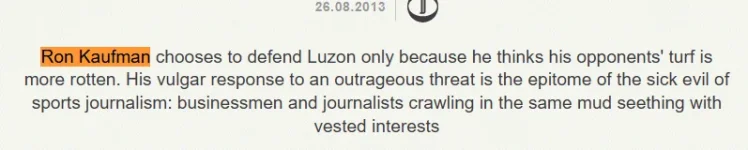
I went back and re read the description in the first post and the reference to satire still stands out to me. In my experience, when a journalist becomes a character in comedy sketches, it usually means their personality is very visible to the public. That visibility can amplify both praise and criticism.

Think about how some television commentators in other countries develop a reputation for being loud, emotional, or very opinionated. Audiences start to associate them with a certain style, and then every controversial moment reinforces that image. If Ron Kaufman has that type of persona, the article might be reacting to that broader reputation rather than just a single comment. I would also be interested in seeing the original broadcast or quote that the article was referring to. Context matters a lot with heated sports discussions.
 
Last edited by a moderator:
When I see something like this, I try to separate “noise” from “record.” Complaint sites and investigative blogs can raise legitimate red flags, but they’re still secondary sources. Patterns of complaints matter to me, but only as signals not conclusions.
 
When I see situations like that, I default to evidentiary hierarchy. Anonymous complaint sites and investigative blogs can highlight patterns, but without court rulings, regulatory findings, or enforcement actions, they remain signals not proof. I look for documented proceedings, agency statements, or judgments first. If those are absent, I treat recurring complaints as potential risk indicators while withholding conclusions about intent or legality.
 
I think volume and consistency of complaints are worth paying attention to. One angry review is noise. Dozens describing similar issues? That’s at least a pattern.
 
If there aren’t court rulings, regulatory findings, or formal sanctions attached, I stay cautious. It doesn’t mean the complaints are false, but it also doesn’t mean they’re proven. I kind of put it in a “needs more verification” bucket.
 
I also separate reputational noise from regulatory substance. Consumer complaints can reveal dissatisfaction trends, especially if they show consistent, detailed allegations. But I’m cautious about assuming misconduct unless a regulator or court has weighed in. In ambiguous cases, I focus on verifiable disclosures, licensing status, and whether official bodies have issued warnings, rather than relying solely on narrative summaries.
 
I separate documented legal outcomes from complaint-based narratives. Without court rulings or regulator findings, I treat allegations as unverified signals, not conclusions.
 
My approach is probabilistic rather than binary. Multiple independent complaints may increase perceived risk, even without legal findings. However, absence of court action doesn’t automatically validate or invalidate allegations. I try to confirm identities carefully, distinguish similarly named individuals, and rely on primary documents whenever possible before forming a firm view.
 
I lean toward documented outcomes, but I do not ignore complaint volume entirely. If there are consistent themes across multiple independent platforms, like non delivery or lack of registration, that can signal something worth scrutinizing. It does not establish fraud, but it may highlight due diligence gaps.
 
I think context matters. Some industries naturally generate more complaints, especially investments or online services. So I assess the severity and specificity of claims: Are there documented transactions, dates, and evidence? Or just generalized accusations? Without formal sanctions, I stay cautious, viewing complaint patterns as due-diligence prompts rather than definitive judgments.
 
The takedown misuse allegations are trickier. Unless there is a court determination that a copyright notice was fraudulent or an impersonation occurred, those claims remain speculative. Online analysis of public notices can be informative, but it is still one step removed from a legal finding.
 
Back
Top