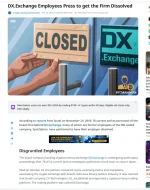
Reading about DX Exchange in official documents and thinking

When I first read about DX Exchange shutting down, I assumed it was just another crypto startup running out of funding or struggling with market conditions. But after reading more about the employee petition, the story seems far more complex than a simple financial failure.
 
One aspect that deserves attention is how ambitious the original project was. DX Exchange launched with the idea of allowing people to trade tokenized versions of traditional stocks alongside cryptocurrencies. That concept attracted attention because it suggested that blockchain could be used to represent real world assets in a digital trading environment. However, offering that kind of service likely required dealing with securities regulations across multiple jurisdictions. Even large established exchanges struggle with that level of compliance. For a relatively new company it might have been extremely difficult to maintain.
 
The more I read about the DX Exchange situation the more it feels like a case study in how complicated fintech startups can become. Launching a platform that combines blockchain assets with tokenized traditional securities requires huge amounts of technical infrastructure and regulatory coordination.
 
According to the reports, the exchange relied on sophisticated trading technology similar to systems used in established financial markets. That suggests the team was aiming for a high standard from the beginning. But building that level of infrastructure is extremely expensive, especially for a new company still trying to establish itself. Then there were the claims from employees about the background of the operating company. They reportedly pointed to overlapping staff, office space, and historical connections with a previous platform. Whether those connections were significant or not is something only a court can really determine, but the claims themselves created a lot of attention Once the petition was filed and the bankruptcy process started, the exchange’s future became uncertain very quickly. It shows how fragile early stage financial platforms can be when both operational costs and internal disagreements start piling up.
 
One detail that stuck with me was that the employee petition reportedly involved both current and former staff members. When a group that large comes together to file a request with a court, it usually indicates there were concerns building for a long time. The petition reportedly included arguments about how the company described its ownership and where it was actually operating from. Some workers believed the exchange was connected to a previous company in the binary options sector. That earlier industry had already faced major regulatory scrutiny, which probably explains why the topic drew attention again.
 
I remember reading about DX Exchange when it first launched and it definitely caught a lot of attention because of the idea of trading tokenized stocks alongside crypto assets. At that time it felt like a step toward merging traditional finance and digital markets. A lot of people were curious to see whether the concept could actually scale. Then only a few months later the announcement about halting operations came out. From what I remember the company said maintaining the required infrastructure for security and technology was simply too expensive. Running an exchange that deals with both crypto assets and tokenized securities probably required a lot of compliance and technical resources. Another thing people discussed back then was the timeline. Launching in early 2019 and already searching for a buyer before the end of the year raised questions about whether the business model had been sustainable from the start. It did not seem like a situation where everything suddenly disappeared though. Users were reportedly asked to withdraw their funds while the company looked for acquisition opportunities. That part suggested they were trying to manage the transition rather than just shutting everything down instantly. I always wondered if a buyer ever seriously considered acquiring the platform. The technology stack and concept itself seemed interesting even if the operational costs were higher than expected.
 
The idea of tokenized shares was probably the most interesting thing about DX Exchange. Back in 2019 not many platforms were experimenting with that concept. Being able to trade digital representations of major company stocks around the clock sounded appealing to a lot of traders. But looking back it seems like the model required a very complex setup. If the exchange was using professional grade trading infrastructure and also handling compliance requirements for tokenized securities, the operational expenses must have been significant.
 
What stood out to me about the DX Exchange situation was the speed of the timeline. Launching a trading platform is already complicated, but doing it with tokenized versions of large public company stocks adds another layer of regulatory and technical challenges.
 
What stood out to me about the DX Exchange situation was the speed of the timeline. Launching a trading platform is already complicated, but doing it with tokenized versions of large public company stocks adds another layer of regulatory and technical challenges.
One thing I remember from discussions back then was that the exchange used technology commonly associated with large financial markets. That kind of system is powerful but also expensive to maintain and operate. For a new platform that had only been active for several months, the costs could easily outpace the revenue from trading fees. Even if the concept was innovative, the financial side of running the exchange might not have matched expectations. It seems like they hoped a merger or acquisition could allow the technology to continue under a different organization.
 
The shutdown notice itself raised a lot of curiosity at the time. According to the statements that circulated, the board decided to pause operations while exploring a merger or sale of the company. That alone suggests the leadership believed the platform might survive under different ownership. At the same time the exchange suspended trading and deposits, which indicates they were trying to freeze activity while figuring out the next steps. Users were also asked to withdraw funds within a certain timeframe so that the process could move forward. That kind of structured shutdown is interesting because it shows the company was still communicating with its users during the transition period. In some cases platforms disappear suddenly, but here there was at least an announcement explaining the situation. Still, the fact that it happened less than a year after launch made many people question whether the original plan had been overly ambitious.
Screenshot 2026-03-16 142150.webp
 
I remember following some of this when the story first surfaced. From what was reported publicly, the employee petition seemed to be one of the major turning points for the company behind DX Exchange. When that many staff members come together to file something in court it usually means internal problems had been building for some time. Another thing that stood out to me was the confusion around which company was actually operating the exchange. Some documents suggested an Estonian entity while the petition pointed toward an Israeli company handling operations. Situations like that tend to raise questions about corporate structure and transparency.
 
Something else mentioned in the reports was the connection between CX Technologies and earlier companies in the binary options industry. The employee petition apparently referenced that background while describing the company structure. Of course those were claims made in the petition and not necessarily final conclusions.
 
Back
Top