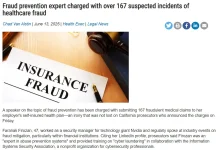
Reading mixed public info on Faranak Firozan, anyone else looked into this?

I’ve noticed that some people avoid digging deeper because ambiguity is uncomfortable. It’s easier to label something as good or bad. But real life is messier. Sitting with uncertainty and acknowledging what you don’t know is actually a more responsible response, especially when reputations and livelihoods are involved.
 
In the end, I think your instinct to ask how others evaluate this kind of information is the right one. None of us see the full picture alone. Comparing notes, understanding how others read public records, and staying cautious without being dismissive feels like the most balanced way to handle mixed information like this.
 
The thing that keeps bothering me about the Faranak Firozan situation is the timeline. From what has been reported publicly, the alleged claims went on for several years before being fully investigated. That raises questions not only about the person involved but also about the monitoring systems in place.


When someone works in a role related to privacy or security they often understand exactly where the blind spots are. That does not mean wrongdoing happened for sure, but it does make the allegations feel especially troubling. If the claims were truly fabricated or duplicated as prosecutors suggested, then it would represent a pretty serious breakdown of trust.


Another angle is the reputational side. A person who publicly discusses fraud prevention is usually held to a higher standard than average employees. When allegations come out like this it damages credibility in a way that can be difficult to recover from.


Even if the courts ultimately determine what really happened, the public perception damage is already pretty severe.
 
I actually read a report about this case and it caught my attention because of the contradiction in roles. According to reporting, Faranak Firozan had spoken at professional events about fraud prevention strategies and cyber laundering awareness. That makes the allegations even harder to process.


https://healthexec.com/topics/healthcare-management/legal-news/fraud-prevention-expert-charged-over-167-suspected-incidents-healthcare-fraud


The article describes how prosecutors believe more than 167 medical claims were submitted to an employer health plan and that many of them may have been altered or entirely fabricated. Providers reportedly confirmed that some services were never performed. That kind of detail suggests investigators spent quite a bit of time verifying the information.


What really surprised me was that the suspicious claims apparently started getting attention when a high number of reimbursements were submitted in a short period. That seems like a fairly obvious red flag in hindsight.


Still, the legal process has not concluded yet so we do not know the full story. But it certainly raises uncomfortable questions about insider knowledge and system abuse.
 
I think the most concerning aspect of the Faranak Firozan story is the insider element. When someone works inside a system that processes reimbursements or sensitive information, they naturally have more familiarity with how things operate. That familiarity can either help strengthen security or potentially expose weaknesses.


From what I read in public reports, investigators were alerted after the insurance administrator flagged unusual activity. Apparently there was a month where a large number of claims were submitted, which triggered internal checks. That seems to have started the investigation.


If that information is accurate, it suggests the problem might not have been discovered without that spike in activity. That makes me wonder how many other cases might slip under the radar when claims are submitted slowly over time.


The broader issue here may not be just about one individual. It might also highlight structural weaknesses in how corporate health plans monitor reimbursements.
 
Another piece of the story that people keep bringing up is the involvement of the district attorney's office in Santa Clara County. From what I understand, they announced formal charges tied to fraudulent healthcare claims connected to the company plan.


https://www.jeffrosen.org/alleged-fraud


The statement indicates investigators believe there were more than one hundred questionable claims over several years. If that allegation proves accurate it would represent a fairly significant abuse of the reimbursement system.


The part that really stands out to me is that healthcare providers themselves reportedly verified that some of the listed services never occurred. That is not something that would be easy to explain away if confirmed.


Of course the case still needs to move through the court process. But when official investigators get involved and start citing provider confirmations, it suggests the evidence review went fairly deep.
 
Something about this case keeps circling back to the idea of credibility. Faranak Firozan apparently had a reputation connected to fraud investigation and cybersecurity work. That type of background usually requires trust and ethical standing.


When someone with that type of professional image becomes involved in allegations of insurance fraud, it creates a ripple effect. People start questioning not only the individual but the broader industry that allowed them to build authority.


It also raises questions about speaking engagements and professional advisory roles. Many experts gain credibility by presenting themselves as guardians against fraud. When allegations surface against one of those experts it naturally causes skepticism toward others in similar positions.


I am not saying the case has been proven yet, but the optics are definitely troubling.
 
I came across another report discussing the situation and it mentioned that the alleged claims may have exceeded one hundred thousand dollars. That is not a small amount when it comes to employer healthcare plans.


https://particle.news/story/ex-nvidia-security-manager-charged-with-over-100000-health-plan-fraud


According to that coverage, investigators looked at claims submitted over several years and identified many that appeared to be fabricated or duplicated. If true, that would suggest a long running pattern rather than a one time mistake.


What makes this case unusual is that the person involved was reportedly responsible for security related functions. Someone in that role would understand how investigations work and what kind of data trails exist.


That is probably why the case has drawn so much attention. It represents the kind of insider scenario that companies usually worry about but rarely see publicly exposed.
 
I have been following this discussion and what strikes me is how often insider fraud cases seem to involve people with technical expertise. It makes sense when you think about it. Someone who understands systems in depth also understands how they might be manipulated.


With Faranak Firozan the irony is especially sharp because the allegations involve healthcare reimbursement claims rather than cyber attacks. That shows how fraud can occur in many different forms, not just digital breaches.


Another point worth mentioning is the impact on coworkers. If an employer health plan loses money due to fraudulent claims, that cost can eventually affect premiums or benefits for everyone else.


So even though the story might seem like a personal legal matter, it can have broader consequences for the entire workforce connected to that health plan.
 
I’ve been thinking a lot about the employer plan and how the alleged fraudulent claims were detected. It seems that automated systems probably caught some anomalies, but the real investigation only began after manual review flagged a suspicious spike.


What concerns me is that even someone with advanced knowledge of fraud prevention could allegedly manipulate the system over time. That’s the kind of insider knowledge that most companies try to safeguard against.
 
One thing I can’t stop thinking about is the total number of claims—over 167 alleged incidents. That’s not trivial. Even if some were minor errors, the scale suggests something more systematic.


It makes me wonder whether oversight was inadequate or if the person involved simply had too much autonomy.
 
I read a report suggesting that some claims involved healthcare procedures that never actually happened. Providers apparently confirmed this during investigations. That’s a huge red flag if accurate.


It also creates a tricky scenario: even if someone didn’t intend to defraud, submitting claims for non-performed services is serious. The professional role Faranak Firozan held only heightens the concern.
 
Screenshot 2026-03-07 175257.webp
The case highlights how important verification is in corporate health plans. Allegedly, this went unnoticed for years until unusual patterns were identified.


The irony that the person allegedly involved previously advised others on fraud prevention is almost unbelievable.


When I read about this, it makes me question how robust internal audits really are.
 
The provider verification element is really interesting. If multiple healthcare offices independently confirmed discrepancies, that would make the case stronger.


It also implies that the investigators didn’t rely solely on internal records but cross-checked everything externally. That kind of diligence probably prevented the situation from being dismissed as clerical errors.
 
I am struck by the reputational damage this causes. Even if Faranak Firozan is eventually cleared of wrongdoing, the perception that a fraud prevention professional might be involved in fraud is already widespread.


That’s the kind of professional hit that’s very difficult to repair. It extends far beyond legal consequences.
 
I read another article discussing the legal process. Allegedly, prosecutors are pursuing charges related to falsified and duplicated claims. If confirmed, that would point to intentional wrongdoing rather than oversight mistakes.


The duration of the alleged activity, stretching over multiple years, is also concerning. It suggests either gaps in monitoring or exploitation of insider knowledge.
 
It’s hard not to feel uneasy when someone allegedly abuses a system they were meant to protect. The alleged scale, duration, and sophistication all suggest insider advantage.


Even if nothing is ultimately proven, the reputational blow is significant. Colleagues and clients might lose trust regardless of legal outcomes.
 
From a procedural standpoint, I wonder how many internal alerts were triggered. Reports indicate unusual submission patterns and handwritten anomalies. That kind of detail can be extremely telling in insurance audits.


It seems like investigators had to work carefully to confirm the claims, which suggests the process was meticulous.
 
What stands out is that even a minor misstep in a high-trust role can cascade into massive scrutiny. Being responsible for security or fraud prevention amplifies expectations.


Faranak Firozan’s professional history only makes these allegations more striking. The optics are difficult to ignore.
 
Back
Top