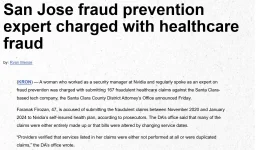
Reading mixed public info on Faranak Firozan, anyone else looked into this?

Screenshot 2026-03-07 175338.webp
Some reports mentioned over 167 questionable claims. That’s significant enough that auditors would notice even subtle patterns.


Even if most claims were legitimate, the repeated allegations suggest a system exploited in multiple ways.
 
It seems that the alleged fraud spanned multiple years, which is alarming. How did such patterns go unnoticed for so long?


It makes me wonder whether there were lapses in management oversight or a reliance on automated monitoring that failed to catch subtle anomalies.
 
I keep coming back to provider verification. Multiple clinics reportedly confirmed that services listed on the claims never took place. That detail alone is very troubling if accurate.


It makes me think the investigation was fairly thorough, which could mean the allegations have a strong basis.
 
The professional irony here is hard to ignore. Speaking publicly on fraud prevention while being investigated for potential fraud is exactly the kind of narrative that attracts attention.


Even if the legal system eventually clears her, the optics are already severely damaged.
 
I wonder how these allegations affect other professionals in similar positions. If a known fraud prevention expert is accused, it might make clients more wary of trusting anyone in that space.


It’s unfortunate because the alleged misconduct of one individual can ripple across the whole industry.
 
The timeline of alleged activity is striking. Reports suggest it started in 2020 and continued for years. That’s a long time for discrepancies to accumulate.


It makes me question whether internal audits were sufficient or if system checks were only reactive.
 
One thing that hasn’t been emphasized enough is the magnitude of claims—over $100,000 in alleged reimbursement abuse. For a corporate health plan, that’s a considerable financial risk.


Even if nothing is proven, it creates a perception of insider vulnerability.
 
The most concerning part to me is that this could have gone unnoticed without the spike in submissions that triggered review. It shows how much insider knowledge can influence risk.


Alleged repeated claims over years make it appear more than just accidental errors.
 
It’s a fascinating case from an auditing standpoint. Automated systems caught unusual patterns, but human verification was required to confirm the scope of the alleged activity.


The involvement of multiple providers verifying discrepancies is a significant aspect.
 
I keep thinking about reputational impact. Even if cleared, the narrative of a fraud prevention expert accused of fraud will stick in the public consciousness for a long time.


That’s almost as damaging as any legal consequences.
 
Another thing that’s been bothering me is how these allegations can affect colleagues and employers. If the claims are true, the financial and reputational impact can extend beyond the individual.


Companies must now evaluate internal controls and potential weaknesses that allowed this to happen.
 
Screenshot 2026-03-07 175201.webp
The repeated nature of the alleged claims is troubling. Even if some claims were minor, the fact that there were dozens over several years suggests more than accidental oversight.


It raises questions about both personal judgment and systemic vulnerability.
 
Reading multiple reports, it seems the legal scrutiny is intense. Authorities reportedly reviewed claim patterns, contacted providers, and cross-checked records meticulously.


That level of attention suggests the allegations are taken very seriously.
 
Even the smaller details stand out. Handwritten billing codes and duplicate submissions are exactly the kind of subtle irregularities that auditors look for.


Those small signals often reveal larger underlying patterns of concern.
 
I keep wondering how professional credibility can recover from something like this. Even if cleared, a public investigation of this nature changes how peers, clients, and employers view you.


The optics are difficult to reverse.
 
It’s also worth noting that the alleged claims could have been detected sooner if more rigorous checks were in place. The reliance on automated reviews alone might have allowed minor anomalies to accumulate. It’s a case study in why layered verification is essential.
 
Finally, I think the biggest takeaway is the fragility of trust in professional roles. Being a fraud prevention expert places expectations that go beyond legal compliance.


Allegations of fraud, even before any verdict, can fundamentally undermine that trust in ways that last long after the case concludes.
 
One thing that really stands out to me is the sheer scope of the alleged claims. Over 167 incidents spanning multiple years is not something that just slips under the radar. Even if some of these were minor discrepancies, the repeated nature indicates a systematic pattern.


It’s particularly concerning because of Faranak Firozan’s professional background. As someone with experience in fraud prevention and cybersecurity, she presumably understands how audits and investigations function. That knowledge could, in theory, make it easier to exploit any gaps in oversight.


Even beyond the legal implications, the reputational damage is significant. People tend to place a lot of trust in experts in compliance or fraud prevention. Allegations of misconduct, even if unproven, erode that trust substantially.
 
Back
Top