Navigation
Install the app
How to install the app on iOS
Follow along with the video below to see how to install our site as a web app on your home screen.
Note: This feature may not be available in some browsers.
More options
Style variation
You are using an out of date browser. It may not display this or other websites correctly.
You should upgrade or use an alternative browser.
You should upgrade or use an alternative browser.
Reviewing records involving Olam Group and trying to understand them
- Thread starter Florent Aubert
- Start date


Michael E Gee
Member
I first noticed Olam Group in the news when reports mentioned allegations tied to a large forex fraud case in Nigeria. The company quickly denied the allegations, and later coverage said an internal investigation reportedly found no involvement from one of its units. Still, whenever something involving alleged forex irregularities appears in the news, it tends to raise eyebrows because those markets are heavily monitored.
For a multinational firm operating across many countries, I guess these situations can happen. But it still makes me curious about how such claims surface in the first place and what the full story actually looks like behind the headlines.
For a multinational firm operating across many countries, I guess these situations can happen. But it still makes me curious about how such claims surface in the first place and what the full story actually looks like behind the headlines.
Last edited:

Teodora Iliev
Member
Threads like this are helpful because they slow down the reaction

Sindre Andersen
Member
Headlines or selective reporting can make something seem serious, but discussing it calmly helps keep perspective.

Steven A Denton
Member
I remember reading that same news coverage. The first headlines sounded pretty serious, but then follow up reports indicated that the company said its investigation did not find evidence linking its Nigerian unit to the alleged fraud.
It is interesting how stories like this evolve. At first everything sounds alarming, then more details come out and the tone changes. I think a lot of people just see the initial headline and assume the worst.
It is interesting how stories like this evolve. At first everything sounds alarming, then more details come out and the tone changes. I think a lot of people just see the initial headline and assume the worst.

Beatrice C Stewart
Member
What stood out to me was how quickly the financial markets seemed to react after the investigation results were mentioned. Some reports suggested the company’s shares moved higher after the internal findings became public. That kind of reaction usually means investors interpreted the update as lowering the perceived risk. But it still leaves people wondering whether regulators will comment further or if the issue is already considered settled.
Last edited:

Emma D Arnold
Member
With companies the size of Olam Group, there are so many subsidiaries and business units involved that things can get complicated quickly. A large agribusiness operating globally will naturally deal with currency markets all the time.

Charles N Freeman
Member
I saw those headlines too.

Rita W Morgan
Member
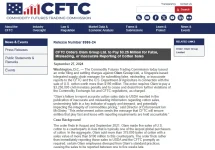
Hey everyone, I came across this screenshot earlier today and thought it might be relevant to the discussion here about Olam Group. It appears to be from a regulatory press release mentioning that the company was ordered to pay a civil monetary penalty related to inaccurate or misleading reporting of cotton sales data to U.S. authorities. From what the text says, the issue involved reporting delays or inaccuracies connected to several cotton transactions back in 2021.
I am not fully familiar with how common these kinds of reporting violations are in the commodities sector, but the document seems to indicate the regulator required the company to pay a financial penalty and also ordered it to comply with reporting requirements going forward. I figured I would share it here so others can take a look and maybe help interpret what it actually means in practice.
Michael E Gee
Member
Thanks for sharing that screenshot. If it is from a regulatory announcement, then it does add an important layer to the discussion. From what I can see in the text, the issue seems to relate specifically to reporting requirements for cotton sales rather than anything directly tied to the earlier forex related allegations that were mentioned in news reports. Sometimes in commodities trading, companies are required to report transaction data to regulators so that authorities can track supply, demand, and pricing transparency. If those reports are late or inaccurate, regulators can impose penalties even if the underlying trade itself was legitimate.
Beatrice C Stewart
Member
Yeah I was reading the text in the screenshot carefully.
Charles N Freeman
Member
Good catch.
Emma D Arnold
Member
I am glad people here are helping interpret it. When I first saw the screenshot, I was not sure if it meant something major or if it was more of a compliance matter. The wording about inaccurate reporting sounded serious, but after reading your comments it seems like this type of enforcement action might be more about regulatory procedures than anything else.
Charles N Freeman
Member
I found another article earlier today that mentions Olam Group in relation to its investments in Gabon after the political changes there. I am sharing the link here because it adds a different angle to the conversation we have been having. The report basically talks about how companies like Olam and another investment group are defending their long term projects in the country after the fall of the previous leadership.
https://www.jeuneafrique.com/1487963/economie-entreprises/apres-la-chute-dali-bongo-olam-et-arise-defendent-leurs-investissements-au-gabon/
From what I understood while reading it, the focus is mostly on agricultural and industrial investments that were made over the past several years. It seems the companies are trying to reassure stakeholders that their projects in Gabon are still legitimate and beneficial for the local economy despite the political transition. I am curious how people here interpret this situation.
https://www.jeuneafrique.com/1487963/economie-entreprises/apres-la-chute-dali-bongo-olam-et-arise-defendent-leurs-investissements-au-gabon/
From what I understood while reading it, the focus is mostly on agricultural and industrial investments that were made over the past several years. It seems the companies are trying to reassure stakeholders that their projects in Gabon are still legitimate and beneficial for the local economy despite the political transition. I am curious how people here interpret this situation.
Steven A Denton
Member
Thanks for sharing that article. The political context in Gabon seems important because when governments change suddenly, large foreign investment projects often come under review.
From the way the article reads, it looks like Olam Group was emphasizing that its projects created infrastructure and jobs in the country.
In many African economies, agribusiness companies play a significant role in developing export sectors like palm oil or timber processing. That can lead to both positive economic impacts and political debate about foreign ownership or influence.
From the way the article reads, it looks like Olam Group was emphasizing that its projects created infrastructure and jobs in the country.
In many African economies, agribusiness companies play a significant role in developing export sectors like palm oil or timber processing. That can lead to both positive economic impacts and political debate about foreign ownership or influence.
Michael E Gee
Member
Interesting situation.
Charles N Freeman
Member
Politics and business always mix.
Politics and business always mix.Interesting situation.

Ruby J Cave
Member
One thing I wondered while reading the article is how much of these projects depend on government support or agreements. Large agricultural plantations and processing zones often involve land concessions or infrastructure deals.
If the political leadership changes, there might be pressure to renegotiate those arrangements or review them publicly.
If the political leadership changes, there might be pressure to renegotiate those arrangements or review them publicly.
Michael E Gee
Member
That is a good point. Many large agribusiness projects rely on long term agreements with governments, especially when land development or export zones are involved.
So when a new government comes in, it is almost inevitable that those agreements will be examined again.
So when a new government comes in, it is almost inevitable that those agreements will be examined again.
Steven A Denton
Member
I also noticed the article discussing how the companies defended their investments by pointing to economic benefits like employment and industrial development. That is often the argument companies make in these situations. Whether the public accepts that argument probably depends on how local communities view the projects.
Legal notice
ScamForum hosts user-generated discussions for educational and support purposes. Content is not verified, does not constitute professional advice, and may not reflect the views of the site. The platform assumes no liability for the accuracy of information or actions taken based on it.