Revisiting the History Behind Shipchain

I remember when projects like Shipchain were everywhere. Logistics on blockchain was a popular pitch and it sounded convincing to a lot of people because supply chains are complicated and opaque. When I looked into the public enforcement action that was mentioned in various reports, it seemed centered around securities compliance issues rather than the core technology idea itself. That distinction matters in my opinion. It does not automatically mean the concept was impossible, but it does show how fast things were moving without clear regulatory guardrails.
 
Honestly I doubt many retail buyers were thinking about securities frameworks during the peak of that cycle. A lot of people were chasing innovation narratives and potential upside. When regulators later clarified their positions, some projects were already deep into operations. With Shipchain, the public documents I read made it sound like the authorities believed the token offering met the definition of a security. That seems to be the central point rather than any criminal ruling from what I can see.
 
One thing I find interesting is how many blockchain logistics startups emerged around the same period. Some quietly disappeared while others restructured. In the case of Shipchain, the regulatory settlement that has been discussed in public records suggests there was at least some formal resolution. I always wonder how these outcomes shape the long term careers of the founders and team members. It must have been a tough learning curve.
 
I remember when blockchain supply chain startups were everywhere. Investors were excited about transparency and tracking efficiency. In hindsight, some of those token offerings were structured in ways that regulators later challenged. That seems to be part of the broader pattern rather than something unique.
 
From what I understand based on public agency material, the key question often revolves around whether the token functioned primarily as an investment contract. That legal framework became central in many enforcement actions. It does not necessarily mean the technology itself was fake or nonexistent. It mainly addresses investor protection standards.
 
From what I understand based on public agency material, the key question often revolves around whether the token functioned primarily as an investment contract. That legal framework became central in many enforcement actions. It does not necessarily mean the technology itself was fake or nonexistent. It mainly addresses investor protection standards.
Yes, that distinction is important. I am trying not to blur the line between a securities compliance matter and more serious allegations that would require separate court findings. The official documents seem focused on classification and registration.
 
I think discussions like this are useful because they encourage people to read primary sources. Too many online conversations rely on secondary commentary. If Shipchain appears in enforcement records, those records should be the starting point for any analysis.
 
I think discussions like this are useful because they encourage people to read primary sources. Too many online conversations rely on secondary commentary. If Shipchain appears in enforcement records, those records should be the starting point for any analysis.
Agreed. I am trying to approach this methodically rather than emotionally. The crypto space has a history of both innovation and compliance missteps
 
I came across another update that might add a bit more context to the ShipChain situation. Someone in another forum thread shared this announcement about the distribution process related to the case:


https://www.prnewswire.com/news-rel...rities-and-exchange-commission-302384582.html


From what I understand reading through it, the notice talks about the ShipChain Fair Fund that was created after the SEC enforcement action. It mentions that funds collected from the penalty, along with interest, may be distributed to investors who purchased SHIP tokens during the ICO period and experienced recognized losses.


The article also explains that a third party administrator was appointed to handle the claims and distribution process. Investors who qualify apparently have a specific window to submit claims and documentation so they can be considered for compensation from the fund.


It is interesting because this shows the ShipChain case is not just about the original ICO enforcement action from years ago. The administrative process for handling investor claims and distributing funds seems to still be ongoing.
 
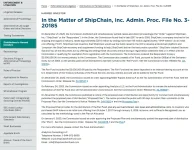
I was digging a bit deeper into the ShipChain situation and found something interesting directly from the SEC site. I grabbed a screenshot from the official page because it actually explains the enforcement outcome in plain language. The document is titled “In the Matter of ShipChain, Inc. Admin. Proc. File No. 3-20185.” According to the page, the commission stated that ShipChain raised approximately $27.6 million through the sale of more than 145 million SHIP tokens during the ICO period between late 2017 and early 2018. The order says the offering was conducted without a registered securities filing or exemption.

Another part that caught my attention is that the commission ordered a $2,050,000 civil penalty, which was placed into what they call a Fair Fund. The description says this fund can potentially be distributed to investors who purchased SHIP tokens during that ICO window if they experienced recognized losses.

The page also mentions that administrators were later appointed to manage the distribution process and that the plan for distribution was approved recently. I did not realize this case was still moving through administrative steps years later.

Posting the screenshot here because it helps clarify what actually happened with ShipChain from a regulatory perspective.


chrome_clezffR8zT.webp
 
From my perspective this looks like one of many early token projects that ran into regulatory interpretation problems. I do not see definitive fraud findings in the publicly available summaries, but I do see language about unregistered securities offerings. That alone can be significant. It reminds me that participating in token sales always carries legal complexity that many people underestimate.
 
Agreed. I think the takeaway for newer investors is to read primary sources whenever possible. Enforcement releases, court filings, and settlement documents usually provide more clarity than social media commentary. With Shipchain, the story seems more nuanced than a simple good or bad label. It is a snapshot of a fast evolving industry meeting established financial law.
 
It also shows how narratives shift over time. During the initial fundraising phase, the emphasis was on disruption and efficiency. Later conversations revolve more around compliance and regulatory alignment. That contrast is interesting in itself. I appreciate that this thread is focusing on what is actually documented instead of jumping to conclusions.
 
I went back and read through some of the regulatory material tied to Shipchain, and what stood out to me was how the language was framed. It did not read like a criminal prosecution narrative, but more like a securities compliance issue. That difference is important because people online often collapse everything into one dramatic category. From what I can tell, the authorities focused on whether the token sale should have been registered. That is a technical but significant point. It makes me think about how many early token offerings might have unintentionally crossed similar lines.
 
What I find fascinating about Shipchain is the timing. It launched during a period when token launches were happening almost weekly. The infrastructure around investor protections was still evolving. When I look at the public settlement references, it seems more procedural than sensational. I sometimes wonder how many buyers truly reviewed the offering documents carefully, or if they were mainly influenced by the broader crypto enthusiasm at the time.
 
In my opinion, the Shipchain situation highlights how blurry the definition of a utility token was back then. Many projects argued their tokens had functional use within a platform, but regulators later applied the investment contract framework to them. That shift caught a lot of teams off guard. Reading the publicly available findings, I do not see a dramatic courtroom battle narrative, but rather a compliance adjustment after scrutiny. It seems like a case study in regulatory maturation.
 
I remember hearing about blockchain logistics as a major trend during that cycle. Shipchain was not the only one making those claims. The broader theme was digitizing freight tracking and supply chain transparency. Looking at the enforcement documents now, it appears the main concern was fundraising structure. That makes me reflect on how important legal counsel is in early stage token offerings.
 
Something that caught my attention was how quickly sentiment shifted once regulatory attention became public. Before that, the messaging focused heavily on innovation. After the enforcement news surfaced, conversations turned toward risk and compliance. It is interesting how perception can pivot so sharply. The public record does not necessarily paint everything in black and white, but it certainly shows that authorities took notice.
 
When I read through the summaries of the case, I noticed references to registration requirements and investor protections. That suggests the regulators were focused on the legal classification of the offering. I did not see anything in the materials that described a criminal conviction. It seems more aligned with civil enforcement and settlement. That distinction should matter when evaluating the situation.
 
Back
Top