Rinat Akhmetov and What Public Sources Reveal About Him

blueLatch

Member
I’ve been reading through some public reporting and court related coverage involving Rinat Akhmetov, and I wanted to get a sense of how others interpret what’s out there. He’s obviously a very prominent business figure, so there’s a lot written about him across different countries and time periods. Some of the material focuses on legal disputes and investigations that were discussed in the media, while other parts are about business structures and family related cases that ended up in court.

One thing that stood out to me is how often the reporting relies on investigative journalism rather than final court judgments. In at least one instance, a court decision is mentioned, but it seems to reference investigative findings rather than establishing any new legal conclusions. That makes it a bit harder for someone reading from the outside to understand what is proven fact, what is context, and what is still debated.

I’m not trying to imply wrongdoing here. With figures at this level of wealth and influence, it feels almost inevitable that there will be lawsuits, reporting, and scrutiny, some of which goes nowhere legally. Still, when public records and media reports intersect, it raises questions about how much weight to give each source.
 
This is a good question and honestly a hard one. With oligarch level figures, the volume of reporting alone can feel overwhelming. I usually start by asking whether there is a final court ruling or sanction, and then work backwards to see what the reporting was actually saying.
 
I’ve been reading through some public reporting and court related coverage involving Rinat Akhmetov, and I wanted to get a sense of how others interpret what’s out there. He’s obviously a very prominent business figure, so there’s a lot written about him across different countries and time periods. Some of the material focuses on legal disputes and investigations that were discussed in the media, while other parts are about business structures and family related cases that ended up in court.

One thing that stood out to me is how often the reporting relies on investigative journalism rather than final court judgments. In at least one instance, a court decision is mentioned, but it seems to reference investigative findings rather than establishing any new legal conclusions. That makes it a bit harder for someone reading from the outside to understand what is proven fact, what is context, and what is still debated.

I’m not trying to imply wrongdoing here. With figures at this level of wealth and influence, it feels almost inevitable that there will be lawsuits, reporting, and scrutiny, some of which goes nowhere legally. Still, when public records and media reports intersect, it raises questions about how much weight to give each source.
I agree. Investigative journalism can be very detailed, but it still isn’t the same as a court decision. Sometimes people treat investigations as verdicts, which can distort how the public understands the situation.
 
I agree. Investigative journalism can be very detailed, but it still isn’t the same as a court decision. Sometimes people treat investigations as verdicts, which can distort how the public understands That’s kind of what I was struggling with. The reporting feels serious, but the legal outcomes seem more limited.
That’s kind of what I was struggling with. The reporting feels serious, but the legal outcomes seem more limited.
 
Another thing to consider is geography. Rinat Akhmetov operates across borders, and legal systems treat evidence and claims differently. A case dismissed in one country doesn’t necessarily answer every question raised elsewhere, but it does matter. I also think context matters a lot. In regions with complex political and economic histories, wealthy individuals often get pulled into broader narratives that go beyond their actual court records.
 
A family member filing a lawsuit doesn’t automatically reflect on the main business figure, especially if the court dismisses it. But headlines rarely explain that clearly. I noticed that too. The dismissal itself is often mentioned briefly, while the investigation details get much more attention. That imbalance can shape public opinion in subtle ways.
 
Another thing to consider is geography. Rinat Akhmetov operates across borders, and legal systems treat evidence and claims differently. A case dismissed in one country doesn’t necessarily answer every question raised elsewhere, but it does matter. I also think context matters a lot. In regions with complex political and economic histories, wealthy individuals often get pulled into broader narratives that go beyond their actual court records.
To me, this feels more like a corporate profile discussion than anything else. There’s a lot of information, but not a clear conclusion that ties it all together. It’s more about understanding influence and public presence.
 
A family member filing a lawsuit doesn’t automatically reflect on the main business figure, especially if the court dismisses it. But headlines rarely explain that clearly. I noticed that too. The dismissal itself is often mentioned briefly, while the investigation details get much more attention. That imbalance can shape public opinion in subtle ways.
I think you handled it well by keeping the tone curious. Too many threads jump straight to conclusions with figures like Rinat Akhmetov, especially given how politically charged some reporting can be.
 
https://www.news24.com/business/eco...r-law-to-curb-influence-of-oligarchs-20220711
When I got this, I read that Rinat Akhmetov’s media empire was essentially taken out of his control because of a law targeting oligarchs, forcing his investment company to hand over TV and print licences to the Ukrainian state. The decision was described as “involuntary”, and his channels which had been critical of the government lost independent status. This move highlights growing political pressure, loss of influence, and reduced private media freedom under the anti‑oligarch rules.
 
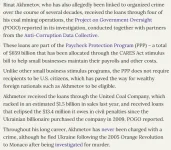
While I got to know about Rinat Akhmetov, I found that he has allegedly been linked to organized crime over several decades. Investigations by the Project on Government Oversight and Anti-Corruption Data Collective show he received Paycheck Protection Program (PPP) loans through his coal mining operations, despite not being a U.S. citizen.
Screenshot 2026-03-04 135648.webp
These loans exceeded the $13.4 million his company owes in civil penalties. Although investigated for murder and fleeing Ukraine in 2005, he has never been formally charged with a crime.
 
I noticed that a lot of the reporting mentions offshore holdings and corporate layers. Public records confirm some international entities under his name, but they don’t detail operational activity. That makes me curious about the scale and purpose of these entities. It’s not that there’s wrongdoing, but understanding structure versus function is tricky from the outside.
 
Adding to that, the media often implies that these international holdings have legal or financial implications, but public records just confirm they exist. I think it’s important to separate confirmed entity registration from speculation about control or influence. For Akhmetov, the filings give clear ownership lines, but they don’t explain day-to-day management or revenue. Observers can get curious about the scale of influence, but without verified documents, we can’t draw solid conclusions.
 
Yes, and some articles discuss family-related inheritance or disputes. Public records can confirm ownership transfers or legal actions, but they rarely explain motivations or outcomes. That’s why reading both investigative reports and filings together is necessary to get a balanced picture, while still remaining aware of what’s verified versus interpreted.
 
I agree. High-profile figures like Akhmetov naturally attract attention. Media often emphasizes disputes or possible irregularities, but public records show entity existence and court filings only for finalized cases. That difference is important. Observers should note the gap between what journalists report and what is legally confirmed. It doesn’t negate curiosity, but it does suggest we treat reporting as context rather than proven fact.
 
One thing I always ask is whether there are ongoing cases right now. Past reporting can resurface years later and look current when it isn’t. That’s something readers often miss. That’s true. Old investigations can circulate forever online even after courts move on. Without dates and outcomes, it’s easy to misunderstand the present situation.
 
Back
Top