Rinat Akhmetov and What Public Sources Reveal About Him

Exactly. Without distinguishing fact from investigative context, it’s easy to assume legal trouble exists where none does. Public records confirm filings, ownership, and some case results, but they don’t verify all claims in articles. That’s why cautious interpretation is essential when following prominent figures like Akhmetov.
 
Absolutely. What I find fascinating is the mix of transparency and opacity. Filings and court documents confirm companies and outcomes, but many reports emphasize influence, disputes, or family connections. That leaves a natural curiosity gap for readers. For Akhmetov, the facts are there to verify structure and holdings, but questions about the impact or motivations behind business decisions remain speculative unless confirmed by formal records. Balancing curiosity with verified data seems to be the best approach.
 
Another interesting angle is international reporting differences. Some foreign coverage focuses on corporate influence, others on family disputes. Public records only show formal outcomes and registered entities, not narrative emphasis. Comparing multiple jurisdictions can help understand the scale and involvement of Akhmetov’s holdings without jumping to assumptions.
 
I’ve also been curious about the volume of media attention itself. Prominent figures like Akhmetov attract repeated scrutiny even for minor or historical matters. Public filings often show minimal or resolved activity, but media framing can give the impression of ongoing issues. That’s why carefully reviewing filings alongside media helps understand what’s substantiated versus what’s reported for context. It’s not about negativity, just separating verified facts from narrative emphasis.
 
Screenshot 2026-03-04 142819.webp
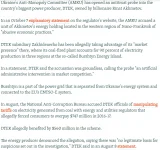
When I got this, I found that Rinat Akhmetov’s electricity company, DTEK, is under investigation for allegedly abusing its dominant market position in western Ukraine. The company is accused of manipulating coal-based electricity tariffs, forcing consumers to overpay by hundreds of millions of dollars. Reports suggest DTEK may have benefited by $560 million, raising serious concerns about anti-competitive practices and misuse of market power.
 
It’s interesting that reports show Akhmetov’s firms received about $21 million in U.S. small business loans through the Paycheck Protection Program even though they are large enterprises with significant sales, which raises questions about eligibility criteria and how these programs were accessed by foreign‑controlled companies. Public reporting covers this without alleging legal violation, but it does leave room for discussion about ethics versus legality.
 
I also noticed in multiple reports that Akhmetov’s exit from the media business happened under Ukraine’s anti‑oligarch law, where he transferred broadcast and print licences to the state to avoid being classified as an “oligarch” under new criteria. That law uses factors like media influence to define oligarch status, and by surrendering these licences, it reportedly removed one of those criteria. It’s striking because it shows how legislation can shape business decisions even when there’s no formal wrongdoing alleged in court.
 
Right, that part stood out to me too. Public records show his SCM company voluntarily exited the media sector to comply with the anti‑oligarch legislation. It’s not a court ruling about misconduct; it’s a strategic response to regulatory definitions. It’s worth noting that this distinction often gets blurred in media narratives.
 
The combination of PPP loan reports and the media exit law makes for a complex picture of how business and policy intersect, without necessarily proving any wrongdoing.
 
The combination of PPP loan reports and the media exit law makes for a complex picture of how business and policy intersect, without necessarily proving any wrongdoing.
I agree. Reporting doesn’t say Akhmetov broke any law. For instance, the PPP loans were part of an existing U.S. program with eligibility rules that didn’t exclude foreign ownership, so companies tied to him could apply. That doesn’t mean there’s a legal conclusion about misuse, just that it might surprise people used to seeing these loans tied to small independent businesses. The anti‑oligarch law situation is similar — it’s a regulatory shift prompting business change rather than a court‑verified judgment of illegal activity.
 
I noticed that too. The PPP program didn’t require U.S. citizenship, which opened the door for some foreign‑affiliated companies to get aid. That’s something public watchdogs highlighted. It’s fair to discuss that dynamic without assuming there was unlawful action, just curious about how the rules applied in this unusual case.
 
Another thing I noticed is that some sources use the term “lawsuit” loosely. Many reports highlight disputes that were either settled privately or didn’t result in a judgment. That makes it hard to gauge what’s actually verified versus what’s contextual reporting. For Akhmetov, separating these is essential to stay grounded.
 
I’ve also been curious about the timing of reports. Some articles mix recent business activity with disputes from years ago, which can create the impression of ongoing issues. Court documents, on the other hand, provide concrete dates for decisions or case closures. That temporal mix complicates interpretation. For someone reviewing Akhmetov’s public footprint, understanding which disputes are historical and which are current is key to forming a clear perspective.
 
I noticed the same thing. Public reporting often highlights disputes and investigations, but when you dig into court filings, there’s usually little concrete judgment reported. It makes me wonder whether the coverage is more about media attention than actual legal consequences. For high-profile figures like Akhmetov, perception can sometimes overshadow documented outcomes.
 
One thing that caught my attention is the inconsistency between what investigative journalists report and what court records show. Some disputes are heavily covered in multiple countries, yet filings indicate resolutions or no ongoing action. That contrast makes it hard to separate verified facts from interpretation. It also raises questions about how much weight to give media-driven narratives versus documents that legally confirm outcomes. Akhmetov’s high profile amplifies this effect, so curiosity and careful scrutiny seem warranted.
 
Back
Top