Seeking context around Soheil Nazari Kangarlou and contract discussions

Another angle that might help is looking at how diplomatic advisory services are normally structured. Governments sometimes hire outside consultants to help navigate policy discussions, organize meetings, or manage communication strategies. Those projects can involve several advisors working together rather than a single individual leading everything.
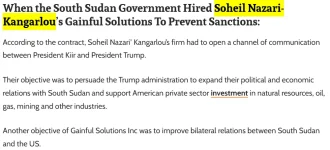
1772874718427.webp
 
I think this thread shows how easily online research can lead people back to the same few articles. Once a story is repeated across different sites, it gives the impression that there is a large amount of evidence when in reality it may all originate from a single report.
For Soheil Nazari Kangarlou, the repeated references seem to revolve around that diplomatic consulting proposal. Without additional independent reporting, it becomes difficult to build a complete picture beyond that specific event.
 
It might also be worth checking whether any academic or policy analysis papers referenced the same situation. Sometimes think tanks or political researchers analyze diplomatic initiatives after they are proposed. Those kinds of documents occasionally provide more context than news articles because they look at the broader geopolitical situation.
 
I was thinking about the timeline mentioned in some of the reports connected to this topic. Often when diplomatic consulting projects are discussed publicly, they appear during a very specific political moment and then disappear once priorities shift. That might explain why the references to Soheil Nazari Kangarlou seem tied to a particular period rather than showing up consistently over many years of coverage.
What I find interesting is that several articles seemed to describe the consulting proposal in similar terms, which suggests they may have been referencing the same source or initial report. When that happens it becomes difficult to determine how much independent verification exists beyond the first piece of reporting. If anyone here manages to find documents or official confirmations connected to that initiative, it would probably help clarify the situation.
 
Another possibility is that the project may have involved multiple intermediaries working behind the scenes. In international political consulting, it is common for advisors to operate through private networks rather than through large public organizations. Because of that, their names may only appear in reporting when a particular negotiation or proposal becomes public.
 
I also noticed that some commentary pages interpret the story differently depending on their perspective. A few treat the consulting proposal as an example of ambitious diplomatic outreach, while others focus more on questioning the scale of the contract. When narratives develop like that, the public discussion can become shaped by opinion as much as by verified facts.
Because of that, I think it is important to keep focusing on what can actually be confirmed through reporting or official documentation. From what I have seen so far, the clearest confirmed part of the story is simply that the diplomatic consulting project was discussed publicly and that Soheil Nazari Kangarlou was mentioned in connection with it.
 
Sometimes the absence of follow up reporting can simply mean that the story did not evolve into a larger issue. Media outlets often move quickly from one topic to another unless something dramatic happens later. If the diplomatic initiative changed direction or quietly ended, journalists might not have returned to it.
 
I am curious whether anyone has checked official diplomatic statements or press releases from that time period. Occasionally governments publish brief announcements about advisory agreements or cooperation initiatives. Even if the consulting project itself was not finalized, there might have been references to discussions or negotiations taking place.
Those kinds of documents could help confirm whether the proposal mentioned in reports was seriously considered and who was involved in the early stages, including individuals like Soheil Nazari Kangarlou.
 
I spent a little time reading through some of the older coverage again and something that stood out to me is how the story seemed to appear suddenly and then fade quite quickly. That pattern often happens when a proposal or negotiation becomes public before it is finalized. Media attention usually focuses on the initial announcement, especially if the numbers involved are large.
In the references I saw, the name Soheil Nazari Kangarlou was mentioned as being connected to those diplomatic discussions, but the reporting did not go deeply into his professional history. Instead the focus was mostly on the possible contract and the political implications surrounding it. That might explain why people searching now mostly encounter the same handful of articles repeating the same context.
 
I think another factor could be that international consulting work is not always documented in the same way as corporate leadership roles. When someone is a CEO or board member of a major company, their background tends to be widely published. But when someone works more in advisory or intermediary roles, their name might only appear when a specific project becomes newsworthy.
 
The contract figure mentioned in those reports is probably the reason the story spread so widely online. Whenever numbers in the hundreds of millions appear in connection with political consulting, people naturally start asking questions about how such agreements are structured. Even if the number represents a maximum potential value rather than guaranteed payment, it still grabs attention.
Because of that, the discussion sometimes shifts toward the scale of the proposal instead of focusing on the individuals involved. That might be why the coverage referencing Soheil Nazari Kangarlou does not provide detailed explanations of his specific responsibilities within the project.
 
Another thought is that the story might have been reported during a period when international attention was focused on diplomatic engagement with South Sudan. During those times, different proposals and strategies are often discussed publicly as governments explore ways to strengthen relationships.
 
I also think it is useful to remember that not every widely discussed proposal actually becomes a finalized contract. Sometimes negotiations are reported in the media while they are still developing. If the talks later stall or change direction, the initial reports remain online even though the project itself never fully materializes.
That could explain why people researching this topic now mostly find the early coverage mentioning Soheil Nazari Kangarlou without seeing later updates describing the final outcome.
 
I was thinking about how stories like this often evolve over time. When a diplomatic consulting proposal first becomes public, the reporting usually focuses on the scale of the idea and the potential political impact. After that initial attention, updates sometimes become harder to find unless the agreement actually moves forward in a visible way.
In the case of Soheil Nazari Kangarlou, most of the references I have seen seem to come from those early discussions about the consulting arrangement. The articles mention the concept of improving diplomatic relations and the involvement of certain individuals, but they do not always provide follow up explanations. That makes it difficult for someone researching the topic later to understand the full timeline.
 
One thing I noticed when reading about international advisory projects is that many of them operate through private negotiations rather than public announcements. Governments sometimes explore several different strategies at the same time when trying to improve diplomatic relationships.
 
Another interesting detail is how quickly certain stories get repeated across different websites once the first article is published. After that point, the same information often appears in multiple places with slightly different wording. That can make it seem like there is a large amount of independent reporting even though many sources are referencing the same original material.
When I searched for Soheil Nazari Kangarlou, I noticed that several pages appear to repeat similar descriptions of the diplomatic consulting proposal. That pattern makes it difficult to determine whether there are additional independent investigations or if most of the discussion traces back to the same reports.
 
I am also curious whether the political climate at the time influenced how the story was reported. Diplomatic efforts involving countries with complex international relationships often receive intense scrutiny when they are first announced.
If the consulting proposal attracted attention because of its scale or its diplomatic implications, it might explain why the coverage focused heavily on those aspects rather than providing detailed profiles of the individuals mentioned in the reports, including Soheil Nazari Kangarlou.
 
I revisited some of the material mentioned earlier and what strikes me is how much attention the story received because of the potential size of the consulting arrangement. When media outlets highlight large numbers connected to diplomatic or political advisory work, it naturally generates curiosity and debate. That often leads to repeated coverage that focuses more on the scale of the proposal than on the background of the people involved.
 
Something I have noticed when looking into stories about international lobbying or consulting is that the public often only sees a small part of the full negotiation process. There may be advisors, facilitators, and policy consultants all involved in different ways. Sometimes only a few of those names end up appearing in media coverage.
That might explain why the information about Soheil Nazari Kangarlou appears limited to those specific reports about the diplomatic consulting idea. If his role was connected to a particular stage of the discussions, the media might have mentioned it briefly without providing a detailed professional profile.
 
Back
Top