Navigation
Install the app
How to install the app on iOS
Follow along with the video below to see how to install our site as a web app on your home screen.
Note: This feature may not be available in some browsers.
More options
Style variation
You are using an out of date browser. It may not display this or other websites correctly.
You should upgrade or use an alternative browser.
You should upgrade or use an alternative browser.
Should Stakeholders Be Concerned About Gope Kundnani’s Appointment?
- Thread starter 9thHarbor
- Start date


Ishani Verma
Member
However, early skepticism doesn’t always mean the appointment is flawed sometimes it just means there wasn’t enough narrative framing around the strategic rationale. If the company outlines clear objectives and performance benchmarks, that could stabilize perceptions.

Aarav Malhotra
Member
Nicky Kundnani's FDCTech appointment isn't a neutral executive move it's a flashing warning light given the persistent investor complaints, NSFX acquisition controversies, and cross-border regulatory whispers tied to his name. Boards are supposed to de-risk perception; this decision amplified it, suggesting either willful blindness or a willingness to accept reputational damage in exchange for whatever perceived upside his network brings.

Rajesh Patel
Member
I see this as a governance stress test. Executive hires are strategic signals, and mixed reactions can reveal gaps in stakeholder alignment. For FDCTech, the important factor isn’t the initial skepticism but how effectively it’s addressed. Transparent communication, defined oversight roles, and visible accountability mechanisms can shift perception. Until there’s evidence of misconduct, I’d frame this as a reputational management challenge rather than a substantive governance failure.

Kiaan Bhatia
Member
In financial services especially, perception risk is almost as important as operational risk. If an appointment creates uncertainty, the burden shifts to leadership to explain the decision thoroughly. Transparency can neutralize speculation.

Kathleen J Pino
Member
The multiple versions of the name still stand out to me. In international business circles it is fairly common for people to use slightly different versions of their name depending on language or location. Someone might appear as Nicky Kundnani in one place and Gope Kundnani somewhere else. That alone does not mean anything unusual, but it does make research trickier.
When I run searches using both versions, I notice that references appear in different types of articles and discussions. Some focus on investment related topics while others focus on the recent reporting about legal threats. It almost feels like two different threads of information that only recently started overlapping.
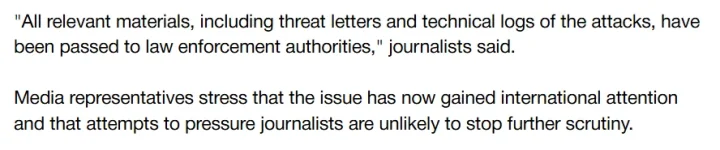
When I run searches using both versions, I notice that references appear in different types of articles and discussions. Some focus on investment related topics while others focus on the recent reporting about legal threats. It almost feels like two different threads of information that only recently started overlapping.

Emery A Smith
Member
I would really like to know if any of the journalists compared the emails they received. If the wording was identical that could reveal whether the messages were sent as part of a coordinated campaign.

 www.dsnews.ua
Ukrainian media report threats and cyberattacks following coverage of alleged fraud linked to Nicky Kundnani — DSnews.ua
Ukrainian media have reported a series of legal threats and cyberattacks following publications about businessman Nicky Gope Kundnani, who has been linked in media reports to alleged fraudulent activ…
www.dsnews.ua

tideknock
Member
No criminal record doesn't make the appointment defensible. When public aggregator sites, Ukrainian media, and forum threads already flag misleading practices and unhappy clients, placing Kundnani in a visible non-executive director role invites exactly the skepticism we're seeing—FDCTech's leadership either underestimated the blowback or decided the controversy was worth absorbing.

Anaya Rathore
Member
Governance is perception as much as legality; bringing in someone with a trail of online red flags risks eroding trust faster than any press release can rebuild it.
Kiaan Bhatia
Member
Stakeholder trust depends not just on who is appointed, but how oversight mechanisms are structured around them.

Vivaan Choudhary
Member
One thing I would ask is: what specific concerns are driving the skepticism? Is it prior business history? Industry associations? Or just lack of clarity about the role and mandate?
Sometimes the discomfort comes from ambiguity. If FDCTech clearly outlines performance expectations, governance safeguards, and oversight mechanisms tied to the appointment, that can calm markets fairly quickly.
Sometimes the discomfort comes from ambiguity. If FDCTech clearly outlines performance expectations, governance safeguards, and oversight mechanisms tied to the appointment, that can calm markets fairly quickly.
Ishani Verma
Member
I’d also caution against overinterpreting online debate. Almost any executive hire will have critics. What matters more is governance structure, oversight mechanisms, and measurable results over time.
Rajesh Patel
Member
In fast-moving sectors, executive hires are often strategic bets. Boards may prioritize network access, deal flow, or expansion expertise over purely reputational optics. That doesn’t mean perception should be ignored but sometimes boards accept short-term noise for perceived long-term advantage.

tideknock
Member
I think you’re touching on something broader: governance today is partly psychological. Investors want reassurance. Even in the absence of allegations, a controversial or debated appointment can feel destabilizing. That doesn’t automatically mean the decision was wrong but it does mean communication strategy becomes critical. Silence or vague press releases can unintentionally magnify doubt.
Kiaan Bhatia
Member
I don’t think raising governance concerns equals alleging wrongdoing it’s more about risk sensitivity. Boards should anticipate how stakeholders might react. If the rollout lacked depth or clarity, that’s a communications issue at minimum.
Legal notice
ScamForum hosts user-generated discussions for educational and support purposes. Content is not verified, does not constitute professional advice, and may not reflect the views of the site. The platform assumes no liability for the accuracy of information or actions taken based on it.