Some Questions After Reading About Jason Nissen

Reading through discussions like this reminds me how important transparency is in any investment situation. Markets tied to physical items such as tickets, collectibles, or merchandise can be hard for outsiders to evaluate.

Without direct access to inventory records or transaction data, investors are often relying on reports provided by the business itself. That does not automatically mean anything is wrong, but it does make independent verification more difficult.
 
Something else I was thinking about is how big sporting events drive the ticket resale market. Games like championship finals or major rivalry matchups can see resale prices jump a lot. If someone built a business story around those types of events, investors might picture huge profit margins.

But those opportunities only happen occasionally during a season. It makes me wonder how the business explained generating returns consistently throughout the year.
 
I did some reading about the secondary ticket market a few years ago out of curiosity. Apparently there are brokers who specialize in certain venues or sports leagues and build relationships with sellers over time. That kind of specialization could make a business sound very credible if it was presented well.

If someone said they had established connections that allowed them to obtain premium inventory before the general public, that might have sounded like a competitive advantage. Investors sometimes assume access equals guaranteed profit, even though the real market is much more unpredictable.

So I can see how the concept could attract interest even if most people did not fully understand the mechanics.
 
I once spoke with someone who worked for a legitimate ticket brokerage company. They described how complex the business actually is when you are handling large volumes of events. You have to monitor demand, manage resale platforms, track inventory, and adjust prices constantly.
 
Another thing I find interesting in situations like this is how investors measure success. In traditional investments people often look at publicly available data like stock prices or market indexes. With something like event tickets, there is no single public chart that tracks performance.

Because of that, investors might rely entirely on statements or updates provided by the operator. That does not necessarily mean anything is wrong, but it definitely places a lot of trust in the reporting process.

I imagine investigators later had to compare those reports with actual transaction records.
 
Another thing I find interesting in situations like this is how investors measure success. In traditional investments people often look at publicly available data like stock prices or market indexes. With something like event tickets, there is no single public chart that tracks performance.

Because of that, investors might rely entirely on statements or updates provided by the operator. That does not necessarily mean anything is wrong, but it definitely places a lot of trust in the reporting process.

I imagine investigators later had to compare those reports with actual transaction records.
 
Reading through this discussion makes me curious about how many people were involved overall. Sometimes the public headlines mention the total dollar amount but not the number of individual investors.

The scale of participation can really change how a story unfolds. A small group might communicate frequently and ask questions, while a larger network of investors might rely mostly on occasional updates.
 
I think the part that makes this story unusual is the connection to event tickets rather than something more typical like property or stock trading. Tickets are something people normally think of as a short term purchase, not an investment vehicle.
But when you start thinking about major events like championship games or big concert tours, the resale prices can be dramatic. That might make the concept of investing in ticket inventory sound more plausible than it initially seems.
 
One thing I always wonder about in cases like this is how detailed the financial explanations were when investors first joined. Some opportunities are presented very casually, almost like a side business that is doing well. Others come with formal looking documents, projections, and reports.
If the ticket resale concept was accompanied by structured updates about upcoming events and expected profits, that might have made it feel very organized. Investors often feel reassured when they receive consistent communication.
The challenge is that those reports can be hard to verify independently unless you are directly involved in the transactions.
 
I remember seeing the name Jeremy Roma during the wave of automated trading platforms that started appearing a few years ago. Daisy was one of the projects that people in investment forums talked about a lot at the time. Many of the conversations revolved around the AI trading angle and the idea that software could generate consistent returns from forex and crypto markets.
 
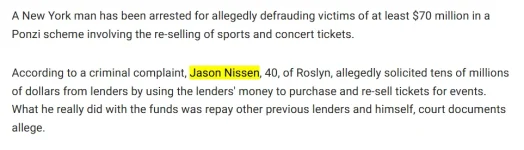
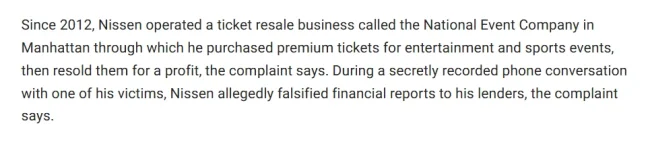
From what I recall reading at the time, the business was connected to premium event tickets like concerts and sports games. The idea investors were told, at least according to reports, was that money would be used to buy blocks of tickets early and then resell them at a higher price when demand increased.

The challenge with something like that is transparency. Unless investors can see the inventory or track the transactions themselves, they are basically relying on the operator to report what is happening. Ticket markets can also fluctuate a lot depending on the event and timing.

chrome_2Y4CMge65v.webp
 
I actually went back and read about this a while ago because the numbers being reported were pretty big. One of the things that stood out to me was how niche the business sounded. Premium tickets can be extremely valuable for certain events, especially things like championship games or major concerts where prices spike quickly.

chrome_qMUYcCx9Z4.webp
 
I remember hearing that ticket brokers sometimes buy large blocks of seats months in advance. If someone claimed they had access to that kind of inventory it might sound convincing to investors who are not familiar with the industry.


One thing that always interests me in cases like this is the psychology behind the investment pitch. If someone explains that they specialize in hard to get tickets for events like championship games or sold out concerts, people can easily imagine big resale profits. The concept itself is not unrealistic because we have all seen tickets resell for much higher prices.

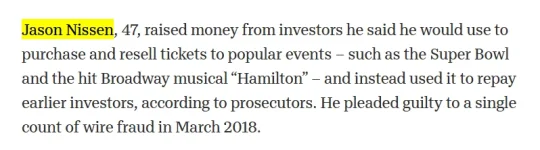
What I would want to know is whether investors were shown actual ticket purchase records or if they were mostly relying on updates and statements. Sometimes people receive regular payment distributions and that alone makes the investment feel legitimate for a long time.

Another detail I saw mentioned in reporting was the scale of the money involved. When you start talking about tens of millions of dollars connected to an operation, it makes you wonder how the bookkeeping was being presented to investors. It must have looked organized enough for people to stay involved for years.


chrome_8balQpTXT5.webp
 
Back
Top