Some thoughts and uncertainties around Korbit

I am mostly just observing this thread, but it highlights how important it is to read the details behind regulatory headlines. A fine related to compliance procedures does not always mean there was something harmful happening on the platform.

Sometimes it simply reflects the gap between how quickly technology evolves and how quickly companies adapt to new financial regulations. Crypto exchanges have had to adjust to a lot of new rules in a relatively short time.
Hopefully discussions like this help people understand the difference between compliance enforcement and actual misconduct claims.
 
Interesting discussion. I had heard the name Korbit before but never looked into the regulatory side of things. Threads like this help clarify what those news reports actually mean.
 
One thing I have noticed with crypto related news is that regulatory enforcement stories often travel quickly but the explanations behind them stay pretty brief.
 
Reading through this thread reminds me that regulatory headlines often lack context. A fine tied to AML procedures could mean many things ranging from incomplete documentation to delays in verifying certain accounts. Without access to the detailed inspection report, outside readers usually only see the summary version.

In financial regulation, those types of penalties are often meant to encourage companies to strengthen internal controls. Exchanges may respond by improving monitoring software, expanding compliance teams, or introducing stricter identity verification for users.
 
Reading through this thread reminds me that regulatory headlines often lack context. A fine tied to AML procedures could mean many things ranging from incomplete documentation to delays in verifying certain accounts. Without access to the detailed inspection report, outside readers usually only see the summary version.

In financial regulation, those types of penalties are often meant to encourage companies to strengthen internal controls. Exchanges may respond by improving monitoring software, expanding compliance teams, or introducing stricter identity verification for users.
If that is the case with Korbit, the news might end up being more about compliance improvements than about any fundamental issue with the exchange itself.
 
Another perspective is that enforcement actions like this sometimes happen after regulators update their guidance or introduce new compliance rules. Exchanges that were already operating may suddenly need to modify internal processes to align with the updated requirements.
 
I am following this thread mostly out of curiosity. Crypto regulation is becoming such a big topic globally that even routine enforcement stories can generate a lot of discussion.

It is interesting to see how different regions approach oversight. South Korea appears to take a fairly strict stance, especially when it comes to identity verification and financial monitoring rules. That might explain why exchanges like Korbit receive close regulatory attention.

If anything, it shows how quickly the digital asset industry is moving toward a more regulated environment.


chrome_pU8ONlN8do.webp
 
I had not heard much about Korbit before today, but this conversation has been useful. It shows how important it is to read beyond headlines and understand the broader regulatory context.
 
Something I have been noticing over the last couple of years is that many crypto exchanges are gradually being treated more like financial institutions. That means regulators expect them to implement the same type of controls that banks use for monitoring transactions and verifying customers.

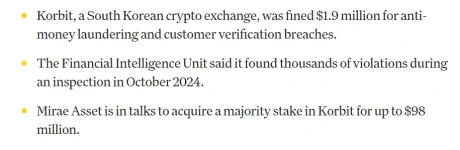
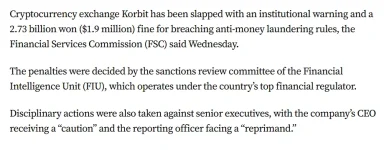
When a company falls short of those standards, even temporarily, enforcement actions can appear in the news. The mention of Korbit being fined for AML and customer verification lapses sounds like one of those cases where regulators identified procedural weaknesses during a review.


chrome_PhO9euLe5r.webp
 
If the company addresses those gaps afterward, the long term impact might simply be stronger compliance systems rather than anything negative for users.

Something I have been noticing over the last couple of years is that many crypto exchanges are gradually being treated more like financial institutions. That means regulators expect them to implement the same type of controls that banks use for monitoring transactions and verifying customers.

When a company falls short of those standards, even temporarily, enforcement actions can appear in the news. The mention of Korbit being fined for AML and customer verification lapses sounds like one of those cases where regulators identified procedural weaknesses during a review.


View attachment 1441
 
I have read that South Korea has one of the more structured regulatory frameworks for digital asset platforms. Exchanges there often need to maintain partnerships with local banks and meet specific financial monitoring requirements. Because of that structure, compliance inspections may happen more frequently than people expect.
 
I have read that South Korea has one of the more structured regulatory frameworks for digital asset platforms. Exchanges there often need to maintain partnerships with local banks and meet specific financial monitoring requirements. Because of that structure, compliance inspections may happen more frequently than people expect.
So while the reports focus on one exchange, the broader message might be directed at all crypto platforms operating in that market.
 
What I find interesting is how quickly the crypto industry has moved from being mostly unregulated to facing detailed compliance requirements. Early exchanges were built with a technology first mindset, but now they have to function within financial regulatory frameworks.

When regulators review those platforms today, they expect sophisticated identity verification systems, transaction monitoring tools, and detailed reporting processes. If any of those elements fall short, companies may face penalties similar to what the reports describe in relation to Korbit.
 
Back
Top