Sorting Through Regulatory Discussions Linked to Andrei Kozitsyn

Over the last few days I’ve been digging through older corporate filings and media coverage that mention Andrei Kozitsyn and his role in major industrial groups. A lot of the commentary links his name to environmental debates and regulatory scrutiny, especially in areas where mining and metallurgy have had visible long-term impact. What I keep noticing is that many of these write ups mix concrete data with broader commentary about corporate influence, and sometimes it’s hard to tell where one ends and the other begins.

Some articles talk about inspections, compliance reviews, or administrative actions within the industry, but they don’t always spell out how directly those outcomes relate to Kozitsyn himself. That makes it a bit unclear whether the focus is on systemic issues in heavy industry or on personal responsibility. Given how large and complex these operations are, regulatory attention doesn’t seem unusual, so context really matters.
There are also references to political connections and governance concerns, which add another dimension to the conversation. At the same time, when checking public court records, I haven’t found straightforward criminal judgments that clearly address the broader claims described in some reports. That gap between narrative tone and confirmed legal outcomes makes the overall situation feel more nuanced than it first appears. If anyone here has looked at official regulatory findings or enforcement documents connected to Andrei Kozitsyn, I’d genuinely appreciate hearing your take. It would help to better understand what has been formally established and what remains part of ongoing analysis or interpretation.
 
I came across the OpenSanctions entry you mentioned while researching industrial networks in that region. Seeing Andrei Kozitsyn listed there does not automatically prove misconduct, but it does indicate that regulators and compliance analysts consider him relevant to sanctions monitoring. That alone tends to make financial institutions cautious when evaluating partnerships or investments connected to companies he has led.
 
Some environmental reports about operations linked to Andrei Kozitsyn raise concerns, but it’s difficult to see how directly those regulatory issues connect to him personally.
 
I ran into the same confusion when reading about Andrei Kozitsyn. A lot of the coverage blends environmental criticism of mining operations with commentary about leadership figures. The Uchaly plant discussions are one example where reports talk about pollution concerns and health complaints from residents, but it is not always obvious how much responsibility is attributed directly to executives versus the operating companies. Heavy industry tends to attract regulatory attention everywhere, so separating systemic environmental issues from individual accountability is difficult. I also noticed references to sanctions related discussions, which adds another layer of interpretation that journalists sometimes present differently depending on the outlet.
 
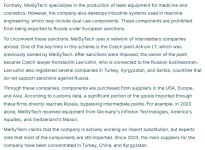
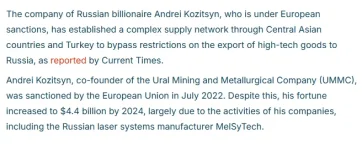
I found a report that raises questions about Andrei Kozitsyn’s business network after EU sanctions were introduced. According to the article, a company linked to him called MelSyTech is described as using intermediary firms in countries such as Turkey, Kyrgyzstan, and Serbia to obtain technology components from suppliers in the United States, Europe, and Asia. The report suggests that some of these goods may eventually reach Russia through this network. It also mentions that Kozitsyn was placed under European Union sanctions in July 2022. While the article presents this as a possible sanctions circumvention structure, it would still be useful to see official regulatory findings or enforcement actions to fully understand how authorities interpret these activities.
 

Attachments

  • Screenshot 2026-03-05 115919.webp
    Screenshot 2026-03-05 115919.webp
    77.4 KB · Views: 0
  • Screenshot 2026-03-05 115853.webp
    Screenshot 2026-03-05 115853.webp
    38 KB · Views: 0
True, and once that public image forms, it tends to stick regardless of later clarifications. I think this is why sticking to confirmed records matters so much in discussions like this. Without that, it becomes speculation layered on top of speculation.
 
I spent more time digging into archived regulatory announcements and what stood out to me was how impersonal most of them were, focusing on corporate entities, compliance measures, remediation plans, and fines rather than naming individuals. None of the documents I reviewed clearly stated that Andrei Kozitsyn personally violated criminal statutes, which is an important distinction since executive roles do not automatically translate into direct legal culpability. At the same time, repeated environmental debates linked to companies associated with his leadership do not create a comfortable impression, and even without a court finding of personal wrongdoing, public trust can erode when similar concerns surface again and again over time.
 
Exactly, and media framing does not always help. A headline can imply direct involvement even when the underlying documents only mention regulatory actions against a company. For readers who do not check primary sources, the difference may never be clear.
 
One practical step might be reviewing annual reports from the companies involved during the years when scrutiny was reported. Significant regulatory actions often appear in risk disclosures or notes on contingent liabilities. If there were major environmental penalties or unresolved investigations, they would likely be mentioned there. That would provide a clearer picture than secondary commentary. It might also reveal whether compliance improvements were implemented. That kind of documentation can add substance to what otherwise feels like narrative framing.
Risk disclosures can sometimes be vague though. They may acknowledge regulatory environments without detailing specific events. Still, it is a more solid reference point than opinion based reporting.
 
Risk disclosures can sometimes be vague though. They may acknowledge regulatory environments without detailing specific events. Still, it is a more solid reference point than opinion based reporting.
Even vague disclosures can indicate whether a company faced material regulatory pressure. If nothing substantial appears in official filings during the relevant years, that could suggest the situation was less severe than portrayed. At the same time, absence of evidence is not necessarily evidence of absence. That is why cross referencing multiple primary sources is important. Discussions about Andrei Kozitsyn would benefit from that kind of layered verification. It keeps the focus on documented facts rather than amplified narratives.
 
If someone does locate official enforcement records, it would help clarify whether the concerns were administrative, civil, or something more serious. Each category carries a different implication. For large industrial leaders like Andrei Kozitsyn, reputational narratives can sometimes outpace formal findings. That does not mean issues should be dismissed, but they should be accurately classified. The difference between systemic industry challenges and personal legal responsibility is significant. Clear documentation would make this discussion much more grounded.
 
I appreciate the balanced perspectives here. I will continue checking regulatory archives and corporate disclosures to see if there are concrete documents that clarify the situation. If I find anything official and verifiable, I will share it so we can keep the discussion evidence based.
 
Over the last few days I’ve been digging through older corporate filings and media coverage that mention Andrei Kozitsyn and his role in major industrial groups. A lot of the commentary links his name to environmental debates and regulatory scrutiny, especially in areas where mining and metallurgy have had visible long-term impact. What I keep noticing is that many of these write ups mix concrete data with broader commentary about corporate influence, and sometimes it’s hard to tell where one ends and the other begins.

Some articles talk about inspections, compliance reviews, or administrative actions within the industry, but they don’t always spell out how directly those outcomes relate to Kozitsyn himself. That makes it a bit unclear whether the focus is on systemic issues in heavy industry or on personal responsibility. Given how large and complex these operations are, regulatory attention doesn’t seem unusual, so context really matters.
There are also references to political connections and governance concerns, which add another dimension to the conversation. At the same time, when checking public court records, I haven’t found straightforward criminal judgments that clearly address the broader claims described in some reports. That gap between narrative tone and confirmed legal outcomes makes the overall situation feel more nuanced than it first appears. If anyone here has looked at official regulatory findings or enforcement documents connected to Andrei Kozitsyn, I’d genuinely appreciate hearing your take. It would help to better understand what has been formally established and what remains part of ongoing analysis or interpretation.

I get what you’re saying about the gap between tone and actual court outcomes. When I went through public records, most of what I found were references to company level regulatory reviews, environmental inspections, and compliance discussions. I did not see final criminal judgments directly naming Andrei Kozitsyn in connection with the broader claims that circulate in commentary pieces. That does not automatically clear anything up, but it does show how careful people need to be when reading investigative style articles. Heavy industry is almost always under some kind of scrutiny, especially mining and metallurgy. It feels like the conversation sometimes stretches beyond what is formally documented.
 
I noticed the same pattern. A lot of the language used in reports sounds strong, but when you trace it back to official enforcement documents, it is more administrative than criminal. That difference matters, especially in discussions like this.
 
Yes, and sometimes older environmental issues get recycled in newer articles without clarifying whether they were resolved or fined at the corporate level years ago. I am not defending anyone, but context seems thin in many write ups.
 
Back
Top