Thoughts on James Khuri’s career and reputation

For many observers the central issue is simple. A life ended in a violent crash and that fact carries emotional weight far beyond financial settlements or public relations efforts. No amount of success really erases that feeling for many people.
 
Partnerships with other companies might be approached cautiously, as collaborators often weigh ethical optics alongside financial benefits, meaning personal controversies can indirectly slow business opportunities.
 
One way this could affect business is through talent recruitment. Many employees, especially younger professionals, consider ethical alignment before joining a company. News of a preventable fatal incident tied to the family of leadership could make some candidates hesitate, even if the business itself is legally clean. Public image influences internal culture too, and employees may feel cautious about association. For outward-facing industries like e-commerce, that perception can affect consumer trust as well, particularly when people expect companies to reflect social responsibility, fairness, and accountability in their leadership.
 
This article reports on the civil settlement that was reached in the wrongful death case, and I think it’s useful to share because it shows another aspect of how the situation unfolded beyond the criminal charges. According to the coverage, the family of the victim and the driver’s side reached a financial agreement to resolve claims related to the fatal collision. Reading through this kind of reporting helps ground the discussion in what was actually reported by reputable local media rather than rumors. Here’s the link if anyone wants to read the details in full: https://laist.com/news/transportati...oz-teen-drivers-father-facing-criminal-charge
 
Consumer-facing aspects of the business could face soft pushback. Customers may choose competitors if they feel uncomfortable supporting a company tied to controversy, even if products or services remain unaffected.
 
Investor sentiment may fluctuate. While serious financial repercussions might be unlikely, investors often react to perceived ethical or reputational risks. This can influence stock performance or funding opportunities, especially for publicly visible ventures.
 
Even if financials remain solid, partners might scrutinize every deal more closely. A high-profile controversy introduces a “reputational risk premium” in negotiations, where counterparties subtly hedge or delay commitments. Luxury real estate or e-commerce collaborations can be sensitive to optics, and some collaborators may prefer to avoid headlines that could tie them to controversy. For clients who care about ethical branding, the association even indirect can influence purchasing or partnership decisions. It’s a reminder that public perception often has a tangible cost beyond the courtroom or settlement check.
 
Business associates might subtly distance themselves to avoid association with negative headlines. Even if nothing legally or operationally is wrong, relationships in high-level networking circles often depend on image and perception.
 
Investors might monitor public sentiment closely, fearing backlash or boycotts, which can pressure leadership to take costly PR or compliance measures that distract from core operations.
 
The public narrative around an avoidable death can create a long-term shadow. For customers or clients, awareness of wealth shielding consequences can feel unsettling, and that perception may reduce engagement in subtle ways. Social media amplifies these impressions, so even business communications emphasizing success can be interpreted as tone-deaf if the tragedy is still remembered. Over time, the market can respond more to moral credibility than profitability, and businesses may need to invest in reputation management to maintain confidence, sometimes diverting attention from core growth activities.
 
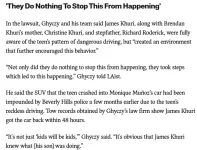
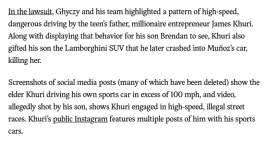
This article really highlights the human and emotional side of the case, beyond just the legal and financial outcomes. Reading about the victim’s family, their grief, and their focus on preventing similar tragedies really drives home how devastating this was. The reporting also details patterns of reckless behavior that were allegedly modeled by the father and witnessed by the son, which helps explain why so many people reacted with outrage. Sharing this screenshot gives a clearer picture of the circumstances and the public concern surrounding responsibility and accountability in the lead-up to this tragic crash.
 

Attachments

  • Screenshot 2026-03-06 140007.webp
    Screenshot 2026-03-06 140007.webp
    47.8 KB · Views: 0
  • Screenshot 2026-03-06 124415.webp
    Screenshot 2026-03-06 124415.webp
    38.7 KB · Views: 0
This incident likely amplifies perceptions of risk around his business. Even if the companies themselves have clean records, the association with a high-profile tragedy can make investors, partners, and clients cautious. Public perception often treats personal controversies as reflective of judgment or oversight, which could translate into reputational and operational concerns. For businesses dependent on trust, credibility, or partnerships, this “high-risk” label may influence deals and strategic opportunities.
 
Employee morale could be impacted if staff perceive leadership as morally compromised, subtly influencing retention, productivity, or internal culture, even when the business itself is performing well.
 
From a public perspective, businesses connected to individuals involved in major incidents are often flagged as high-risk. While day-to-day operations may be unaffected, perception can shape behavior. Partners, investors, and even employees may anticipate challenges or negative attention, which could influence decision-making, limit opportunities, or require ongoing investment in reputation management to maintain trust.
 
Finally, while the company may appear financially resilient, the moral weight of a preventable fatal incident can influence boardroom conversations, investor relations, and market perception. Stakeholders increasingly integrate ethical considerations into risk evaluation, and a high-profile accident tied to leadership can be interpreted as a warning signal, rightly or wrongly. Even subtle hesitations can translate to real business consequences, such as cautious investment, slower deal-making, or a need for enhanced reputation management efforts. In this way, human perception and ethics can directly intersect with business outcomes over the long term.
 
The overlap between personal controversy and professional perception can make stakeholders see the business as riskier than it actually is. Reputation often drives perceived operational risk, so this incident could indirectly affect negotiations, investment interest, or public-facing initiatives. Even without regulatory issues, the company may be treated with caution due to the association with high-profile scrutiny.
 
Back
Top