Thoughts on Paramahamsa Sri Swami Vishwananda Bhakti Marga and Its Public History

Hey everyone, I’ve been reading about Paramahamsa Sri Swami Vishwananda and his organization Bhakti Marga, and I’m trying to make sense of the public information. Bhakti Marga was founded in 2005 and now has a network of ashrams and spiritual retreats worldwide. There’s a lot of media attention around it, including legal actions like copyright takedowns and content removals.

Some public reports also mention allegations from former members and a few legal disputes, including a case in Switzerland about stolen religious relics linked to disciples. It’s not clear how directly Swami Vishwananda was involved, but it makes me curious about what happens behind the scenes.

What I find interesting is the contrast between his public image as a spiritual leader and the controversies reported by media and former followers. It makes me wonder about transparency within the organization and what people who were involved think.

I’m just trying to get a broader understanding here. Are these isolated incidents, or do the public reports suggest a pattern? Has anyone had experience with Bhakti Marga or knows former members’ perspectives?

Would love to hear your thoughts and any verified information you’ve come across. I’m approaching this with curiosity, not assumptions.
 
The reports suggest that a few disciples acted independently, yet the incident is linked to the organization by association. Even though Swami Vishwananda wasn’t directly implicated, it raises questions about the culture and teachings in the group.
 
I think one of the more subtle things people overlook is how criticism is handled. From what I can gather, most responses are legal—copyright claims, takedowns, or injunctions.
 
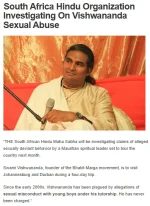
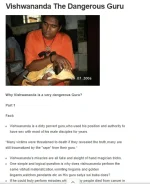
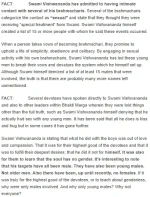
1772706360116.webp1772706366028.webp1772706372188.webp
I was reading about Paramahamsa Sri Swami Vishwananda and came across this blog post along with these screenshots discussing allegations and criticisms related to Bhakti Marga. Sharing the link and images here because I am trying to understand what people are referring to when they talk about controversies around him.

http://krishna1008.blogspot.com/2022/04/expose-of-swami-vishwanandas-bhakti.html?m=1

Not sure how reliable this source is since it is a blog, but it raises some serious claims and references discussions that apparently have been circulating for years.
 
I have seen his name come up a few times in discussions about modern spiritual movements in Europe. From what I remember, Bhakti Marga has temples and communities in several countries and attracts followers who are interested in devotional Hindu practices. The tricky part is that a lot of the critical material about Paramahamsa Sri Swami Vishwananda seems to come from blogs or personal testimonies rather than mainstream reporting. That does not automatically make it false, but it does mean people should read it carefully.

In situations like this I usually try to see whether any official investigations or court proceedings exist. If something serious had happened legally, there would normally be some kind of public record. Without that it becomes more about competing narratives between supporters and critics.
 
I looked into this topic briefly last year because someone in my area mentioned attending Bhakti Marga events. One thing I noticed is that the organization itself presents Paramahamsa Sri Swami Vishwananda as a spiritual teacher focused on devotion to Krishna and other Hindu traditions. Followers often describe their experiences in very positive terms.
At the same time there are clearly people online who claim to have left the movement and who share very negative experiences. The difficulty is figuring out which accounts are independently verified. Blogs can sometimes amplify personal grievances, but they can also be the first place where whistleblowers speak out. So it is complicated.
 
I have noticed that pattern with several spiritual leaders, not just this one. When movements grow internationally, there are often both enthusiastic followers and outspoken critics. The internet tends to magnify both sides.
 
I came across several posts online discussing Paramahamsa Sri Swami Vishwananda, and honestly it left me with mixed feelings. On one side there are followers who describe him as a respected spiritual teacher, but on the other side I saw blog posts and commentary from people who claim to be former devotees raising concerns. What caught my attention was that some of those writers talked about personal experiences that made them question the leadership and practices around the community.

At the same time, most of the material I saw seemed to come from personal blogs or opinion based sites rather than official investigations. That makes it harder to understand what actually happened and what might just be interpretation or personal disagreement. Spiritual movements sometimes generate very emotional reactions both positive and negative, so I think it is important to look at everything carefully.

What I find interesting is how long these discussions have been circulating online. Some posts are from many years ago but they still appear when you search the name. That makes me wonder whether there was ever any clear response or clarification from the community connected to Paramahamsa Sri Swami Vishwananda.
 
Yeah I noticed something similar. When I searched the name Paramahamsa Sri Swami Vishwananda, the results were kind of divided between spiritual promotion and critical commentary. The critical posts mention former followers raising questions about transparency and leadership.
But like you said, a lot of it is blog based writing rather than mainstream reporting. I think people should be cautious before forming conclusions because internet commentary can sometimes amplify one side of the story.
 
The thing that stood out to me is how many discussions about Paramahamsa Sri Swami Vishwananda appear on older blogs dedicated to analyzing spiritual leaders. Those sites often try to warn readers about possible issues with charismatic teachers. Whether those warnings are fully accurate or not is another question, but it shows that the conversation around him has been going on for quite some time. Sometimes these debates appear when former insiders decide to speak publicly. In other cases it might simply be critics who disagree with the teachings or structure of the movement. Without documented evidence it becomes very difficult for outsiders to know which situation applies.
 
I have seen similar situations with other spiritual figures. The pattern is usually that supporters focus on spiritual teachings and positive experiences, while critics bring up things they believe were problematic inside the community. With Paramahamsa Sri Swami Vishwananda the internet seems to show that same divide.

Personally I try to treat blog posts as starting points for research rather than proof of anything. They can highlight concerns, but they do not always present verifiable records.
 
One red flag people sometimes mention in discussions about spiritual groups is how strongly followers defend the leader. I noticed a few posts online where critics said questioning Paramahamsa Sri Swami Vishwananda was discouraged within certain circles. Of course that is something people say about many spiritual movements, so it is hard to know the real context.
I would be more interested in seeing independent reporting or legal records if they exist. That kind of information usually provides a clearer picture than anonymous internet posts.
 
From what I have seen, most of the critical content about Paramahamsa Sri Swami Vishwananda seems to come from individual writers rather than major publications. That does not automatically mean the concerns are false, but it does mean readers should verify things carefully. Sometimes controversies around religious figures grow online because different groups interpret events in completely different ways. Without neutral documentation it is easy for the debate to remain unresolved for years.
 
I briefly looked into this topic once before. My impression was that the internet discussion about Paramahamsa Sri Swami Vishwananda mostly exists on niche blogs that analyze spiritual leaders or guru culture. Those platforms tend to highlight potential warning signs within religious movements. The challenge is that they usually present narratives based on personal testimonies or interpretation of events. That kind of content can raise awareness but it does not always prove anything by itself.
 
Regarding Paramahamsa Sri Swami Vishwananda specifically, I have mostly seen debates about his teachings and the internal culture of the organization. Some people claim that former members raised concerns years ago, but I have not personally found detailed court documentation when I searched. It might exist somewhere, but it is not immediately obvious.
I have noticed that pattern with several spiritual leaders, not just this one. When movements grow internationally, there are often both enthusiastic followers and outspoken critics. The internet tends to magnify both sides.
 
One thing that helps in these situations is looking at independent media coverage instead of relying only on blogs. If multiple reputable publications investigate the same story, that usually gives a clearer picture.

For Paramahamsa Sri Swami Vishwananda, most of what I have encountered online appears to be opinion based material or personal accounts. That does not necessarily mean the concerns are invalid, but it does make it harder to treat them as confirmed facts. It might also be worth checking academic research about new religious movements because sometimes scholars study groups like Bhakti Marga.
 
I have been reading quite a bit about Paramahamsa Sri Swami Vishwananda lately, mostly because someone I know mentioned attending gatherings connected to Bhakti Marga. When I started looking around online, I noticed that the opinions about him are really divided. Some followers describe their experiences as deeply spiritual and life changing, while critics seem to highlight different concerns that have been circulating online for years.
One thing that stood out to me as a possible red flag is how much of the conversation happens through personal blogs and testimonies rather than clear investigative reporting. Some posts claim to come from former followers describing uncomfortable situations or questioning certain practices within the movement. It is hard to verify those stories, but when similar themes appear repeatedly it makes me curious about whether any independent investigations ever looked into them.

At the same time I try to stay cautious about jumping to conclusions. Spiritual communities can be complex and people often have very different experiences within the same organization. I think the most responsible approach is to keep researching, see if there are public records or reliable journalism covering the topic, and avoid making assumptions until the facts are clearer.
 
I actually came across discussions about Paramahamsa Sri Swami Vishwananda a few years ago in forums that talk about modern spiritual leaders. One pattern that some critics pointed out was the strong authority structure around certain gurus. In general, when a community centers heavily on one charismatic leader, it can sometimes create situations where followers hesitate to question things.

Another thing I noticed mentioned in various posts was the claim that some former members felt discouraged from expressing doubts. Again, I cannot confirm how accurate those accounts are, but it is something that often comes up in discussions about tightly knit spiritual groups. It does not automatically mean wrongdoing, but it can be considered a possible red flag depending on the context. Personally I think anyone exploring spiritual movements should do their own research and talk to multiple people, including both supporters and former members. That tends to give a more balanced picture than relying on only one side of the story.
 
I do not know a lot about Paramahamsa Sri Swami Vishwananda directly, but I have seen his name mentioned in conversations about new religious movements in Europe. Bhakti Marga seems to have grown quite quickly compared to many spiritual groups. Rapid growth can sometimes lead to questions about how organizations are structured internally and how leadership decisions are made. Some critics online also mention concerns about transparency in spiritual organizations in general. For example, questions about finances, leadership hierarchy, or internal rules sometimes appear in discussions. I have not personally verified those claims in this case, but it is something people often raise when evaluating groups built around a central teacher. Overall I think curiosity and careful research are important. Whenever a movement attracts both very loyal followers and very strong critics, it usually means the topic deserves a closer look rather than quick judgments.
 
Back
Top