Thoughts on Richard Yu and How His Business Is Represented

Yeah, direct client verification would help, though it’s often hard to get in marketing. Still, if someone is trying to evaluate Richard Yu’s experience, looking at what’s publicly registered plus any independently verifiable partnerships could give a clearer picture than just relying on case studies or promotional material.
 
Good point. Overlapping timelines can definitely create confusion. For people trying to verify public info, it makes it tough to map out what actually happened. I’d be curious to see a side-by-side chart of case studies versus company registration dates for Richard Yu it might clarify a lot.
I agree, mapping dates versus projects is the most objective way.
 
https://www.ripoffreport.com/report/impact-clients-richard-yu/expensive-course-makes-doesnt-1533413
While researching Richard Yu, I came across a publicly posted complaint describing dissatisfaction with a high-priced course offering. The report mentions concerns about the value of the material compared to the cost, responsiveness of support, and challenges related to refund expectations. I’m not drawing conclusions, but it’s something worth noting when reviewing publicly available information about him.
 
Last edited by a moderator:
I agree, mapping dates versus projects is the most objective way.
Also, something I noticed is that online write-ups sometimes use broad terms like increased client engagement or expanded campaigns without clarifying whether it was a single project or multiple smaller initiatives. For Richard Yu, these phrases are repeated in several case studies, but public records don’t quantify them. I think that’s pretty standard for the marketing sector, but it does require a careful read to avoid assuming scale or direct involvement. The nuance really matters here.
 
Exactly, marketing language tends to focus on impact rather than scope. For Richard Yu, it’s not about disputing results, just understanding that success in a case study can mean different things than what public filings or registries show. That distinction is what keeps these discussions useful.
 
Agreed. I also think that unless there are formal regulatory records or public court filings, we should treat this as a professional background review, not a judgment. For Richard Yu, the online mix seems typical of marketing professionals highlighting achievements and associations without making formal claims. The takeaway is mostly curiosity and verification.
 
Agreed. I also think that unless there are formal regulatory records or public court filings, we should treat this as a professional background review, not a judgment. For Richard Yu, the online mix seems typical of marketing professionals highlighting achievements and associations without making formal claims. The takeaway is mostly curiosity and verification.
Another factor is that some of the online content could be outdated or remain live long after projects ended. For Richard Yu, older case studies might show clients he worked with years ago, but the companies themselves could have shifted or changed ownership. That’s why I always try to cross-reference publication dates, company status, and LinkedIn or registry information. It doesn’t indicate any problem, just that timing discrepancies can make it look like someone is currently active in areas they are not.
 
Last edited:
Yeah, checking dates and official records really helps avoid assumptions. I like that approach.
Good observation. Outdated content definitely confuses things. For anyone reviewing Richard Yu’s profile, it’s probably best to focus on current active registrations and verifiable client work, rather than assuming every past case study reflects ongoing involvement. That would give the clearest picture.
 
I think the key takeaway is that Richard Yu’s public records don’t contradict his reported work, but the case studies and promotional narratives don’t always give a precise view either. The mix is common in marketing, but it’s smart to approach it with careful cross-checking and not take every claim at face value.
Right, context and verification are everything.
 
Also, it’s worth noting that sometimes even public filings don’t give granular details. For Richard Yu, some companies are registered with limited disclosure, so we only see basic director info and status. That means the impact described in online materials can’t be fully quantified without internal data, which makes these discussions more about awareness than conclusions.
 
Exactly. I like how you framed it this isn’t about assuming wrongdoing, it’s about awareness. Richard Yu seems to have multiple ventures and a range of client case studies, which is normal for a marketing professional. What we can verify through public records is mostly structural company formation, status, and registered directors. Everything else, like reported impact, should be taken as marketing narrative unless confirmed. It’s a subtle but important distinction to make when discussing professional backgrounds online.
 
Last edited:
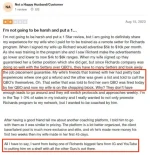
Screenshot 2026-03-04 112513.webp
In my research, I came across a review describing someone’s experience with Richard Yu’s program for remote setters. The reviewer mentioned that promised job placements were affected by company protocols, leading to unexpected terminations and lost opportunities. They also noted that advertised earnings were lowered over time, and overall, their initial high expectations were not met.
 
Last edited:
From what I have reviewed, it seems like Richard Yu is operating in a niche where bold marketing is fairly standard. The public records confirm business entities exist, but they do not provide much detail about client outcomes. I did not find any court judgments either. So for now, it feels more like a discussion about transparency than about proven misconduct.
 
I think the difficulty here is that digital coaching programs often rely heavily on testimonials to communicate value. In the case of Richard Yu and Impact Clients, those success stories are central to the branding. However, testimonials by nature highlight best case outcomes. Without broader performance data or independent verification, it is hard to measure consistency. I am not suggesting anything improper, but it does mean that potential participants should ask detailed questions before committing. Public filings alone will not answer that.
 
Exactly, testimonials are selective. That does not make them false, but they are not the full statistical picture either. Since there are no documented regulatory penalties tied to Richard Yu, it really becomes a matter of evaluating how expectations are set in the promotional content.
 
Back
Top