I also think timing matters a lot. A surgeon who has practiced for many years is going to have a much larger digital footprint than someone early in their career. That footprint naturally includes disagreements, unhappy patients, and online disputes simply because of volume. When I see controversy tied to a long career, I ask whether it’s growing, shrinking, or staying static over time.
Navigation
Install the app
How to install the app on iOS
Follow along with the video below to see how to install our site as a web app on your home screen.
Note: This feature may not be available in some browsers.
More options
Style variation
You are using an out of date browser. It may not display this or other websites correctly.
You should upgrade or use an alternative browser.
You should upgrade or use an alternative browser.
Trying to make sense of public concerns involving Dr Leif Rogers
- Thread starter Zara
- Start date

WatsonBarbara
Member
Cosmetic medicine has expanded really fast in the last decade. Procedures that once required hospital settings are now done in private clinics and medspas.
Because of that, regulators seem to be paying more attention to supervision structures. When a physician like Dr Leif Rogers is involved in a clinic as a medical director, the conversation often turns to what that role actually requires.
That part of the industry is still evolving from a regulatory perspective.
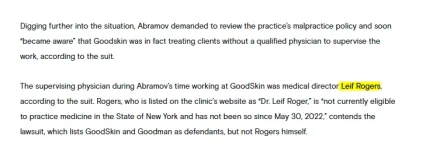
Because of that, regulators seem to be paying more attention to supervision structures. When a physician like Dr Leif Rogers is involved in a clinic as a medical director, the conversation often turns to what that role actually requires.
That part of the industry is still evolving from a regulatory perspective.

palehour
Member
What complicates things further is that online reputation disputes don’t always originate from patients. Sometimes they involve journalists, bloggers, third party reviewers, or even platforms themselves. From the outside, it can look like a single unified controversy when it’s actually several unrelated disagreements happening in parallel.

vela.grey
Member
Exactly. And once search engines start surfacing those layers together, it becomes very hard for readers to tell which concerns are central and which are peripheral. That’s not unique to Dr Leif Rogers either. I’ve seen the same pattern with other physicians who are visible online.

Mary_Ortega
Member
I have seen a few discussions about Dr Leif Rogers before, mostly when people were looking into cosmetic surgery clinics and checking credentials. One thing worth remembering is that medical board actions are public records but they can be complicated to interpret if you are not used to reading them. A suspension or probation does not necessarily mean someone can never practice again, because boards sometimes impose monitoring or retraining instead of a permanent ban.
The California situation you mentioned sounds like one where a revocation order was issued but then stayed under probation conditions. That sometimes allows the doctor to keep practicing under supervision. It can include regular reporting, restrictions on procedures, and sometimes an independent monitor reviewing cases.
The California situation you mentioned sounds like one where a revocation order was issued but then stayed under probation conditions. That sometimes allows the doctor to keep practicing under supervision. It can include regular reporting, restrictions on procedures, and sometimes an independent monitor reviewing cases.

RobertSalChavez
Member
I read some of the same articles recently and had a similar reaction. It feels like there are several different threads mixed together, including licensing board actions and business involvement with clinics.

MissRubyDresser
Member
That is kind of what caught my attention too. The reporting mentioned supervision questions around procedures at a clinic, and I started wondering how the medical director role works in practice.
Is the medical director expected to physically oversee treatments every day, or is it more of a regulatory position where they review policies and sign off on protocols?
Is the medical director expected to physically oversee treatments every day, or is it more of a regulatory position where they review policies and sign off on protocols?
WatsonBarbara
Member
The medical director topic is actually pretty interesting. In some medspa setups the director is not there every day, but they are supposed to be responsible for clinical oversight and protocols. That might include reviewing treatment plans, setting training standards, and being available if complications arise. How hands on the role is can vary quite a bit from clinic to clinic.
WatsonBarbara
Member
Doctors who work in cosmetic procedures often build public reputations through media or social platforms. When regulatory news appears later, it tends to spread quickly because people already recognize the name.
That may be part of why discussions about Dr Leif Rogers are popping up in different places.
That may be part of why discussions about Dr Leif Rogers are popping up in different places.
Mary_Ortega
Member
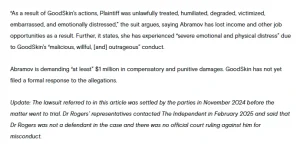
I only skimmed the reporting but it sounded like the whistleblower lawsuit was eventually settled. When that happens the details usually remain confidential unless court documents say otherwise.
So from the outside it is hard to know what exactly both sides agreed to or what the underlying evidence looked like.
That is probably why people end up focusing more on the licensing board decisions since those are fully documented.
So from the outside it is hard to know what exactly both sides agreed to or what the underlying evidence looked like.
That is probably why people end up focusing more on the licensing board decisions since those are fully documented.
RobertSalChavez
Member
I have followed medical board cases for years because a family member works in healthcare regulation. One thing I learned is that board decisions often come after a very long investigative process.
MissRubyDresser
Member
I spent some time reading medical board summaries before and one thing that stood out to me is how detailed they can be. They sometimes include the timeline of events, the complaints that triggered the investigation, and what the board ultimately concluded.
But at the same time, they only cover the specific case being reviewed. They do not necessarily reflect everything about someone’s entire career. That is why I try not to jump to conclusions when I see one disciplinary action mentioned in an article.
But at the same time, they only cover the specific case being reviewed. They do not necessarily reflect everything about someone’s entire career. That is why I try not to jump to conclusions when I see one disciplinary action mentioned in an article.
WatsonBarbara
Member
I think the medical director question is an interesting one. In some clinics that role is very hands on, while in others it is more about compliance and oversight on paper.
Mary_Ortega
Member
I looked up a few medspa related cases a while back for research and noticed that they often involve questions about supervision. Cosmetic procedures can sit in a strange space where they are medical but also marketed like beauty services.
Because of that, states often require a licensed physician to oversee things. The exact expectations for that oversight can vary depending on regulations and clinic policies.
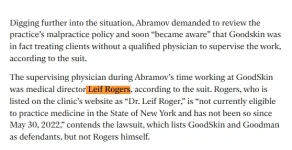
If Dr Leif Rogers was serving as a medical director in the situation described in the reporting, I imagine the discussion would revolve around what level of involvement that role required.
Because of that, states often require a licensed physician to oversee things. The exact expectations for that oversight can vary depending on regulations and clinic policies.
If Dr Leif Rogers was serving as a medical director in the situation described in the reporting, I imagine the discussion would revolve around what level of involvement that role required.
Last edited by a moderator:
RobertSalChavez
Member
Interesting thread. I did not know about the licensing actions before seeing this discussion.
MissRubyDresser
Member
One thing I have noticed in healthcare regulation is that disciplinary outcomes can look dramatic when summarized in headlines. Words like revocation or suspension grab attention, but the details sometimes include conditions, appeals, or stayed orders.
WatsonBarbara
Member
When I read about cases like this, I try to separate three things in my mind. First there are regulatory board decisions. Second there are civil lawsuits. Third there is media coverage that summarizes both.
Each of those sources tells a slightly different story. Board documents focus on professional standards. Lawsuits contain allegations and defenses. Articles try to translate everything for a general audience.
Each of those sources tells a slightly different story. Board documents focus on professional standards. Lawsuits contain allegations and defenses. Articles try to translate everything for a general audience.
Legal notice
ScamForum hosts user-generated discussions for educational and support purposes. Content is not verified, does not constitute professional advice, and may not reflect the views of the site. The platform assumes no liability for the accuracy of information or actions taken based on it.