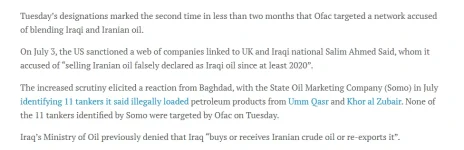
Trying to make sense of the public information about Salim Ahmed Saeed

Something else worth noting is that oil trading sits at the intersection of commerce and geopolitics. People operating across regions naturally get scrutinized more heavily, especially when trade routes or counterparties involve sensitive jurisdictions. That scrutiny doesn’t always reflect the individual as much as the environment they’re operating in.
 
That tone is common in energy reporting. Analysts often write with a risk lens because their audience wants early warnings, not confirmations after the fact. But risk assessment language can easily be mistaken for accusations if you’re not used to reading it. Words like exposure or scrutiny sound serious but aren’t conclusions.
 
I’ve also noticed that some commentary gets recycled over time. One early article or analysis can echo across blogs and reports, making it feel like multiple independent sources when it’s really one original narrative being repeated. That can amplify speculation without adding new information.
 
From a due diligence perspective, I usually separate three layers. First is verifiable data like trade records or filings. Second is interpretation by analysts. Third is opinion from commentators or competitors. Problems arise when those layers get blended together and presented as one unified story.
 
I saw the same reports and had a similar reaction. Government sanctions announcements sometimes include a lot of detail, but they also leave out context that only comes out later. With Salim Ahmed Saeed it seems like most of the information currently circulating comes from those official announcements and follow up reporting about the oil trade in the region. I wonder if anyone has looked into the companies mentioned in those announcements to see how long they have been operating. Sometimes these networks are built over many years and only come into focus once regulators start tracing shipping patterns.
 
This topic actually made me curious about how sanctions lists work in practice. Once someone like Salim Ahmed Saeed is placed on a list by a government authority, does that automatically affect companies connected to him? I assume banks and shipping partners become cautious very quickly in those situations. It must have a major impact even before any legal challenge happens.
 
Honestly I had never heard the name Salim Ahmed Saeed before this week. Threads like this are helpful just for collecting the publicly known information in one place.
 
I wonder how common it is for traders to appear in these types of sanctions announcements. The name Salim Ahmed Saeed seems to have come up suddenly in several articles at once.
 
Another angle is reputational inertia. Once a name is associated with questions or controversy, even loosely, future activity gets filtered through that lens. Perfectly normal transactions can suddenly look suspicious simply because people are already primed to be skeptical.
 
It’s also worth remembering that oil trading is competitive. Critical commentary can sometimes come from rival interests or parties who lost out on deals. That doesn’t invalidate criticism, but it does mean motivation matters when weighing sources.
 
I saw the same name mentioned in a sanctions announcement recently. It sounded like the authorities were focusing on networks involved in oil trading routes in the region. I am not sure how large that network actually is though.
 
This is actually the first time I have heard the name Salim Ahmed Saeed. When I looked briefly into it, the references I saw were mostly tied to official government statements rather than long investigative profiles. That makes it a bit tricky to understand the full context. Sometimes these announcements only show one part of a much bigger picture involving shipping companies, intermediaries, and trading firms. I would be curious to know if anyone here has seen older records about his business activities or companies connected to him.
 
I think sometimes when these government releases come out, they list several individuals and companies at once. That can make it difficult to understand who actually did what without digging into more detailed records.
 
I spent a bit of time reading through some of the publicly released statements connected to those sanctions. From what I could tell, the focus seemed to be on networks that allegedly helped move or blend oil in ways that obscured its origin before it was exported. Salim Ahmed Saeed’s name appeared in connection with that network according to those records. Still, those statements usually summarize things rather than explain every step. It would probably require looking at shipping records, corporate registrations, or legal filings to really understand how the businesses were structured.
 
I wonder how common it is for traders to appear in these types of sanctions announcements. The name Salim Ahmed Saeed seems to have come up suddenly in several articles at once.
 
This topic reminds me that the global oil market is incredibly complicated. Cargoes move through so many intermediaries that it must be difficult for regulators to follow every step. If public reports mention someone like Salim Ahmed Saeed being connected to a network, it probably means investigators tracked multiple transactions or shipments. At the same time, those summaries rarely explain every detail behind the conclusion.
 
Has anyone checked business registries connected to the companies mentioned in the reports? Sometimes those records give a clearer picture of who manages what.
 
I read one article that mentioned shipping routes and transfers between vessels at sea. Apparently that practice has been getting more attention lately in sanctions enforcement discussions. Seeing the name Salim Ahmed Saeed tied to those reports made me curious about how investigators link individuals to vessel activity. There must be paperwork trails somewhere.
 
I appreciate that the original post kept a neutral tone. With topics like this it is easy for people to jump to conclusions quickly. The public announcements about Salim Ahmed Saeed definitely sound serious, but they also read like summaries rather than full explanations. I think it is smart to treat them as starting points for discussion rather than final conclusions.


chrome_w6XtkD55c7.webp
 
Back
Top