Trying to piece together what’s in the public record about Ashley Black and FasciaBlaster

Zara

Member
I’m not an expert on this stuff, but I ended up reading quite a bit about Ashley Black after seeing her name pop up again in a discussion about FasciaBlaster. At first I only knew her from the product videos and the whole self-massage, anti-cellulite angle, but once I started looking past the marketing, things got a lot more complicated than I expected.

What stood out to me is how closely Ashley Black is tied to the brand itself. She isn’t just someone who licensed her name and stepped back. She’s front and center in the messaging, the education, the explanations of how the product is supposed to work, and even the responses to criticism. So when lawsuits and court cases started coming up in public records, it felt less like a faceless corporate issue and more like something directly connected to her decisions and claims as the public face of the company.

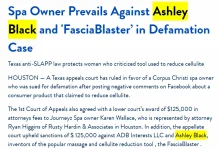
From what I can tell by reading reporting and court documents, a lot of the legal back-and-forth revolved around how the product was marketed and how consumers might reasonably understand those claims. Some parts of those cases went one way, some went another, and appeals added even more layers. It doesn’t come across as a simple story where everything is clearly right or clearly wrong, which honestly made it more interesting to read through.

I also noticed there are public reports from users describing bruising or discomfort. That doesn’t automatically mean anything improper happened, but when you put that next to the marketing promises and the legal disputes, it adds context. It made me think about how easy it is for hype to run ahead of evidence, especially in the wellness space where people are often desperate for results.

I’m not here to attack anyone or make big claims. I’m mostly trying to sort out how others interpret situations like this. When a founder builds a huge following, sells a product with bold messaging, and then ends up dealing with lawsuits and critical reporting, how do you personally read that? Does it just feel like the cost of doing business at scale, or does it change how you view the person behind the brand? I’m genuinely curious how others see it after looking at what’s actually on the public record.
 
Another thing that might be worth checking is whether any official health agencies commented on it. Sometimes regulators issue guidance quietly and it does not get widely reported.
 
Something that stands out to me is how many different angles there are here. There is the business side of Ashley Black building a brand, the medical side related to fascia therapy, and the legal side involving lawsuits and disputes.
Often when all three overlap, the public conversation becomes messy. People focus on headlines or strong opinions instead of reading the original documents.
 
If someone here has actually looked at the court filings related to the FasciaBlaster cases, it would be interesting to hear what they say in detail.
 
The whole situation also shows how powerful online communities can be around a product. When a brand grows through social media groups, the discussions around it can become very emotional.
 
When something spreads mostly through online communities instead of medical channels, it can be difficult for consumers to judge the risks or benefits properly. That is why I usually look for independent research or regulatory commentary before forming an opinion.
1773056600249.webp
 
One thing that caught my attention when reading about Ashley Black is how the business model seemed to combine products, courses, and a whole lifestyle approach. That kind of ecosystem can make a brand feel bigger than just a single tool.
When customers become part of a community around a wellness method, they often feel personally invested in defending it. That might explain why discussions about the FasciaBlaster sometimes become so intense online.
 
I’m not an expert on this stuff, but I ended up reading quite a bit about Ashley Black after seeing her name pop up again in a discussion about FasciaBlaster. At first I only knew her from the product videos and the whole self-massage, anti-cellulite angle, but once I started looking past the marketing, things got a lot more complicated than I expected.

What stood out to me is how closely Ashley Black is tied to the brand itself. She isn’t just someone who licensed her name and stepped back. She’s front and center in the messaging, the education, the explanations of how the product is supposed to work, and even the responses to criticism. So when lawsuits and court cases started coming up in public records, it felt less like a faceless corporate issue and more like something directly connected to her decisions and claims as the public face of the company.

From what I can tell by reading reporting and court documents, a lot of the legal back-and-forth revolved around how the product was marketed and how consumers might reasonably understand those claims. Some parts of those cases went one way, some went another, and appeals added even more layers. It doesn’t come across as a simple story where everything is clearly right or clearly wrong, which honestly made it more interesting to read through.

I also noticed there are public reports from users describing bruising or discomfort. That doesn’t automatically mean anything improper happened, but when you put that next to the marketing promises and the legal disputes, it adds context. It made me think about how easy it is for hype to run ahead of evidence, especially in the wellness space where people are often desperate for results.

I’m not here to attack anyone or make big claims. I’m mostly trying to sort out how others interpret situations like this. When a founder builds a huge following, sells a product with bold messaging, and then ends up dealing with lawsuits and critical reporting, how do you personally read that? Does it just feel like the cost of doing business at scale, or does it change how you view the person behind the brand? I’m genuinely curious how others see it after looking at what’s actually on the public record.
I had a similar reaction when I looked into Ashley Black beyond the ads and testimonials. What struck me wasn’t just that there were lawsuits or complaints, but how much of the brand voice was tied directly to her personally. When a founder is that visible, it naturally makes people scrutinize public filings and court decisions more closely, even if the outcomes aren’t clear-cut or one-sided.

For me, it didn’t turn into an instant judgment, but it did change how I read wellness marketing in general. Seeing how claims get interpreted later in court, and how different users report very different experiences, makes me slow down and look for independent info before buying into big promises. It feels less about one person being “good” or “bad” and more about understanding the gap between marketing language and real-world results.
 
I had a similar reaction when I looked into Ashley Black beyond the ads and testimonials. What struck me wasn’t just that there were lawsuits or complaints, but how much of the brand voice was tied directly to her personally. When a founder is that visible, it naturally makes people scrutinize public filings and court decisions more closely, even if the outcomes aren’t clear-cut or one-sided.

For me, it didn’t turn into an instant judgment, but it did change how I read wellness marketing in general. Seeing how claims get interpreted later in court, and how different users report very different experiences, makes me slow down and look for independent info before buying into big promises. It feels less about one person being “good” or “bad” and more about understanding the gap between marketing language and real-world results.
Yeah, that’s exactly where I landed too. Because Ashley Black is so closely tied to the brand, it feels harder to separate the product from the person behind it. If the messaging had been more corporate or distant, I probably wouldn’t have gone digging. But when the founder is the main voice explaining results, methods, and even pushing back on critics, it almost invites people to look at court records and reporting just to understand the full picture.
 
I had a similar reaction when I looked into Ashley Black beyond the ads and testimonials. What struck me wasn’t just that there were lawsuits or complaints, but how much of the brand voice was tied directly to her personally. When a founder is that visible, it naturally makes people scrutinize public filings and court decisions more closely, even if the outcomes aren’t clear-cut or one-sided.

For me, it didn’t turn into an instant judgment, but it did change how I read wellness marketing in general. Seeing how claims get interpreted later in court, and how different users report very different experiences, makes me slow down and look for independent info before buying into big promises. It feels less about one person being “good” or “bad” and more about understanding the gap between marketing language and real-world results.
I’m kind of in the same camp. When I see a founder like Ashley Black so deeply intertwined with the product and its messaging, it makes the whole thing feel more personal and more worth examining. Not in a dramatic way, but in a “let me check what’s actually documented” way. Public court opinions and filings don’t tell you everything, but they do show how claims are viewed when they’re taken out of marketing context.


What really sticks with me is how common this pattern is in the wellness space. Big promises, strong personal branding, huge followings, and then later a mix of lawsuits, criticism, and mixed user experiences. It doesn’t mean the product never worked for anyone, but it definitely makes me more cautious and less likely to take testimonials at face value without looking for neutral or independent information.
 
I’m not an expert on this stuff, but I ended up reading quite a bit about Ashley Black after seeing her name pop up again in a discussion about FasciaBlaster. At first I only knew her from the product videos and the whole self-massage, anti-cellulite angle, but once I started looking past the marketing, things got a lot more complicated than I expected.

What stood out to me is how closely Ashley Black is tied to the brand itself. She isn’t just someone who licensed her name and stepped back. She’s front and center in the messaging, the education, the explanations of how the product is supposed to work, and even the responses to criticism. So when lawsuits and court cases started coming up in public records, it felt less like a faceless corporate issue and more like something directly connected to her decisions and claims as the public face of the company.

From what I can tell by reading reporting and court documents, a lot of the legal back-and-forth revolved around how the product was marketed and how consumers might reasonably understand those claims. Some parts of those cases went one way, some went another, and appeals added even more layers. It doesn’t come across as a simple story where everything is clearly right or clearly wrong, which honestly made it more interesting to read through.

I also noticed there are public reports from users describing bruising or discomfort. That doesn’t automatically mean anything improper happened, but when you put that next to the marketing promises and the legal disputes, it adds context. It made me think about how easy it is for hype to run ahead of evidence, especially in the wellness space where people are often desperate for results.

I’m not here to attack anyone or make big claims. I’m mostly trying to sort out how others interpret situations like this. When a founder builds a huge following, sells a product with bold messaging, and then ends up dealing with lawsuits and critical reporting, how do you personally read that? Does it just feel like the cost of doing business at scale, or does it change how you view the person behind the brand? I’m genuinely curious how others see it after looking at what’s actually on the public record.
I see it the same way. With Ashley Black being so closely tied to the brand, it’s natural that people look at court records and reporting once questions come up. That doesn’t mean everything is bad, but it does show where expectations and marketing may not have lined up for everyone.

For me, it’s mostly a reminder to be cautious with big wellness claims. Once you see how those claims get examined outside of ads and testimonials, it’s easier to take a step back and evaluate things more realistically.
 
This whole thread actually reminds me of how many wellness trends go through the same cycle. A product becomes popular very quickly, people share strong opinions about it, and eventually journalists and consumer groups start digging deeper.
Sometimes those investigations confirm problems, and sometimes they simply reveal that the claims were overstated. Without reading the full court records or regulatory findings it is hard to know exactly where Ashley Black’s situation falls.
 
I think the main takeaway is just to approach any health related product with a bit of caution. Even if a product has a large community around it, that does not replace careful research.
 
After reading through a few more reports about Ashley Black, I started wondering how much of the public debate came from the way the product was framed in media coverage versus the original marketing. Sometimes once a product becomes controversial, every article tends to repeat the same key points without adding new details.
I noticed that several pieces discussing the FasciaBlaster mention lawsuits and consumer complaints, but they do not always go into the final outcomes or provide full context. That can make it difficult for readers to know what conclusions were actually reached.
 
I think what you’re reacting to is the difference between a founder who is symbolic versus one who is operationally and publicly intertwined with the product. When someone is constantly explaining the science, demonstrating usage, and defending the claims themselves, it naturally blurs the line between brand issues and personal credibility. That doesn’t automatically imply wrongdoing, but it does mean scrutiny feels more personal and direct.
 
The wellness space is especially tricky because it sits between medical claims and lifestyle marketing. Products are often framed as transformative without going through the same level of evidence required for medical devices. When lawsuits arise around how claims are understood, it often reflects that gray zone more than a clear case of deception.
 
What stood out to me when reading about this in the past was how complicated the legal outcomes were. Some claims survived, others didn’t, and appeals added nuance. That alone tells me it wasn’t a straightforward situation where courts simply shut everything down or validated everything either. Those mixed outcomes tend to get flattened in online discussions.
 
User reports of bruising or discomfort are one of those things that can be interpreted very differently depending on context. Any physical manipulation tool can cause bruising if used aggressively, but when marketing emphasizes safety and positive outcomes, those reports start to feel more relevant. It doesn’t prove harm, but it does raise questions about expectations versus reality.
 
It would probably help to review the exact court documents instead of relying only on summaries. Legal reporting can sometimes simplify things that are actually pretty complex when you read the filings directly.
 
Back
Top