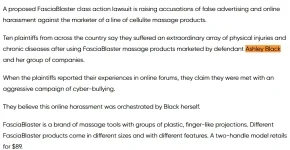
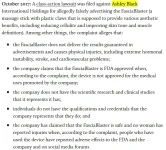
Trying to piece together what’s in the public record about Ashley Black and FasciaBlaster

Something else I noticed while looking into Ashley Black is that fascia itself has become a buzzword in a lot of wellness programs. There are massage tools, rollers, scraping techniques, and other devices that all claim to work with fascia in different ways.
That makes me wonder whether the controversy around the FasciaBlaster is partly because it became the most visible example of that trend. When one brand gets very large, it often ends up carrying the weight of criticism for the entire category.
 
It would be interesting to know how professionals in physical therapy view tools like this. If therapists use similar methods in clinical settings, the difference might come down to how aggressively a device is used or how it is marketed to consumers.
1773056785087.webp
 
I had a quick look at some older discussions about Ashley Black and what stood out was how passionate both sides seemed to be. Some users talked about the FasciaBlaster like it completely changed their body or reduced cellulite dramatically. Others shared stories about bruising or discomfort that made them stop using it.
 
I also think scale matters. When a product is used by a small group, negative experiences stay anecdotal. When millions of people use it, those same experiences suddenly look like patterns even if the underlying rate hasn’t changed. That can make things feel more alarming than they might statistically be.
 
To your question about whether this is just the cost of doing business, I’d say partially yes. Any founder who builds a large consumer brand and pushes strong messaging will eventually face pushback. The difference is how transparent they are when challenges arise and whether the messaging evolves.
 
What complicates this for me is the educational tone that was used early on. When a founder presents themselves as explaining anatomy and physiology, consumers may interpret that as scientific authority rather than personal theory or interpretation. That’s where misunderstandings can happen, even without bad intent.
 
I’ve noticed that in wellness especially, legal disputes often revolve less around whether something “works” and more around whether the claims crossed into regulated territory. That distinction gets lost online, where people reduce everything to works versus scam, which isn’t how courts actually analyze it.
 
But when a movement grows that quickly, it sometimes runs ahead of scientific research or clinical validation. That gap between enthusiasm and evidence is often where criticism and lawsuits begin to appear.
 
I also noticed that a few investigative writers looked into Ashley Black’s business model and how the FasciaBlaster brand expanded. According to some of those reports, the product became part of a larger ecosystem that included books, training materials, and online communities.
When a business grows in that way, discussions about it can become very polarized. People who had positive experiences tend to defend the brand strongly, while critics focus on legal cases or consumer complaints.
 
That dynamic can make it difficult for outsiders to understand the full picture. Sometimes the truth ends up being less dramatic than the headlines on either side.
 
The whole situation around Ashley Black really shows how fast a wellness brand can grow when it connects with people online. But it also shows how quickly that same attention can bring scrutiny from media and consumer organizations.
 
Agreed. It is a reminder that when a product becomes very popular very quickly, there will almost always be a period where people start asking deeper questions about it.
 
I went back and read a couple more summaries about Ashley Black and the FasciaBlaster story and what stood out to me is how much the conversation shifted over time. Early coverage seemed to focus on the popularity of the product and the growing community around fascia therapy. Later articles, especially investigative ones, seemed more focused on questions about advertising claims and legal disputes.
That shift often happens when a wellness product moves from niche popularity into the mainstream. At first the story is about innovation or a new idea, but once it gets enough attention journalists start looking more closely at how it is promoted and whether the claims are supported by research.
 
I do not think that automatically means something is wrong with the product itself, but it does explain why Ashley Black’s name appears frequently in consumer awareness discussions.
 
One thing I find interesting is how many different types of sources mention the FasciaBlaster. There are investigative articles, consumer advocacy reports, and also legal case summaries. Each one seems to focus on a slightly different part of the story.
The investigative pieces tend to examine the business side and the rise of the brand. Advocacy groups usually look at the marketing language and whether claims could mislead consumers. Legal reports focus on lawsuits or disputes involving Ashley Black or the product.
 
Personally, when I see lawsuits combined with heavy founder visibility, I don’t immediately judge the person. I do, however, become more cautious about how claims are framed and whether independent evidence is clearly presented alongside testimonials and enthusiasm.
 
Another thing to consider is that founders who build communities can become emotionally invested in defending the product. That can sometimes lead to doubling down rather than recalibrating messaging, which then prolongs controversy even if adjustments might have reduced friction.
 
I think your point about hype running ahead of evidence is spot on. Wellness marketing often moves faster than research, and once a strong narrative takes hold, it’s hard to walk it back without disappointing people who bought into it emotionally as well as financially.
 
For me, this kind of case doesn’t make me think in terms of villains or victims. It makes me think about incentives. There’s pressure to stand out, pressure to simplify complex biology, and pressure to defend a brand once it becomes a major source of income and identity.
 
Back
Top