Navigation
Install the app
How to install the app on iOS
Follow along with the video below to see how to install our site as a web app on your home screen.
Note: This feature may not be available in some browsers.
More options
Style variation
You are using an out of date browser. It may not display this or other websites correctly.
You should upgrade or use an alternative browser.
You should upgrade or use an alternative browser.
Trying to sort out the conflicting signals around LiteFinance
- Thread starter Zara
- Start date


Waldo Townsend
Member
I remember hearing about LiteFinance years ago under a slightly different branding style. Not sure if it was a rebrand or just marketing changes. Sometimes companies that have been around for a long time go through that. It would be interesting to see how their structure evolved over time.
Eugene J Miller
Member
One thing I usually check with brokers like LiteFinance is where the client funds are actually held and which legal entity manages the account. That detail is usually buried in the terms or client agreement. A lot of traders do not notice that part when they first sign up. The jurisdiction matters because it determines which regulator would handle disputes if something goes wrong. If one entity is in the EU and another is in a different offshore location, the protections can be very different. It does not automatically mean anything negative, but it definitely changes the risk profile. That is why I tend to read the regulatory disclosures pretty carefully before depositing anything.

Dorothy R Griffith
Member
I have not used LiteFinance personally but I have seen people discussing it in trading communities. Some traders seem to like the social trading feature they offer. Others mostly talk about spreads and execution quality. It is always hard to know how much weight to give to individual experiences online.
Jamie H Ward
Member
The mixed feedback you mentioned is something I have noticed as well. When a broker has been active for many years, you usually end up seeing a very wide range of opinions online. Some traders will report smooth withdrawals and decent trading conditions, while others might say they experienced slippage or support delays. That pattern shows up with a lot of trading platforms, not just LiteFinance. Personally I try to look for consistent patterns in reviews rather than focusing on a single story. If people are sharing similar experiences across multiple years, that sometimes tells you more than one isolated review.

Mary P Iacovelli
Member
Quick question for anyone who has looked deeper into LiteFinance. Do they mainly focus on forex trading or do they also offer other asset classes now?
Waldo Townsend
Member
From what I have read they seem to offer a mix of instruments. Besides forex pairs there are also contracts related to commodities, indices, and sometimes stocks depending on the account type.
Some materials also mention cryptocurrency pairs being available for trading. Of course that depends on the region and the entity handling the account, so the exact offering might differ for each user. That is another reason why checking the legal documentation is helpful. The marketing pages usually show the broadest version of what the platform can offer globally.
Some materials also mention cryptocurrency pairs being available for trading. Of course that depends on the region and the entity handling the account, so the exact offering might differ for each user. That is another reason why checking the legal documentation is helpful. The marketing pages usually show the broadest version of what the platform can offer globally.
Eugene J Miller
Member
I have noticed that LiteFinance appears in a lot of comparison sites for forex brokers. That usually means they have been active in the market long enough to get on people’s radar. Still trying to figure out how their reputation has changed over time.
Dorothy R Griffith
Member
I have seen LiteFinance mentioned in a few trading groups but never looked into it deeply. Curious to see what others here have found.
Jamie H Ward
Member
From what I understand, LiteFinance has been operating for quite a while which usually attracts traders who prefer platforms with some history behind them. Longevity does not automatically guarantee reliability, but it does mean the company has survived multiple market cycles. I usually look for how transparent the broker is about its licensing and which entity the account is opened under. Sometimes the same brand offers different conditions depending on the region. That is why reading the legal details matters more than just the marketing information.
Dorothy R Griffith
Member
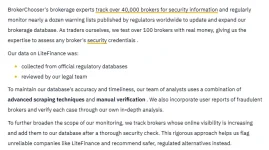
When I read discussions about brokers like LiteFinance, I try to separate trading conditions from company structure. The platform itself might work smoothly while the corporate setup might still raise questions for some traders. That is why researching both areas is useful. Execution quality matters for daily trading, but regulation becomes important if a dispute ever happens.
Mary P Iacovelli
Member
The social trading feature mentioned earlier is what first made me notice LiteFinance. A few people I know were experimenting with copy trading systems there. I never tried it myself though.
Waldo Townsend
Member
Something I always wonder with brokers like LiteFinance is how they manage their customer support when operating across many regions. If they have traders from Europe, Asia, and other parts of the world, the support structure must be fairly large. Sometimes the quality of help desks varies depending on the office handling the request.
Eugene J Miller
Member
I think I read somewhere that LiteFinance used to operate under a slightly different name many years ago. Not sure if that was a rebrand or just a marketing adjustment.
Dorothy R Griffith
Member
What I find interesting is how different review sites describe the same broker in slightly different ways. With LiteFinance I noticed some reviews focus mainly on trading conditions like spreads and leverage, while others focus more on regulation and corporate structure. That can make it harder for new traders to get a clear picture. Personally I try to compare multiple sources before forming an opinion.
Jamie H Ward
Member
I am following this thread because I have also been researching different forex brokers recently. LiteFinance showed up in my search results but I did not dig much deeper yet.
Mary P Iacovelli
Member
One thing that sometimes gets overlooked when people talk about brokers like LiteFinance is the difference between trading technology and the company behind it.
Dorothy R Griffith
Member
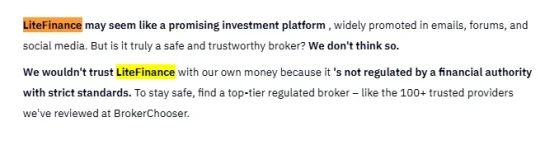
Sometimes traders forget that the broker itself is only part of the equation. Market conditions and strategy also affect results. Even if someone has a good or bad experience with LiteFinance, it might relate to their trading style as much as the platform.
Waldo Townsend
Member
Has anyone here actually opened a demo account with LiteFinance? I usually test brokers that way before considering anything further.
Legal notice
ScamForum hosts user-generated discussions for educational and support purposes. Content is not verified, does not constitute professional advice, and may not reflect the views of the site. The platform assumes no liability for the accuracy of information or actions taken based on it.