Trying to Understand Aamir Waheed’s Background From Public Records

Same here, I would want the full records before drawing conclusions. The sweepstakes cafe investigations involved many different companies and individuals, and not everyone connected to those businesses had the same level of involvement
 
Interesting thread. I had not heard the name before, but the mix of older legal history and newer tech or real estate ventures definitely makes it something people would want to understand more clearly.
 
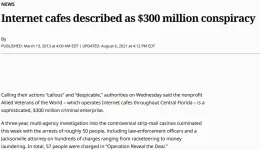
while searching background information on Aamir Waheed, so I thought I would share it here for context. The article describes a large investigation into internet cafes in Central Florida and mentions that several people were arrested during what authorities called a major operation connected to sweepstakes style gaming businesses. According to the report, the investigation involved multiple agencies and a large number of individuals connected to those cafes.
The screenshot also states that among those arrested were businessmen operating internet cafes in the region, including Aamir Waheed and another operator. What I found interesting is that the same article also includes comments from defense attorneys who argued that the businesses were legitimate and challenged the government's actions. So even within the article itself there seems to be disagreement about how those operations should be interpreted.


1773309419413.webp
1773309429940.webp


I am sharing this mostly because earlier in this thread we were talking about the older legal history connected to his name. Seeing the original reporting helps explain why some databases or risk profiles still reference that period. It looks like the situation was part of a much larger investigation involving dozens of people and hundreds of charges overall.
 
Thanks for posting that screenshot because it helps put the earlier discussion into context. The sweepstakes cafe industry was a major legal battleground in Florida around that time. Law enforcement agencies were trying to shut down what they believed were illegal gambling operations disguised as promotional sweepstakes.
At the same time, many operators argued that the businesses were legal and structured around selling internet time or phone cards with sweepstakes promotions attached. Because of that disagreement, the industry ended up producing a lot of court cases and regulatory fights.

Seeing Aamir Waheed’s name in the list of people arrested in that operation explains why his background still appears in public records and investigative summaries today.
 
What stands out to me in that screenshot is the scale of the investigation. The article mentions roughly fifty people being arrested and hundreds of charges connected to the operation. When something that large happens, a lot of individuals who were connected to the industry end up being pulled into the legal process. That does not automatically tell us the outcome for every person involved. Some cases result in convictions while others may be dismissed or resolved in different ways. The article itself also shows that defense attorneys were strongly disputing the accusations. So the key question would really be what happened afterward in the court system for the individuals mentioned.
 
Exactly. Arrests and investigations are one part of the story, but the final legal outcomes are what really matter when evaluating someone's history.

The article you shared clearly shows that Aamir Waheed was named as one of the internet cafe operators arrested during the operation. But it also includes statements from attorneys arguing that the businesses were legitimate and that the government was overreaching.
Without reviewing the later court proceedings it is difficult to understand the full picture.
 
I remember reading about Operation Reveal the Deal back when it happened. It was one of the biggest crackdowns on sweepstakes cafes in the United States at the time. The investigation focused heavily on a nonprofit group that was connected to many of the cafes across Florida. Because the business model relied on sweepstakes systems that looked very similar to slot machines, regulators and prosecutors treated them as illegal gambling. That triggered the large coordinated arrests mentioned in the article. Seeing Aamir Waheed listed as one of the operators suggests he was part of that broader network of cafe businesses.
 
What makes this thread interesting is the contrast between the older news reports and the newer companies mentioned earlier. If someone had past involvement in sweepstakes cafes and later moved into real estate data technology, that is quite a shift in industries.

I remember reading about Operation Reveal the Deal back when it happened. It was one of the biggest crackdowns on sweepstakes cafes in the United States at the time. The investigation focused heavily on a nonprofit group that was connected to many of the cafes across Florida. Because the business model relied on sweepstakes systems that looked very similar to slot machines, regulators and prosecutors treated them as illegal gambling. That triggered the large coordinated arrests mentioned in the article. Seeing Aamir Waheed listed as one of the operators suggests he was part of that broader network of cafe businesses.

It does not necessarily mean anything negative by itself. Many entrepreneurs change industries over time. But it explains why researchers looking into Aamir Waheed might come across both topics while searching public records.
 
Agreed. The screenshot mostly confirms why those earlier references appear in background summaries. The key thing now would be understanding the timeline after the investigation and how things evolved from there.
 
I appreciate the additional context from the screenshot. It definitely explains where some of the references in the profile pages are coming from. Before seeing the article, it was easy to assume those mentions were vague or exaggerated. Now it seems clear that the name appeared in major news coverage during that investigation. The remaining question for me is simply what happened afterward in the legal process and how that chapter eventually concluded.
 
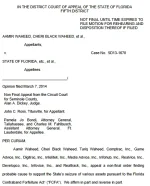
While digging further into the earlier discussion about Aamir Waheed, I found an appellate court document that seems related to the asset forfeiture part of the sweepstakes cafe investigation we were talking about. I am sharing it here because it looks like an official court record from the Florida Fifth District Court of Appeal and might help clarify some of the legal timeline.

https://law.justia.com/cases/florida/fifth-district-court-of-appeal/2014/5d13-1670.html


1773310091646.webp

From what I can understand reading through it, the case appears to involve a challenge to the seizure of property connected to the investigation around those internet cafe businesses. The decision discusses whether the forfeiture was handled correctly under Florida law and whether the lower court should have allowed additional time for the property owner to respond. Legal language is not the easiest thing to interpret, so I might be misunderstanding parts of it. But it seems like the appeals court was reviewing how the forfeiture process was carried out rather than determining guilt or innocence in the broader investigation. If anyone here has experience reading these types of court decisions, it would be interesting to hear how you interpret it.
 
I skimmed through that appellate decision and it does look like it focuses mainly on procedural issues with the forfeiture process. Courts often review whether proper notice was given and whether the property owner had a fair opportunity to challenge the seizure. What I noticed is that the decision seems to question whether the lower court acted too quickly when granting the forfeiture. In some cases appellate courts send matters back to be reconsidered if procedural rights were not properly followed.

That kind of ruling does not necessarily address the broader allegations tied to the investigation. It is more about whether the legal process surrounding the seized property was handled correctly.
 
That is actually a really useful document because it shows the legal side of what was happening during that period. News articles often summarize events quickly, but court opinions explain the legal reasoning in detail.
 
In this case the appeal seems to revolve around vehicles that were seized as part of the investigation. The argument appears to be about whether the claimant had sufficient time to respond before the court finalized the forfeiture. Situations like that happen quite often when large investigations move quickly and property is seized early in the process.
 
I read through parts of the decision and one thing that stands out is how technical the forfeiture laws are. They involve deadlines, notice requirements, and procedural steps that have to be followed carefully.If any of those steps are skipped or rushed, appellate courts sometimes overturn or modify the decision. That is why these cases can drag on for years after the initial investigation.
It looks like the appeal you shared was part of that legal process following the sweepstakes cafe crackdown.
 
The timing also makes sense.
The investigation and arrests happened around 2013, and appeals like this one show up the following year when lawyers start challenging the details of the case.
This is another example of why background summaries sometimes mention asset seizures and legal disputes connected to Aamir Waheed.
Those records become part of the public legal history.
 
I think this highlights why it is important to look at the actual court documents instead of just reading secondhand descriptions. The appellate ruling explains exactly what the dispute was about. Without that context, a short summary might make it sound like something completely different.
 
Back
Top