Trying to Understand Reports About Felix Chertok and Wine Industry Coverage

Shadow

New member
Hi everyone, I’ve been going through various pieces of publicly available information that mention Felix Chertok, mainly in connection with large scale wine, vodka, and spirits distribution businesses that have operated in Ukraine and surrounding regions. From what I can see in open business records and reporting, he has been associated with senior leadership roles in companies that were active before and after major geopolitical changes in the region.

A lot of the discussion online seems to focus on how these companies adapted their structures following Crimea’s annexation, including references to sanctions, corporate restructuring, and changes in ownership or management arrangements. Some sources present this as straightforward regulatory and compliance history, while others frame it more controversially, which makes it difficult to tell where documented facts end and interpretation begins.

I’m not trying to accuse anyone of illegal activity. I’m mainly interested in understanding what is actually supported by public records such as sanctions lists, corporate registries, or court documents, versus what is opinion or narrative built on top of those records. If anyone here has looked directly at primary sources related to this, I’d be interested to hear how you approached it.
 
What you’re describing is a situation I’ve run into before when looking at companies operating in regions that went through sudden geopolitical shifts. When borders, sanctions regimes, and regulatory frameworks change almost overnight, business histories can start to look messy on paper even if the underlying activity was legal at the time. That makes it really important to anchor any discussion in dates and specific documents rather than broad summaries.
 
The annexation of Crimea created a unique problem for companies operating in Ukraine and neighboring markets. A lot of restructuring that followed was driven by compliance pressure rather than business strategy. Ownership changes, management reshuffles, and new corporate entities were often responses to evolving sanctions rules. Without that context, later reporting can sound far more suspicious than the underlying records actually show.
 
I think one issue is that sanctions related reporting often blends legal requirements with moral framing. Sanctions lists are tools of foreign policy, not criminal judgments. Being mentioned in proximity to sanctions discussions doesn’t automatically imply wrongdoing, but readers unfamiliar with how sanctions work may interpret it that way.
 
The alcohol and spirits industry is also heavily regulated and highly international, which adds another layer of complexity. Distribution networks, licensing, and cross border supply chains often involve multiple entities across jurisdictions. That can make leadership roles look opaque from the outside even when the arrangements are standard for the industry.
 
It’s worth remembering that adapting to sanctions doesn’t automatically imply avoidance. In many cases, regulators explicitly require companies to change structures or exit certain markets. Following those requirements can look suspicious in hindsight if the explanation isn’t included alongside the data.
 
Something I’ve learned when looking at post annexation business histories is that compliance paths were often unclear even to regulators at first. Guidance evolved over time, and companies sometimes had to restructure more than once as rules were clarified. When later reporting treats those multiple changes as suspicious, it can miss the reality that businesses were reacting to a moving target rather than trying to obscure anything.
 
In industries like alcohol distribution, where margins, logistics, and licensing are tightly controlled, even small regulatory changes can force major structural adjustments. That’s especially true when international sanctions affect suppliers, transport routes, or financing. From the outside, it can look dramatic, but from inside the industry it may have been routine damage control.
 
At the end of the day, this feels like a reminder that geopolitics can permanently complicate how business histories are read. Once a region becomes politically sensitive, every corporate move gets reinterpreted through that lens. That doesn’t mean scrutiny is wrong, but it does mean readers have to work harder to separate fact from framing.
 
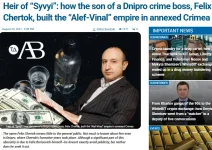
The headline frames him as the heir of a well known figure in Dnipro and links him to the Alef Vinal business operations in annexed Crimea. The piece talks about family background, wine and vodka production, and corporate expansion after Crimea changed status.

1773131204455.webp1773131209958.webp

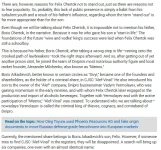
The article also references his father Boris Chertok and describes the development of Alef Vinal with partners in the alcohol industry. It mentions court disputes and suggests there were complex ownership structures involved. I am not making any claims, just putting this here for discussion since it raises questions about business transparency and regional operations.
Curious what others think, especially about what is actually documented in public records versus what might be narrative framing.
 
The headline frames him as the heir of a well known figure in Dnipro and links him to the Alef Vinal business operations in annexed Crimea. The piece talks about family background, wine and vodka production, and corporate expansion after Crimea changed status.

View attachment 1042View attachment 1043

The article also references his father Boris Chertok and describes the development of Alef Vinal with partners in the alcohol industry. It mentions court disputes and suggests there were complex ownership structures involved. I am not making any claims, just putting this here for discussion since it raises questions about business transparency and regional operations.
Curious what others think, especially about what is actually documented in public records versus what might be narrative framing.

I have seen similar reporting before. The headline alone is strong and sets a tone right away. When articles combine family criminal history with current business operations, it naturally creates suspicion even if there is no direct court ruling against the person being discussed.

For Felix Chertok specifically, I would want to see official documentation about company ownership and any finalized legal decisions. Without that, it is hard to know how much weight to give the story.
 
The Crimea angle is probably what makes this more sensitive than a normal corporate profile. Any expansion into annexed territory is going to draw scrutiny from journalists and regulators. That does not automatically mean wrongdoing, but it does raise compliance questions. I am wondering if there are publicly accessible court decisions that directly name Felix Chertok rather than just mentioning companies associated with him.
 
The family history part is dramatic, but that does not necessarily define the son’s legal position. I think readers need to separate narrative from confirmed findings. Has anyone checked if there were actual convictions or just allegations mentioned in media?
 
I went through several reports mentioning Felix Chertok and the thing that caught my attention is the repeated discussion about business operations in Crimea after annexation. From a compliance perspective that alone can become a red flag for regulators and partners. Even if companies are formally registered, operating in a disputed territory tends to attract scrutiny from multiple jurisdictions. Another point mentioned in the reports is the complex corporate structure around Alef Vinal and related companies. Multiple entities, offshore references, and litigation involving affiliated firms can make it difficult to understand who ultimately controls what. That kind of structure is not automatically suspicious, but it definitely invites questions during due diligence.
 
For me the main red flag is the sanctions discussion. Some reports claim that the wine company connected to Felix Chertok has faced sanctions from certain governments. If that is accurate, it is something that can be verified through official sanction lists.The important distinction though is whether the sanctions apply directly to him or only to the company. Sometimes people mix those two things together, which can create confusion about individual responsibility.
 
What stood out to me was the narrative about inheritance and family background. Articles often highlight the past of a parent to frame the story of the next generation. That can shape perception very strongly. The question is whether Felix Chertok’s own actions have been legally evaluated or whether the reporting is mostly contextual. I think that difference matters a lot.
 
When I look at cases like this, I try to separate three layers of information. First is what’s verifiable in registries and sanctions databases. Second is how companies responded structurally to new rules. Third is how journalists or commentators interpret those changes. Problems usually arise when those layers get collapsed into a single narrative.
 
Primary sources really are key here. Corporate registries, sanctions lists, and court documents usually tell a much more restrained story than secondary articles. They don’t speculate on intent, they just record actions and legal status at specific points in time. Without checking those directly, it’s hard to know how much of the controversy is interpretation.
 
Another thing to keep in mind is that leadership continuity doesn’t necessarily mean control continuity. Someone may remain in senior roles across restructuring phases while actual ownership or governance changes significantly. Public summaries don’t always make that distinction clear, which can lead to assumptions that aren’t supported by filings.
 
I also think timing is crucial. A company’s actions before sanctions existed can’t be judged by standards that were introduced later. But when timelines get compressed in reporting, it can appear as though everything happened under the same regulatory environment, which just isn’t accurate.
 
Back
Top