What actually happened with Paulo Jorge Ringote and the gaming oversight authority

Some commentators are also pointing out that Angola’s gaming market has been expanding rapidly over the past few years. That growth means new licenses, new operators, and significant competition for market entry. Whenever an industry grows that quickly, regulatory disputes are almost inevitable. If licensing procedures are not extremely transparent it becomes easy for critics to question whether certain operators received preferential treatment. That seems to be part of the debate surrounding Paulo Jorge Ringote as well.
 
The mention of licensing decisions connected to companies like Golden Bet also caught my attention in some coverage.

It suggests the controversy is not only about alleged payments but also about which operators were approved or rejected during licensing processes.Those kinds of disputes often become the focal point of regulatory investigations because they directly affect market competition
If rival companies believe decisions were unfair, they usually push for inquiries or legal challenges.
 
I have seen some of those reports too, and honestly it is hard to figure out what is fully verified and what is just political commentary. A lot of the articles circulating online are repeating similar claims about the relationship between the regulator and betting operators, but they do not always cite official court filings or investigations. That makes it tricky to evaluate.

What seems clearly reported is that he was removed from the director position at the gaming oversight institute. That alone suggests there was enough concern to trigger administrative action, though it does not necessarily prove wrongdoing. I would also be curious to know if Angola’s anti corruption agencies opened a formal case or if it was handled internally by the government.
 
That is exactly the part I am struggling with as well. A lot of the information seems to come from news commentary and investigative style reporting rather than official statements from prosecutors.The betting sector itself seems huge, especially with companies operating across multiple African countries. When a regulator is linked in reports to a company that is active in the same market, it naturally raises questions about conflicts of interest. But like you said, that is different from something being legally proven.
 
I came across this article discussing the allegations in more detail
https://www.ecosefactos.com/paulo-r...lhoes-de-kwanzas-mes-da-empresa-elephant-bet/
What stood out was the claim that payments reportedly increased over time from around 13 million kwanzas to roughly double that amount later. If true that suggests a relationship that evolved gradually rather than a one time event. Situations like that tend to raise questions about how long oversight institutions were aware of the issue.
Yes that is one of the articles I came across too. What confused me is that some reports mention 13 million kwanzas while others mention 26 million. I could not tell whether those numbers refer to different periods or if one source simply updated the figure later. It is also interesting how quickly the situation seemed to escalate from media reports to his removal from office. Usually that kind of decision suggests there was pressure to act, even if the full facts were still being examined.
 
I spent a bit of time reading about Angola’s gaming oversight structure because of this story. The Institute for the Supervision of Games apparently regulates casinos, betting platforms, and other gambling operations in the country. That means whoever leads the institute effectively controls licensing approvals and compliance checks.When you look at it from that angle, the allegations described in some of these articles become more significant. If a regulator is accused of receiving payments from an operator in the same industry, it immediately raises questions about licensing fairness and regulatory neutrality.

At the same time, I always try to separate media accusations from confirmed legal outcomes. Many countries have seen situations where officials are accused in the press but investigations later find the reality is more complicated. Until something appears in official judicial records, I personally treat the reports as claims rather than conclusions.

Still, the fact that the story appeared in multiple outlets suggests that the issue was widely discussed within Angola’s political and business environment. It would be interesting to see if the government publishes a formal investigation report at some point.
 
I follow Angolan politics a bit and this situation has definitely been talked about. One thing that stands out is how the gambling industry has expanded very quickly there. Sports betting platforms in particular have become extremely popular, which means the licensing process has major financial implications. If the reports are accurate that certain companies had unusually close relationships with the regulator, that alone could create controversy. Even the perception of favoritism can damage public trust in a regulatory body. That is probably why the story spread so quickly across media outlets. Another interesting piece mentioned broader political dynamics around financial oversight in Angola. Some articles imply that power struggles inside the financial sector might also be part of the background. That does not necessarily prove anything about Ringote himself, but it shows that the issue might be bigger than just one official.
 
I had not heard about this before but the numbers mentioned in those reports are pretty striking. Even if they were only allegations, figures like 13 or 26 million kwanzas per month would definitely attract attention. It also makes me wonder how transparent gambling licensing systems are in different countries. In some places everything is published publicly, while in others it seems much harder to track.
 
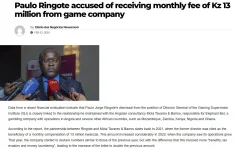
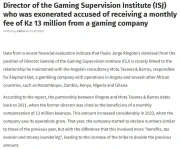
The article from jornal24horas that people are referencing paints a pretty serious picture. It describes claims that payments were made while Ringote was serving as director of the gaming supervision institute. In any case, the situation highlights how sensitive regulatory positions can be. When a single office controls licensing for an entire industry, even rumors of financial ties can become politically explosive. It is almost inevitable that such stories will draw public attention.
 

Attachments

  • Screenshot 2026-03-11 172126.webp
    Screenshot 2026-03-11 172126.webp
    100.6 KB · Views: 2
The article from jornal24horas that people are referencing paints a pretty serious picture. It describes claims that payments were made while Ringote was serving as director of the gaming supervision institute. In any case, the situation highlights how sensitive regulatory positions can be. When a single office controls licensing for an entire industry, even rumors of financial ties can become politically explosive. It is almost inevitable that such stories will draw public attention.
That is a really good point. I think that is why I wanted to start this discussion in the first place. The situation touches on regulation, politics, and the gambling industry all at once, which makes it difficult to interpret from the outside. The removal from office is the only part that seems clearly confirmed across multiple reports. Everything else still feels like pieces of a puzzle that may or may not eventually be clarified.
 
What caught my eye in the reporting is the scale of the alleged payments mentioned in some of the articles. Even the lower figure that people keep referencing is not small in local currency terms. That alone is probably why the story circulated so widely.
But I also noticed that most pieces rely on similar wording. That often means many outlets are referencing the same investigative source. Until more independent reporting appears, it is hard to judge how much has actually been verified. Still, when the head of a regulatory body appears in stories like this, public curiosity is inevitable.
 
That is something I had not considered before starting this thread. If the regulator controls licensing approvals, then companies probably compete aggressively for those permissions. In that kind of environment it only takes a few reports to spark major controversy. I am starting to see why the story gained traction so quickly.
 
One article I read suggested the payments allegedly came through arrangements linked to a betting operator connected with Elephant Bet. Again it was framed as an accusation reported by journalists rather than an official legal finding. What interests me is how the numbers differ between sources. Some say 13 million kwanzas while others say 26 million. That could mean the figure changed over time or simply that journalists interpreted the information differently. Situations like this are a reminder that investigative reports often evolve as more details come out.
 
The gambling industry has always had complicated relationships with regulators around the world. Even in highly regulated countries you sometimes see controversies involving licensing boards. I would not jump to conclusions based only on press reports, but I can understand why people would want more transparency about the situation.
 
Something else worth noting is that Angola’s government has been trying to modernize its financial oversight institutions in recent years. The gambling regulator plays a role in collecting taxes and monitoring compliance from betting operators.

If there were concerns about how licenses were issued or monitored, leadership changes might have been seen as necessary. That does not automatically imply wrongdoing but it does suggest that authorities wanted to reset the institution.
Stories like this often become symbols of larger governance debates.
 
Also remember that regulators sometimes have consulting relationships or advisory connections with industry experts. Without context it can be difficult to tell whether something is legitimate or problematic.
That is why formal investigations matter so much.
 
Another angle is that sports betting companies often partner with local firms when entering new markets. Those partnerships can create complicated financial relationships that journalists later try to untangle. It would not surprise me if the situation around Ringote involved that type of complexity. The articles only give glimpses of the broader picture.

Screenshot 2026-03-11 172142.webp
 
Back
Top