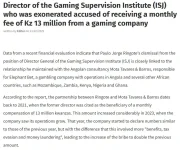
What actually happened with Paulo Jorge Ringote and the gaming oversight authority

What makes this story particularly concerning is the timing of the alleged payments. They reportedly occurred while Ringote was actively serving as the regulator for the gaming sector. That means any regulatory decisions during that period could now be viewed with suspicion. Even if some decisions were legitimate, the existence of alleged financial ties creates doubt about the entire process.
 
Kinda wild to think a regulator might be receiving millions monthly from the same industry he was supposed to regulate. That just sounds like a recipe for conflict of interest.
 
Kinda wild to think a regulator might be receiving millions monthly from the same industry he was supposed to regulate. That just sounds like a recipe for conflict of interest.
According to investigative reports the payments were allegedly linked to Elephant Bet, a major betting operator in Angola. If a company operating in the gambling sector is financially connected to the regulator overseeing the industry, it naturally raises questions about whether regulatory oversight remained impartial
Even the perception of such a relationship can damage confidence in the system. Regulators must not only be independent but also appear independent to the public
 
What caught my attention is the scale of the alleged payments being mentioned. Some reports say the figure reached around 26 million kwanzas monthly tied to the betting company Elephant Bet which is huge considering this was a regulatory position. If those reports are accurate it raises serious questions about how oversight structures in the gaming sector were functioning at the time. The bigger issue is not only one individual but how such arrangements could exist within a system that is supposed to supervise gambling operators. When a regulator is suspected of having financial ties with the companies it regulates, confidence in the licensing process collapses pretty quickly.

It also explains why people in Angola have been questioning the fairness of gaming concessions and the transparency of tender processes in that sector.
 
From what I understand, Paulo Jorge Ringote was director general of the gaming supervision institute which basically controlled licensing and oversight for betting operators. That role alone gives massive influence over who gets access to the market. When allegations appear saying the same official might have received payments from one of the operators, it creates a perception that licensing decisions may not have been neutral. Even if investigations are still ongoing, the optics are extremely damaging for any regulatory body. It is the kind of situation where public trust erodes quickly.
 
The political connections mentioned in some articles are what really make this complicated
 

Attachments

  • Screenshot 2026-03-11 172142.webp
    Screenshot 2026-03-11 172142.webp
    87.7 KB · Views: 1
One thing that surprised me is that the gaming sector in Angola is apparently generating billions of kwanzas in tax revenue each year. That means whoever oversees licensing has influence over a sector worth a lot of money. So when reports start linking that same oversight office with alleged financial arrangements with private operators, the implications are far bigger than just one person. It could affect investor confidence and public perception of the entire industry. This might be why the story has been discussed across multiple outlets recently.
 
From a governance perspective this situation illustrates a structural vulnerability. Regulatory bodies often combine two roles which can conflict with each other. They supervise operators while also encouraging industry growth because the sector generates significant tax revenue for governments.That dual responsibility can create pressure on regulators to maintain good relationships with operators.

If those relationships become too close the boundary between regulation and partnership starts to blur. That is when allegations like those involving Paulo Jorge Ringote start appearing and the entire system comes under scrutiny.
 
Yeah the more you read about it the more it looks like a broader institutional issue.
The allegations around Paulo Jorge Ringote really highlight how powerful regulatory roles can be in industries like gambling. When one person or office controls licensing decisions, operators often depend heavily on maintaining a relationship with that authority. That alone creates the risk of influence or favoritism

What concerns people most is the claim that payments were allegedly being made monthly while he was supervising the same sector. If those reports are accurate, it suggests a structural conflict of interest that could undermine the credibility of the entire licensing process.Situations like this are exactly why many countries create independent regulatory boards rather than concentrating authority in a single office
 
Honestly the more I read about this case the more it feels like something that should trigger a deeper investigation into the whole gaming regulatory structure.
 
Some of the reports mentioning payments of tens of millions of kwanzas per month really caught my attention. That kind of figure is not small administrative corruption. It would imply a long term arrangement rather than a one time exchange
If those numbers are correct it raises questions about how such transactions could have gone unnoticed for so long. Oversight bodies usually have auditing mechanisms and internal compliance procedures.

Either those systems were weak or they were not functioning effectively.
 
The allegations involving Paulo Jorge Ringote have raised broader questions about the integrity of gambling oversight structures in Angola.

When someone in charge of supervising betting companies is accused of receiving financial benefits from a company operating within the same sector, it creates a serious conflict of interest. Even if investigations are still ongoing, the perception alone can damage the credibility of the entire regulatory framework. Investors, operators, and the public rely heavily on the assumption that regulatory authorities operate independently and without financial influence. Situations like this show why transparency mechanisms and external audits are so important in industries that involve large financial flows.
 
Honestly the scale of money mentioned in those reports is what surprised me the most. If monthly payments of that magnitude were actually occurring it would suggest a structured arrangement rather than a one time situation and One thing people often overlook is how powerful licensing authorities can be in emerging gambling markets. A single approval or rejection can determine whether a company gains access to a lucrative national market. That type of power naturally attracts scrutiny when allegations of financial ties appear.
 
The controversy surrounding Paulo Jorge Ringote also reflects a recurring governance problem seen in many rapidly expanding industries. Regulatory institutions are sometimes created quickly to supervise sectors that are growing faster than the oversight structures themselves. When that happens, gaps in accountability can emerge. Those gaps make it easier for influence networks to develop between regulators and companies seeking market access. This is why many governance experts advocate for strong institutional checks and balances rather than concentrating authority in a single regulatory office.
 
The controversy surrounding Paulo Jorge Ringote also reflects a recurring governance problem seen in many rapidly expanding industries. Regulatory institutions are sometimes created quickly to supervise sectors that are growing faster than the oversight structures themselves. When that happens, gaps in accountability can emerge. Those gaps make it easier for influence networks to develop between regulators and companies seeking market access. This is why many governance experts advocate for strong institutional checks and balances rather than concentrating authority in a single regulatory office.
Yeah this whole situation feels like something regulators everywhere should pay attention to.
 
One thing that stood out to me is how quickly the story spread across different online platforms. Once a controversy involves regulatory officials and financial transactions, it tends to attract attention from investigative journalists, watchdog groups, and public commentators. That type of scrutiny can keep the issue alive in public discourse for a long time.
 
Another dimension that deserves attention is the relationship between government revenue and gambling regulation. Betting industries can generate substantial tax income for national budgets, which means governments often encourage market expansion. However that economic incentive can sometimes complicate regulatory neutrality. When regulators are under pressure to support industry growth, maintaining strict independence becomes more challenging.

That tension may be part of the broader context surrounding this case.
 
Back
Top