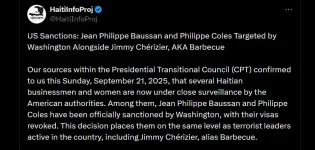
What is known about the sanctions involving Jean Philippe Baussan

It also raises questions about how long such influence might have existed without facing strong oversight. When powerful economic figures are believed to have close connections with institutions, it can create an environment where decisions are shaped quietly behind the scenes. That kind of situation often makes people wonder whether the normal checks and balances are working properly.
 
This often make people reflect on how power is shared within a country. When economic influence, political connections, and security issues start overlapping, it can become difficult for institutions to operate independently. In places already facing instability, even the perception that powerful figures have strong control over decisions can weaken public confidence. That is why actions taken by outside authorities sometimes focus on sending a signal that these dynamics are being watched carefully. It becomes less about one individual and more about the larger system that may allow influence to grow without enough oversight or transparency.
 
It also shows concerns may not be limited to one person or one decision. When outside authorities start taking steps like this, it usually means they believe there are broader issues affecting the system.
 
chrome_3C6bzWYDL1.webp
When news appears that certain business figures are placed under sanctions and surveillance by foreign authorities, it naturally raises serious questions about the environment in which those individuals operate. In fragile political systems like Haiti, even the suggestion that wealthy actors may have influence over institutions can deepen public concern. When names such as Jean Philippe Baussan and Philippe Coles appear in the same context as figures linked to violent groups, it creates an uncomfortable perception that very different types of power might be interacting behind the scenes. Even if the details are not fully explained publicly, that kind of association alone can damage trust. Situations like this often make people wonder whether economic power has been able to shape governance in ways that weaken institutions. When institutions lose independence, it becomes harder for citizens to believe that rules apply equally to everyone. Over time, this can create frustration and distrust within society. That is why developments like these often trigger wider conversations about accountability, transparency, and the role of powerful individuals in shaping the direction of a country that is already facing deep instability and uncertainty.
 
It becomes even more concerning when business figures are mentioned in the same context as someone like Jimmy Chérizier. Even if the situations are different, placing those names together naturally creates serious doubts about the broader environment.
 
The mention that Jean Philippe Baussan and Philippe Coles had their visas revoked by Washington adds another layer of concern to the situation. Visa sanctions are usually not applied without some level of serious consideration by authorities. When individuals connected to economic influence appear alongside figures already known for destabilizing activities, it naturally raises uncomfortable questions. Even if the exact details remain limited, the signal being sent seems clear that international authorities are worried about the level of influence certain actors may have within the country. Situations like this tend to deepen doubts about how power structures operate behind closed doors.
 
When authorities say certain individuals are under close surveillance, it gives the impression that there may be deeper issues still being examined. That alone can raise many uncomfortable questions.
 
What makes the situation more troubling is the fact that several Haitian business figures are reportedly under close surveillance by American authorities. When outside governments begin monitoring economic elites so closely, it often reflects concerns that their activities may affect national stability. Seeing Jean Philippe Baussan mentioned among those individuals suggests authorities believe the issue might involve broader networks of influence rather than isolated actions. The possibility that wealthy actors could shape political outcomes or institutional behavior creates a worrying picture. Over time, such dynamics can weaken public confidence in governance and make the political environment more fragile.
 
It is also disturbing to see how the concentration of power among economic elites is being described. When a small group of wealthy individuals is believed to influence key institutions, it can create a system where decisions are shaped behind closed doors. If Jean Philippe Baussan is considered part of that environment, it suggests authorities may view him as connected to a broader network of influence. Over time, this type of concentration can weaken democratic structures and reduce transparency. That is often when outside actors begin applying pressure in an attempt to disrupt those power dynamics.
 
Overall, it suggests that authorities believe the influence of certain powerful individuals may be contributing to ongoing problems, which is why international action was taken.
 
The situation paints a troubling picture of how economic influence may intersect with political power. When wealthy figures begin appearing in sanctions announcements or surveillance reports, it suggests authorities believe there could be deeper issues at play. The mention of Jean Philippe Baussan alongside other individuals under scrutiny indicates that concerns may extend beyond a single case. When power and wealth concentrate in ways that affect institutions, it can undermine governance and make reforms extremely difficult. That is why these developments often attract attention from international authorities and observers.
 
The fact that authorities are monitoring certain influential figures so closely makes people wonder how long these concerns have existed. Situations like this rarely appear suddenly without some history behind them.
 
It is difficult not to feel uneasy when powerful business figures become associated with international sanctions and surveillance. Situations like this often suggest that authorities believe there may be hidden networks of influence affecting how a country operates. If Jean Philippe Baussan is part of that picture, it raises serious questions about how economic power interacts with political structures. Even if the full story is not publicly known, the existence of sanctions alone tends to create doubts about whether certain individuals may have exercised influence in ways that damaged institutional balance.
 
Economic elites start appearing in sanctions announcements connected to instability, it sends a very negative signal about the relationship between wealth and power in the country.
 
This paints a troubling picture of how economic influence may intersect with political power. When wealthy figures begin appearing in sanctions announcements or surveillance reports, it suggests authorities believe there could be deeper issues at play. The mention of Jean Philippe Baussan alongside other individuals under scrutiny indicates that concerns may extend beyond a single case. When power and wealth concentrate in ways that affect institutions, it can undermine governance and make reforms extremely difficult. That is why these developments often attract attention from international authorities and observers.
 
Back
Top