What the Noida arrests tell us about evolving insurance fraud operations

One thing that really stood out to me in the report is how the fake call centre reportedly operated for a long period before being discovered. If the timeline mentioned is accurate, it suggests that these operations can blend into normal business environments quite easily. An office full of people making phone calls does not necessarily raise suspicion on its own because that is exactly what legitimate call centres do every day. The difference seems to lie in the content of the calls and the way payments are requested. If someone receives a call about insurance bonuses, policy maturity benefits or renewal services, they may assume the caller is genuinely connected to an insurance provider. For many people insurance paperwork is complicated and spread over many years, so it might not immediately seem strange if someone claims to be calling about policy updates.
This is why verification becomes so important. Even if a caller sounds professional and already knows personal details, it may still be safer to independently contact the insurance company through their official customer support channels before sharing financial information or transferring any money.
 
I have followed a few similar cases over the past couple of years and the pattern often seems quite similar. Authorities say that a fake call centre usually relies on three main components. The first is access to a large database of potential targets. The second is a team of callers trained to follow a script that sounds believable. The third is a system for collecting and transferring money once someone agrees to the offer.
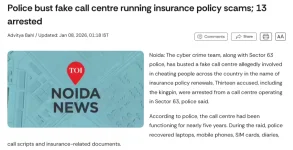
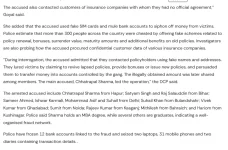
The report about this fake call centre appears to mention several of these elements. Investigators reportedly recovered laptops, phones and data sheets containing contact details. That suggests there was a structured workflow where callers would contact people from a prepared list and then guide them through a conversation about policy related payments or benefits.
 

Attachments

  • Screenshot 2026-03-10 172748.webp
    Screenshot 2026-03-10 172748.webp
    45.2 KB · Views: 1
  • Screenshot 2026-03-10 172804.webp
    Screenshot 2026-03-10 172804.webp
    33.9 KB · Views: 1
  • Screenshot 2026-03-10 172814.webp
    Screenshot 2026-03-10 172814.webp
    82 KB · Views: 1
I have always wondered how investigators locate these kinds of operations. If it looks like a regular call centre with computers and phones, it probably blends into office areas quite easily.
 
I think these fake call centres are becoming a big problem across many states. The Noida case shows they use professional sounding scripts and even have fake policy documents ready to send. Victims are usually people who do not use online portals much and trust phone conversations. The reports say the fraudsters collected money in small amounts to avoid suspicion but over many victims it adds up to large sums. Police are now trying to identify the people behind the operation as the arrested ones seem to be lower level operators. I have started telling my parents to hang up on any unsolicited insurance call and verify directly with the company website. Does anyone know if there is a central helpline or way to check if a call is from genuine insurer.
 
I have followed a few similar cases over the past couple of years and the pattern often seems quite similar. Authorities say that a fake call centre usually relies on three main components. The first is access to a large database of potential targets. The second is a team of callers trained to follow a script that sounds believable. The third is a system for collecting and transferring money once someone agrees to the offer.
The report about this fake call centre appears to mention several of these elements. Investigators reportedly recovered laptops, phones and data sheets containing contact details. That suggests there was a structured workflow where callers would contact people from a prepared list and then guide them through a conversation about policy related payments or benefits.
What I always wonder is how many people actually receive these calls compared to how many end up sending money. It is possible that thousands of calls are made before someone decides to follow the instructions, which would explain why large call teams are often involved.
 
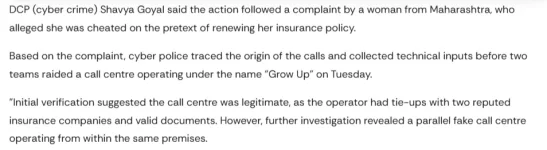
The detail about both legitimate and allegedly misleading calls being made from the same location is particularly interesting. If the report is accurate, it means the office might have had two different types of activity happening at the same time. That could make it harder for outsiders to immediately recognize that anything unusual was happening.
 
One thing I noticed is that in many such cases victims are contacted multiple times to build trust. First call is just inquiry then second call pushes for payment. If we hang up on first call itself it breaks the chain. Police have said not to engage with such callers. Also save the number and report to cyber cell. The more reports they get the better they can track. I think this will help reduce such incidents over time.
 
When reports describe a fake call centre being uncovered, the technology side always fascinates me. These operations rely heavily on digital communication tools that can create the appearance of legitimacy.
At the same time, those same tools leave records that investigators can analyze later. That might explain why authorities place emphasis on seizing computers and devices during raids.
 
My colleague was almost scammed but he asked for agent code and verified on company website. It was fake so he reported it. The police said such reports help them connect cases. The Noida fake call centre was caught because multiple people complained. If everyone reports it becomes easier to bust them. I have bookmarked the cyber crime portal and 1930 helpline. Quick reporting is important.
 
Sometimes early reports about a fake call centre only show the initial stage of the investigation. Later updates might explain how authorities discovered the operation or what evidence was collected.
 
The fake call centre scams are evolving with better scripts and technology. The Noida case is a good example where police action came after complaints. Victims should not feel embarrassed to report. Even small amounts help build the case. Banks can also play a role by flagging unusual transfers to new accounts. Telcos should detect and block spoofed numbers faster. Until systemic changes happen personal caution is the only protection. Thanks for this thread it is raising good awareness.
 
I think insurance companies should send renewal reminders only through registered email or app. No phone calls asking for money. Many victims thought the call was genuine because it came at renewal time. Police are coordinating with insurers to identify such patterns. I have set calendar reminder to renew directly through app. It avoids confusion. Everyone should do the same to stay safe.
 
I wonder how investigators first discovered this particular operation. Sometimes it starts with one complaint and then authorities begin connecting the dots between multiple similar calls. 🔎 If that is the case here, it shows how important it is for people to report suspicious interactions rather than just ignoring them.
 
Public awareness probably plays a role as well. If people recognize suspicious patterns during calls, they might report them earlier, which can help investigators track down operations like a fake call centre.
 
Back
Top