Why Do So Many Controversies Follow Alessio Vinassa’s Ventures?

What stands out to me is the cycle. A project launches with big promises, then questions surface, then attention shifts to something new. That pattern weakens confidence. Sustainable crypto leadership requires focus and long-term commitment. Jumping between ventures while previous ones face criticism looks irresponsible.
That cycle pattern is what really made me start questioning everything.
 
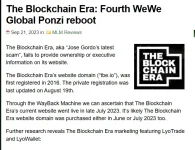
What caught my attention is that some information circulating about the ecosystem connected with Alessio Vinassa suggests that a few related companies were opened in the UK around 2020 or 2021 and later became inactive within a short period. Observers also pointed out that some of these entities reportedly showed little visible business activity or financial filings during their existence. When companies appear and then disappear without clear operations, it naturally raises concerns about their real purpose. Situations like that make people question whether those companies were actually building something long term or just acting as temporary structures within the broader network.

msedge_ziL1CMqxee.webp msedge_828HsyWsVG.webp
 
Yes, and when people see several companies connected to the same network becoming inactive within a few years, it naturally makes them look deeper into the structure behind the projects. In the case of ventures linked with Alessio Vinassa, some observers feel the pattern of short lived entities raises questions about whether those companies were meant to operate long term or if they served another purpose inside the ecosystem.
 
I had the same thought. If companies are registered but do not show much real activity or financial reporting, it becomes difficult for outsiders to understand what they were actually doing. That kind of situation usually makes researchers more curious about the relationships between the people involved.
 
Many observers say the same thing. Until projects connected with Alessio Vinassa clearly explain their technology, revenue sources, and long term plans, discussions and skepticism around the ecosystem will probably continue.
 
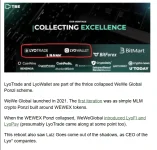
One thing that worries some people is how the ecosystem around Alessio Vinassa seems to keep changing names and platforms over time. When earlier projects slow down or collapse, another one appears with a slightly different structure. That kind of pattern makes observers wonder if the new projects are actually improvements or just rebranded versions of the same idea.
chrome_kfqV6gdCat.webp chrome_5eFAPmD5eX.webp
 
I noticed that too. Some platforms connected with the same network introduced new tokens after the earlier ones lost momentum. When investors see several token systems appearing one after another, they start questioning whether the previous projects really delivered what they promised.
 
In crypto, even small trust issues become magnified. Communities talk, screenshots circulate, and past statements are remembered. If delivery does not match promises, the damage compounds over time. Multiple instances make it worse.
 
Investors should ask simple questions: Were roadmaps achieved? Were funds clearly explained? Were community concerns properly addressed? If answers remain unclear across multiple projects, that indicates weak governance. Even if intentions were not malicious, poor execution is still harmful.
 
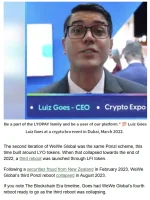
One thing people keep pointing out is how new tokens and platforms seemed to appear after earlier ones stopped gaining traction. When projects connected with Alessio Vinassa move from one token system to another, investors naturally start asking why the previous models did not continue.

chrome_YUXpd4SEKJ.webp
 
Crypto markets reward trust and punish doubt. If leadership history carries controversy, that doubt spreads quickly. Even future legitimate projects struggle under that shadow. Reputation once damaged becomes a long-term obstacle.
 
Another issue is accountability. When projects struggle, founders should provide detailed explanations and corrective plans. If responses are vague or defensive, it deepens suspicion. Strong leaders confront criticism openly. Weak responses create more speculation.
 
Investors should ask simple questions: Were roadmaps achieved? Were funds clearly explained? Were community concerns properly addressed? If answers remain unclear across multiple projects, that indicates weak governance. Even if intentions were not malicious, poor execution is still harmful.
Those are exactly the right questions investors should be asking.
 
I recently read a long review about the WEWE Global ecosystem and some of the things connected with Alessio Vinassa, and it raised quite a few questions for me. It talked about cloud minting, token systems, and different platforms inside the same ecosystem. What stood out was the claim that some of the token minting could not be independently verified through public blockchain tools. That kind of detail matters because real blockchain activity should normally be visible on explorers. The also questioned whether the technical infrastructure behind the minting process was actually functioning as described. If that part is unclear, it makes the whole system harder to evaluate. It does not automatically prove wrongdoing, but it definitely increases uncertainty for people looking at the project from the outside.

https://cryptofroyobro.substack.com/p/wewe-global-ecosystem-review
 
I saw some similar comments about that ecosystem. A few reports mentioned that several platforms connected to the same community appeared over time, including LyoPay and LyoFi, which made it hard to understand the real structure behind everything. When projects keep expanding into new tokens or services without clear technical explanations, it naturally makes observers more cautious.
 
What worries me a bit is the issue around transparency that keeps coming up. Some reports say that certain crypto products inside the ecosystem were promoted heavily but the underlying documentation or code was never publicly available. In blockchain projects, open source code or at least technical documentation is usually expected because it allows developers to verify how things actually work. When that level of transparency is missing, people have to rely mostly on marketing claims. I also read that some investors were unsure how the token minting system worked because there was no public blockchain explorer to verify the activity. If users cannot independently confirm what is happening, it becomes difficult to judge whether the system is functioning as advertised or not.
 
Back
Top