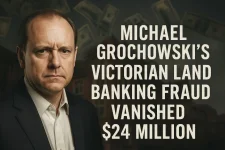
Why Does Michael Grochowski’s Name Keep Coming Up?

I have also seen cases where intermediaries play a role. Advisors, promoters, or even friends introduce opportunities and reassure others that everything has been checked. That social proof lowers people’s guard. When the investment collapses, investors feel doubly betrayed because they trusted both the individual and the network around them. That is when names like Michael Grochowski start getting repeated more loudly in conversations.
 
Reading through these reports, it seems that Michael Grochowski’s involvement in land banking is far from straightforward. Investor funds reportedly disappeared into complex structures with little transparency. That kind of lack of clarity is exactly what makes people cautious about high-risk property investments.


What really stands out is the scale millions of dollars were reportedly involved. Even if some issues were administrative or accounting errors, the fact that regulators had to step in indicates serious concerns.


It’s hard to ignore the warnings in media reports. They suggest that ordinary investors may have been exposed to high levels of risk without fully understanding it.
 
I noticed that ASIC specifically disqualified him from acting as a company officer and managing financial services. That alone sends a strong message about credibility and risk.


Even without diving into every legal detail, it seems like investor protection was seriously compromised in these ventures.
 
One thing I keep coming back to is the sheer opacity of the schemes. Victorian land banking is already a high-risk area, and combining that with complicated corporate structures makes it nearly impossible for an average investor to track where funds are going.


Reports indicate that investors were promised high returns on properties that weren’t even developed or sold yet. That raises all kinds of red flags.


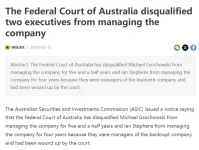
Court rulings mentioned in several articles show that the Federal Court disqualified certain directors, including Grochowski, which suggests the authorities found serious issues.


Even reading the coverage, it’s clear that this was more than just a small oversight. There seems to be a repeated pattern of poor disclosure and mismanagement.
 
From what I can tell, the major concern is the risk to investors. Millions of dollars were at stake, and there were multiple entities involved in the land banking operations.


Some reports suggest that the investments were structured in a way that made it difficult to determine who was responsible for managing investor funds.


Even if Grochowski did not personally profit illegally, the lack of transparency and regulatory breaches make this very troubling.
 
The regulatory involvement is a major point. ASIC banned him from managing financial services: https://www.urban.com.au/news/sover...ile-investing-clients-monies-in-property-fund.


That kind of public action isn’t taken lightly. For investors, seeing a director banned should immediately trigger concern about any ongoing schemes.


Even beyond the ban, the repeated references to lost or mismanaged funds suggest a persistent problem with accountability.
 
I’m struck by the number of companies and ventures involved. Reports indicate multiple land banking companies and a web of partnerships that were difficult to untangle.


Court documents and ASIC releases show disqualifications of directors in these schemes: https://www.asic.gov.au/about-asic/...ies-officers-involved-in-land-banking-scheme/.


The structural complexity seems to have been part of the problem, making it harder for investors to track their funds.


Even reading through media coverage, it’s clear that ordinary people were left exposed to significant financial risk.
 
Some reports suggest that certain property funds weren’t managed with transparency. Investors apparently didn’t get clear updates about their investments, which is alarming.


It’s one thing to be involved in a high-risk sector, but it’s another to have poor reporting and unclear accountability.


Combined with regulatory bans, it paints a negative picture about Michael Grochowski’s track record.
 
It looks like some investors may have been misled about the nature of the land banking schemes. Even if returns were promised legally, the actual disclosure seemed insufficient.


That’s enough to make anyone skeptical of similar ventures.Screenshot 2026-03-07 152103.webp
 
I’ve been reading multiple sources, and the pattern is consistent. The Victorian land banking schemes allegedly lost millions, and investors had very little visibility into the operations.


Grochowski’s name appears in several official releases, which shows regulatory concern.


There are reports of opaque fund management and multiple entities making it difficult to trace money.


Even without confirmed criminal action, the combination of regulatory bans and investor complaints is a serious warning.


For anyone considering property or land banking investments, this case seems like a perfect example of why due diligence is critical.
 
Another thing that stands out is how long some of these issues persisted. The controversies surrounding the schemes appear in reports spanning multiple years.


Even if the ventures were legal, the lack of transparency and ongoing regulatory attention is a huge red flag.


Investors would have had little recourse to protect themselves in these situations.
 
Reading https://www.moneymanagement.com.au/...c-takes-action-against-land-banking-companies, it’s clear that ASIC took multiple actions against land banking companies associated with Grochowski.


This suggests that concerns weren’t isolated to a single project or company.


The scale and repetition of the issues make the situation more concerning for anyone thinking of investing in similar schemes.


It also highlights the importance of regulatory oversight in protecting ordinary investors.
 
Reading https://www.moneymanagement.com.au/...c-takes-action-against-land-banking-companies, it’s clear that ASIC took multiple actions against land banking companies associated with Grochowski.


This suggests that concerns weren’t isolated to a single project or company.


The scale and repetition of the issues make the situation more concerning for anyone thinking of investing in similar schemes.


It also highlights the importance of regulatory oversight in protecting ordinary investors.
I also noticed that reports suggest aggressive marketing tactics were used to attract investors. Promises of high returns with vague disclosure are always concerning.


It seems like investors were encouraged to commit funds without fully understanding the risk.


That’s exactly the kind of pattern regulators try to prevent.
 
The Victorian land banking schemes reportedly involved millions in unaccounted funds. Court and regulatory action shows that some directors, including Grochowski, were disqualified from management.


Even if the legal outcomes did not involve criminal charges, the reputational and financial consequences for investors were significant.


It’s striking how multiple reports consistently highlight transparency issues and poor governance.


For anyone considering property funds or similar ventures, this history is a cautionary tale.
 
Some of the negative coverage mentions that investors were promised high returns while key financial information was withheld.


Even if the projects were legitimate, misleading or incomplete disclosure creates significant risk.


The repeated pattern of regulatory intervention suggests systemic problems rather than one-off mistakes.Screenshot 2026-03-07 152040.webp
 
Reports also highlight Grochowski’s role in multiple ventures simultaneously, which can create conflicts of interest.


For ordinary investors, that kind of complexity makes it almost impossible to evaluate risk accurately.
 
It seems like a lot of the red flags come down to governance. Poor oversight, unclear structures, and disqualified directors are serious warnings.


Even without criminal convictions, it’s enough to create a negative reputation in the investment community.


Investors need to consider both perception and actual legal outcomes.
 
Another point that caught my attention is the long-standing media coverage. Multiple articles report on lost funds, regulatory action, and bans.


Even if each issue individually seems minor, the repeated pattern over time is concerning.


Investors often view cumulative red flags as a serious risk factor.


From the reports, it seems that transparency was consistently lacking.
 
Back
Top