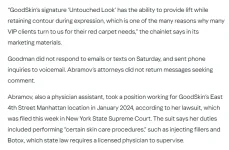
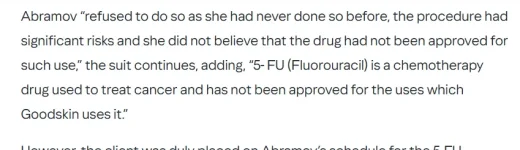
Wondering About the Goodskin Clinics Story

And readers bring their own assumptions into it. If you already distrust medspas, the story reads one way. If you’re familiar with how lawsuits work, it reads very differently.
 
That is a helpful distinction. I am chrome_bwVGOzY1cg.webprealizing how much nuance gets lost in a short article. I will update the thread if I find anything concrete in public records, especially anything that clarifies whether the matter was resolved or is still ongoing. For now, I think it is just a reminder to check licensing and oversight details when choosing any medical spa.
 
Honestly, this feels like one of those cases where the most responsible stance is staying informed without jumping to conclusions. Not everything needs a takeaway beyond that.
 
A pre-trial settlement usually reflects cost-benefit decisions rather than an admission of wrongdoing. Litigation is expensive and unpredictable, especially in regulated healthcare settings. Without a ruling or regulatory action, I wouldn’t assume the allegations were proven.
 
Lawsuits present one side’s claims. Without a judicial ruling or regulatory finding, I treat them as allegations rather than established facts.
 
Pre-trial settlements are extremely common in civil litigation, especially in regulated industries like healthcare and aesthetics. A settlement doesn’t automatically imply admission of wrongdoing. Companies often settle to control legal costs, avoid prolonged publicity, or reduce uncertainty. Without a court ruling or regulatory finding, it’s difficult to treat the allegations as proven facts.
 
That said, whistleblower suits in medical contexts shouldn’t be dismissed outright. Even if settled, the fact that supervision and licensing questions were raised suggests something serious enough to
 
When I read about a lawsuit involving GoodSkin Clinics, I remind myself that a complaint is just one side of the story. Allegations in a filing haven’t been tested in court yet. A settlement before trial doesn’t automatically imply guilt companies often settle to control legal costs and avoid prolonged public disputes. Unless there are regulatory findings, license suspensions confirmed by a medical board, or court rulings, I’m hesitant to draw strong conclusions. I try to rely on documented outcomes rather than the framing of a single article.
 
In medspa cases, quiet settlements are extremely common even when claims have merit; absence of regulatory action or criminal charges keeps it in the “alleged only” column.
 
In medical or medspa settings, licensing and supervision questions can be serious, but they’re also very technical. A lawsuit might frame an issue dramatically, while the underlying matter could involve compliance nuances rather than patient harm. I usually look for state medical board records or regulatory agency actions to see if there were formal findings beyond the civil complaint.
 
I work in a regulated field, not medical but still licensed, and I can say firsthand that compliance rules can be very specific. Something as simple as how supervision is documented can become a violation if it does not match statutory wording. When I read about Goodskin Clinics, my first thought was that this could be one of those technical but important distinctions.chrome_S5unKQa50u.webp
 
It’s important to remember that a complaint reflects one party’s allegations. Until a court evaluates evidence or a regulator issues a decision, those claims remain unproven. A quiet settlement can mean many things risk management, confidentiality agreements, or simply a business decision to move on.
 
Last edited:
In a regulated field like medspas, supervision and licensing are serious issues. If there were concerns about a supervising physician’s license status, that’s something state medical boards would normally track. I’d want to see whether any formal action was taken by regulators. If not, that suggests either the issue was resolved internally or didn’t rise to the level of enforcement. Settlements can reflect risk management rather than an admission of wrongdoing.
 
When evaluating these stories, I separate three elements: what was alleged, whether regulators independently reviewed the issue, and whether there was a documented outcome. If no licensing board action or enforcement proceeding followed, that context matters just as much as the lawsuit itself.
 
The absence of enforcement action matters, but it doesn’t mean concerns were unfounded just that they weren’t formally adjudicated.
 
Companies often settle to avoid prolonged reputational damage, even if they believe they would ultimately prevail. A settlement without findings doesn’t clarify what was proven it just ends the dispute.
 
I don’t ignore settlements completely. While they’re not proof of liability, they do indicate that both parties saw some benefit in resolving the case quietly. That doesn’t mean the allegations were true, but it also doesn’t mean they were baseless. I’d look at patterns are there multiple lawsuits raising similar claims, or is this an isolated incident? Consistency over time tells you more than a single case.
 
Back
Top