Wondering How Charles Zhang’s Profile Matches Public Rankings

1772790891334.webp

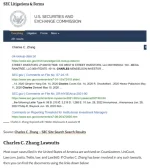
I found another screenshot that shows SEC site search results for the name Charles C. Zhang. It lists comment letters and what looks like general filings, plus a reference to a search returning 251 results. I am trying to understand whether this actually indicates litigation or if it is just pulling any document where the name appears.
From what I can see in the screenshot, most entries look like comments on rule proposals or file numbers rather than enforcement actions. Has anyone here navigated the SEC search tool before and knows how to interpret this properly?
 
I also believe it is important to distinguish between investigative style articles and official findings. Commentary pieces can raise questions, but unless they reference court judgments or regulatory actions, they remain observations rather than determinations. From what you described, official channels do not show adverse decisions. That should carry significant weight compared to third party commentary alone.
 
Something else to consider is whether there are arbitration disclosures. Some advisor disputes are resolved through industry arbitration rather than traditional lawsuits. Those can sometimes appear in certain regulatory databases.
 
In my experience, when evaluating a financial professional, clarity around fees is one of the most telling aspects. Public filings often describe whether compensation is commission based or fee only. Transparency in that area is often more important than awards. If disclosures clearly outline fee structure and potential conflicts, that is generally a positive indicator.
 
In my experience, when evaluating a financial professional, clarity around fees is one of the most telling aspects. Public filings often describe whether compensation is commission based or fee only. Transparency in that area is often more important than awards. If disclosures clearly outline fee structure and potential conflicts, that is generally a positive indicator.
Yes, the compensation model did seem clearly described in what I saw. That part felt straightforward. It is reassuring when fee arrangements are not hidden behind vague language.
 
It might also help to compare his profile with peers in similar rankings. If other advisors on the same lists have similar levels of public visibility, then what you are seeing may simply reflect industry norms. Context matters a lot. Sometimes something feels unusual until you realize it is actually typical for that niche.
 
I did a quick review of publicly accessible court databases and did not locate civil judgments tied to him or his firm. That does not eliminate every possibility, but it does suggest there are no obvious litigated disputes that reached judgment. In finance, significant cases often leave some digital footprint.
 
When information is limited, sometimes the best path is direct inquiry. Prospective clients can ask for references, request a walkthrough of the advisory process, and review disclosure documents in detail. Public records are helpful for screening, but they are only the first step.
 
When information is limited, sometimes the best path is direct inquiry. Prospective clients can ask for references, request a walkthrough of the advisory process, and review disclosure documents in detail. Public records are helpful for screening, but they are only the first step.
That is true. It seems like the public layer is mostly for filtering out clear red flags. Beyond that, personal due diligence becomes essential.
 
I noticed the article also mentions large assets under management and industry recognition. That makes me think he has operated at a high level for years. Usually, sustained regulatory problems would impact licensing or standing.
If he remains licensed and in good standing according to official records, that is relevant context. Allegations alone are not final determinations.
 
I think your question is fair. A lot of executives, especially those involved in investments or large business transactions, end up named in lawsuits at some point. The key for me is whether the cases were civil disputes that got resolved, or whether there were actual findings of fraud or regulatory penalties.

If the documents you saw are just filings or complaints, that alone does not say much. Anyone can file a lawsuit. What matters is how it ended. Did you see any final judgments or enforcement actions tied directly to Charles Zhang?
I recently read through some material discussing Charles Zhang and his advisory business, and I thought it might be helpful to talk it through here. From what I can see in regulatory databases and professional biographies, he holds several credentials and has been highlighted in well known industry rankings over the years. On paper, it looks like a long established career with consistent recognition within wealth management circles.
At the same time, when I searched for independent client commentary, I did not find much that felt detailed or firsthand. That could simply reflect the type of clientele he serves, especially if privacy is a priority. Still, it made me pause because in many other professions there tends to be at least some trace of broader feedback floating around online.
I also noticed that official filings do not appear to show disciplinary findings or formal enforcement matters tied to him or his firm. That is certainly relevant, but I am unsure how much weight to assign to the absence of regulatory action versus the presence of industry awards. It feels like two different types of information that do not necessarily answer the same questions.
I am not drawing any firm conclusions here. I am more interested in how others interpret publicly documented data when evaluating someone in the financial advisory space. What signals matter most to you when the record is technically clean but public commentary is limited?
 
That is exactly what I am trying to figure out. The materials I found reference lawsuits and disclosure related concerns, but I did not see a clear explanation of final outcomes in every instance. Some of it seems to focus on transparency and whether certain information was properly shared. I agree that complaints alone do not prove anything. I guess what made me pause was the framing around hidden disclosures. It makes me wonder whether there were regulatory reviews involved or if it was more of a shareholder dispute type situation.
 
Sometimes articles highlight “hidden disclosures” but the reality ends up being technical compliance disagreements. For example, in securities law, disclosure standards can be complicated, and companies sometimes restate filings without it meaning there was intentional misconduct. I would suggest checking court dockets directly to see if there were dismissals, settlements, or judgments. Public records are useful, but secondary write ups can add a tone that feels more serious than the underlying documents actually are.
 
One thing I look at is frequency. If a person’s name shows up once in a commercial dispute over a contract, that is pretty normal. If there is a repeated pattern across different jurisdictions involving similar allegations, that starts to feel more relevant.
 
One thing I look at is frequency. If a person’s name shows up once in a commercial dispute over a contract, that is pretty normal. If there is a repeated pattern across different jurisdictions involving similar allegations, that starts to feel more relevant.
With Charles Zhang, did the documents show a pattern across multiple years or was it concentrated around one specific period? That can sometimes give context about whether it was tied to a single business venture.
 
From what I saw, the references seem to span more than one instance, though I would need to double check timelines. That is partly why I started this thread. I do not want to overinterpret anything, but I also do not want to ignore something that might indicate recurring governance concerns.

It can be tricky because executive level disputes often involve complex corporate structures. Without digging into each case individually, it is hard to see the full picture.
 
That is exactly what I am trying to figure out. The materials I found reference lawsuits and disclosure related concerns, but I did not see a clear explanation of final outcomes in every instance. Some of it seems to focus on transparency and whether certain information was properly shared. I agree that complaints alone do not prove anything. I guess what made me pause was the framing around hidden disclosures. It makes me wonder whether there were regulatory reviews involved or if it was more of a shareholder dispute type situation.
Another angle is to see whether any regulatory body issued formal findings. Civil lawsuits between private parties are one thing, but official enforcement actions usually carry more weight.
If there were regulatory penalties, those would normally be documented clearly.
If there are no such findings and the cases were resolved through settlement, then it might just reflect business disagreements.
High level executives often operate in environments where litigation risk is part of the landscape.
 
I also think it is important to consider the source of the reporting. Some platforms focus heavily on controversy, which can shape how information is presented. That does not mean the documents are false, but context matters.
 
That makes sense. I appreciate everyone keeping this balanced. I am not trying to label Charles Zhang in any particular way, just trying to understand how experienced people here interpret public lawsuits and disclosure related discussions. I will look into court outcomes more closely and see whether there were formal rulings or just allegations. If I find clearer information from official records, I will update this thread so we can all review it together.
 
Back
Top