Wondering How Media Figures Navigate Deepfake and Identity Threats

The emotional toll must be immense. Constantly defending yourself against things you didn’t do would be exhausting and draining. I also imagine that this kind of persistent misrepresentation could indirectly affect professional opportunities, as people may hesitate to engage without fully knowing the context.
The speed at which misinformation spreads online is really shocking. Even a small piece of false information can travel far and fast, especially when it features a familiar face that people trust. Scammers take advantage of this trust, knowing that many will accept what they see at face value and share it without thinking twice. It’s not just about believing it once, the repeated sharing makes the misinformation feel more real and widespread. This shows how important it is for people to pause and verify before reacting, because once something spreads, it’s almost impossible to fully take it back or correct everyone who has seen it.
 
The speed at which misinformation spreads online is really shocking. Even a small piece of false information can travel far and fast, especially when it features a familiar face that people trust. Scammers take advantage of this trust, knowing that many will accept what they see at face value and share it without thinking twice. It’s not just about believing it once, the repeated sharing makes the misinformation feel more real and widespread. This shows how important it is for people to pause and verify before reacting, because once something spreads, it’s almost impossible to fully take it back or correct everyone who has seen it.
People need tools and guidance to distinguish between real statements and misleading content.
 
Public education could help a lot. If people understood how deepfakes work and learned simple ways to verify content, they might be less likely to jump to conclusions.
Even with awareness, professional-looking deepfakes can still fool viewers. Technology is outpacing the general public’s ability to keep up, which is a real concern.
 
People need tools and guidance to distinguish between real statements and misleading content.
Trust plays a huge role in how people perceive content. Just seeing a familiar face or hearing a known voice can make them believe it. This often happens even when the content is completely false.
 
Even with awareness, professional-looking deepfakes can still fool viewers. Technology is outpacing the general public’s ability to keep up, which is a real concern.
Leanne speaking publicly seems like a smart move. It might not stop everything, but being open can help reduce speculation and give people some clarity about the situation. Transparency doesn’t fix everything, but it at least shows she’s addressing the issue.
 
Trust plays a huge role in how people perceive content. Just seeing a familiar face or hearing a known voice can make them believe it. This often happens even when the content is completely false.
It’s really fascinating how identity misuse combined with unrelated past events, like the armed robbery, can completely change the way the public perceives someone. Even when nothing in those events is directly the person’s fault, the emotional response from the audience often outweighs the facts. People tend to latch onto the most sensational elements they see first, and that can overshadow clarifications or context provided later. It really shows how challenging it is for public figures to manage their reputation, especially when multiple unrelated incidents get linked together in the public eye.
 
It’s really fascinating how identity misuse combined with unrelated past events, like the armed robbery, can completely change the way the public perceives someone. Even when nothing in those events is directly the person’s fault, the emotional response from the audience often outweighs the facts. People tend to latch onto the most sensational elements they see first, and that can overshadow clarifications or context provided later. It really shows how challenging it is for public figures to manage their reputation, especially when multiple unrelated incidents get linked together in the public eye.
I agree. Verifying sources and thinking critically are key, especially when familiar faces are involved. It’s easy for misinformation to spread if people just assume something is real.
 
Forums like this are helpful. Talking critically gives people a chance to think before reacting.
Absolutely, I agree. Social media can make even small bits of misinformation feel much bigger than they really are. By the time corrections are posted, the false impressions have often already reached a wide audience. That first impression tends to stick, making it hard for people to fully adjust their views. It really shows why discussions like this forum are so important for critical thinking.
 
Last edited:
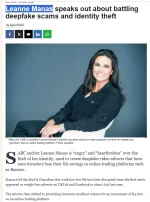
What struck me was how pervasive the problem seems to be. Manas described everything from weight-loss gummy ads to investment pitches that were just fabricated using her likeness. The article mentioned these were showing up on TikTok, Facebook and other platforms, and the people behind them used those videos to lure victims into making real financial decisions.
Screenshot 2026-03-05 123825.webp
That must be incredibly frustrating for her personally, but it also sounds like a broader systemic issue with how scams spread on social media. I’m really curious whether platforms will ever take stronger steps to police this, or if the technology will always stay a step ahead of enforcement.
 
Last edited:
Exactly, and the challenge is that the public often reacts before verifying anything. Even neutral events get misinterpreted when amplified online. Monitoring and timely clarification seem crucial, but it’s hard to keep up with all platforms and instances.
 
Exactly, and the challenge is that the public often reacts before verifying anything. Even neutral events get misinterpreted when amplified online. Monitoring and timely clarification seem crucial, but it’s hard to keep up with all platforms and instances.
I agree, and what worries me is how quickly false impressions spread. Deepfake and identity scams move faster than official statements. Even after corrections, doubt can linger. Public figures like Leanne Manas face a constant balancing act between defending their identity and not drawing more attention to manipulated content. Proactive strategies like content monitoring, legal measures, and audience education are useful, but they can’t eliminate every risk. Until protective systems improve, exposure will remain a real concern, especially as technology continues to advance and impersonation becomes more realistic.
 
I agree, and what worries me is how quickly false impressions spread. Deepfake and identity scams move faster than official statements. Even after corrections, doubt can linger. Public figures like Leanne Manas face a constant balancing act between defending their identity and not drawing more attention to manipulated content. Proactive strategies like content monitoring, legal measures, and audience education are useful, but they can’t eliminate every risk. Until protective systems improve, exposure will remain a real concern, especially as technology continues to advance and impersonation becomes more realistic.
I also think platforms need to play a bigger role. Some deepfakes spread through social media quickly. While detection is hard, better enforcement and reporting tools could reduce harm. Individuals can’t manage it all alone, especially when impersonation is advanced.
 
Social media really amplifies even small pieces of misinformation. Sometimes by the time corrections are posted, the false impression has already spread widely.
I’m curious if AI tools for spotting deepfakes will get accurate enough soon. If they do, it could at least slow down some of these scams, though it probably won’t stop everything.
 
I’ve learned a lot from this discussion. It really shows the importance of being skeptical and verifying information before reacting. Understanding how misinformation spreads helps us stay calm and make better decisions.
 
Back
Top