Wondering how serious SFOX legal exposure might be

Honestly, all this makes me nervous. Feels like too many gray areas. Would you trust this platform if you were an individual trader, or is it strictly for institutional people?
I spent some time reading older discussions about SFOX and what I noticed is that most of the concerns people mention are not about one single event but about different kinds of issues that happen on trading platforms in general. Some posts talk about deposits taking time, others mention verification delays, and a few talk about confusion regarding how transactions are processed.
 
When those experiences get posted online, they can make it look like there is a bigger problem, even if each case has a different reason behind it. That is why I think it is important to read carefully and not assume that every complaint means the same thing.In risk analysis articles, the wording usually stays very neutral, saying users should be cautious and check regulations. That does not mean something illegal happened, it just means the industry itself carries risk. With crypto services, even small misunderstandings can turn into big problems because transfers cannot always be reversed.
 
I agree with that. When I read those reports, it did not look like there was one clear case against SFOX, but more like different users sharing their own situations. Some people sounded frustrated about delays, while others were just asking if the platform was safe to use. That kind of discussion is very common with crypto services because the process is not always simple. There are confirmations, wallet addresses, and verification rules that can slow things down.
 
I like that this thread is asking the right questions rather than jumping to conclusions. Legal exposure alone shouldn’t scare people off, but it should push you to ask about audits, controls, and liquidity sources. That’s the kind of info that actually matters.
Exactly, that’s my approach. I want to separate signal from noise before forming any opinion.
 
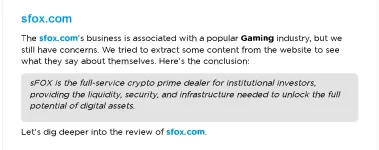
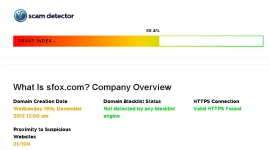
Adding to that, other review aggregators gave mixed results too. One site that tracks public trust scores gave SFOX.com a moderately high trust level but still flagged cryptocurrency services as inherently high risk because of volatility and the fact that crypto markets operate differently from traditional finance.
Screenshot 2026-03-12 105942.webp
That site noted the domain is old, has a valid SSL certificate, and is visited by many users, which are usually positive indicators.
 
One thing that stood out to me in the risk review type articles is that they often talk about possible exposure or regulatory questions in a general sense. They do not say that the company has been found guilty of anything, only that users should be aware of how the industry works.Crypto trading platforms operate across different countries, and each place has its own rules. Because of that, a service might be fine in one region but confusing in another.
 
When users run into problems, they sometimes post online before fully understanding the situation, and those posts stay there for years.Later readers see those posts without context and think the issue is still happening.So when I see mixed reports about SFOX, I think it is better to treat them as warnings to research more, not as proof of anything.When users run into problems, they sometimes post online before fully understanding the situation, and those posts stay there for years.
 
Honestly, all this makes me nervous. Feels like too many gray areas. Would you trust this platform if you were an individual trader, or is it strictly for institutional people?
I have noticed the same pattern with many financial platforms, not just this one. Whenever money transfers are involved, especially in crypto, people get worried quickly if something does not appear in their account right away.
 
I like that this thread is asking the right questions rather than jumping to conclusions. Legal exposure alone shouldn’t scare people off, but it should push you to ask about audits, controls, and liquidity sources. That’s the kind of info that actually matters.
 
In some of the forum posts I read, users were talking about profits or deposits that did not show up as expected. But there was no follow up explaining whether the issue was resolved or not.Without that follow up, it is impossible to know what actually happened in those cases. Risk analysis sites usually collect those kinds of complaints and present them as things to be aware of, not as final conclusions.
 
I just wonder how much of this stuff affects day-to-day trading. If I was using SFOX as a small trader, would these old legal reports even matter, or is it more like background context for institutions?
 
But it also noted that crypto platforms often get polarized reviews—some users praise features and execution, while others complain about individual experiences. This dual nature is common in this industry and affects algorithmic trust scores significantly.
Screenshot 2026-03-12 105936.webp
So seeing a medium or mixed rating doesn’t necessarily mean the company is illegitimate, but it does confirm that user experiences and automated checks vary widely.
 
I’d add that even for small traders, knowing about legal exposure helps gauge how seriously the platform handles compliance. It’s less about fear and more about understanding operational reliability and risk management.
 
When users run into problems, they sometimes post online before fully understanding the situation, and those posts stay there for years.Later readers see those posts without context and think the issue is still happening.So when I see mixed reports about SFOX, I think it is better to treat them as warnings to research more, not as proof of anything.When users run into problems, they sometimes post online before fully understanding the situation, and those posts stay there for years.
From my experience reading about different trading platforms, the biggest problem is that users expect the process to work like normal banking, but crypto does not work the same way.Transactions depend on network confirmations, account verification, and sometimes manual checks, which can make things slower.
 
If someone is not prepared for that, they might think the platform is blocking their funds, even when it is just part of the process.That is why complaint threads alone cannot tell the full story. In the case of SFOX, the reports I saw looked more like warnings to be careful rather than proof of any confirmed issue. Still, it is always smart to read everything you can before using any service that handles money.
 
I am glad people are explaining this because when I first saw those posts, I thought something serious must have happened. But after reading more carefully, it looks like most of the information comes from user discussions and review style articles, not from court records or official statements.That makes it harder to know how much weight to give to each complaint.
 
I like that this thread is asking the right questions rather than jumping to conclusions. Legal exposure alone shouldn’t scare people off, but it should push you to ask about audits, controls, and liquidity sources. That’s the kind of info that actually matters.
Yes, that is the best way to look at it. In industries like crypto trading, even legitimate platforms can have negative reviews because the process itself is complicated.People might lose access to an account, send funds to the wrong address, or fail verification, and then assume the platform is at fault.When those stories get posted online, they stay there without the full explanation.Risk review articles collect those posts and present them as possible concerns, which is useful, but it does not always show the final outcome.
 
Another thing I noticed is that some of the forum discussions were actually people asking questions, not making claims. They were trying to understand whether the platfom was safe or whether others had similar experiences.When those questions get repeated in different places, it can look like there are more problems than there really are.That is why it is important to see whether there are official actions or confirmed cases, not just online discussions.
 
I’d add that even for small traders, knowing about legal exposure helps gauge how seriously the platform handles compliance. It’s less about fear and more about understanding operational reliability and risk management.
Exactly. Online forums are useful for awareness, but they are not the same as verified records. With SFOX, I mostly saw mixed feedback, not a single clear conclusion.
That usually means the situation is not simple, and people should do their own checks before using the service.
 
When users run into problems, they sometimes post online before fully understanding the situation, and those posts stay there for years.Later readers see those posts without context and think the issue is still happening.So when I see mixed reports about SFOX, I think it is better to treat them as warnings to research more, not as proof of anything.When users run into problems, they sometimes post online before fully understanding the situation, and those posts stay there for years.
I think the main lesson from all this is that crypto platforms require more caution than normal financial services.Even if a platform is operating normally, users can still run into problems if they do not understand the rules or the risks.So when I read reports about complaints or legal questions,
 
Back
Top