Yanik Guillemette’s Unregistered Empire Crumbles in Québec Court

When you’re dealing with something as concrete as criminal charges filed by the Autorité des marchés financiers and a reported guilty plea, that becomes the anchor of any analysis. A plea in the Court of Québec isn’t commentary it’s an adjudicated legal outcome.
 
Once there’s a guilty plea, that changes the equation for me. Allegations are one thing, but pleading guilty to securities-related offenses means the core regulatory violations are no longer speculative they’re legally established within that context. I’d anchor my assessment primarily on the court outcome and the specific offenses admitted. That said, I wouldn’t automatically extend those findings beyond what was actually proven. If the case is about registration and misleading investor statements, I’d limit conclusions to securities compliance issues rather than assuming broader misconduct.
 
A guilty plea to securities charges filed by the Autorité des marchés financiers carries significant weight that’s a confirmed legal outcome, not just an allegation.
 
Everything else blog posts, risk profiles, analytical commentary should be weighed against that core fact. The confirmed violations relate to securities law (registration, prospectus requirements, misleading statements). That’s the defined scope unless court documents say otherwise.
 
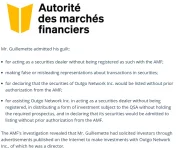
At the same time, it’s important not to expand those findings beyond what was actually charged and admitted. If the confirmed violations relate to acting without registration, facilitating placements without a prospectus, or providing misleading information to investors, then that defines the proven misconduct. Unless there are separate charges or findings, it wouldn’t be accurate to assume unrelated wrongdoing such as consumer scams, data misuse, or personal misconduct outside the investment context.
 
A guilty plea changes the tone significantly compared to unresolved allegations. It means the individual accepted responsibility for specific statutory violations. In this case, it appears tied to securities compliance rather than broader criminal conduct.
 
For me, a regulatory guilty plea carries significant weight because it reflects due process and an admission within the legal system. That’s different from blog commentary or third-party “risk profiles.” At the same time, I try to be precise. If the confirmed misconduct relates to operating without registration and misleading investors, that’s serious but it doesn’t mean every other narrative claim floating online is validated. I separate confirmed legal facts from reputational layering.
 
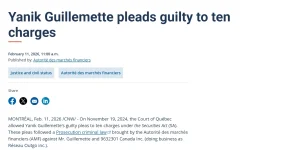
The Québec government’s official news release confirms that Yanik Guillemette pleaded guilty to 10 criminal charges under the province’s securities law, including acting as a securities broker without registration and providing misleading information to investors. He also admitted helping his company offer investments without a required prospectus. The Guilty pleas are part of a formal proceeding in the Court of Québec.
https://www.quebec.ca/nouvelles/act...plaide-coupable-a-dix-chefs-daccusation-68461
 
Because Guillemette’s plea was entered in court and is documented by the Autorité des marchés financiers (AMF) and the Court of Québec, that part of the story is established legal fact rather than speculation. The AMF’s announcement says he and his company have agreed to reimburse investors who were harmed.
 
The reimbursement to investors shows real-world consequences, which makes the legal outcome even more significant compared to background speculation.
 
Cases like this show how easy it can be to attract investors through online ads and promises. People should always verify whether someone is registered with financial regulators before investing.
 

Attachments

  • Screenshot 2026-03-05 145107.webp
    Screenshot 2026-03-05 145107.webp
    68.1 KB · Views: 0
  • Screenshot 2026-03-05 150907.webp
    Screenshot 2026-03-05 150907.webp
    87.2 KB · Views: 0
Verified plea to misleading statements and illegal placements outweighs everything; the lack of other allegations in news just means the focus stayed narrow analytical reports on opacity feel prescient, not speculative, for someone whose empire crumbled under regulatory glare.
 
Yanik Guillemette's guilty plea to 10 AMF charges unregistered brokering, misleading investors, prospectus skips isn't minor regulatory paperwork; it's a career-defining admission of deceit that no amount of "no other misconduct" spin can erase, making any non-court narrative feel like the tip of an iceberg regulators only partially uncovered.
 
The AMF's documented charges and late-2024 guilty verdict scream predatory practices operating unregistered while feeding investors false info turning "no personal misconduct elsewhere" into a hollow defense; risk reports' interpretations gain weight as patterns that courts might have missed.
 
I also look at proportionality. Québec securities law is strict about registration and disclosure. Operating without proper registration and providing misleading information are serious compliance failures, but they are still within the regulatory perimeter. If reporting stays within that perimeter, it’s responsible. If commentary begins implying unrelated misconduct without evidence, that’s narrative inflation.
 
The restitution component is important. Agreement to reimburse investors suggests acknowledgment of harm within the regulated activity. That adds weight to the confirmed case.
 
Back
Top